Category: family life

  • An Astonishing Look Into A Day With Chronic Illness

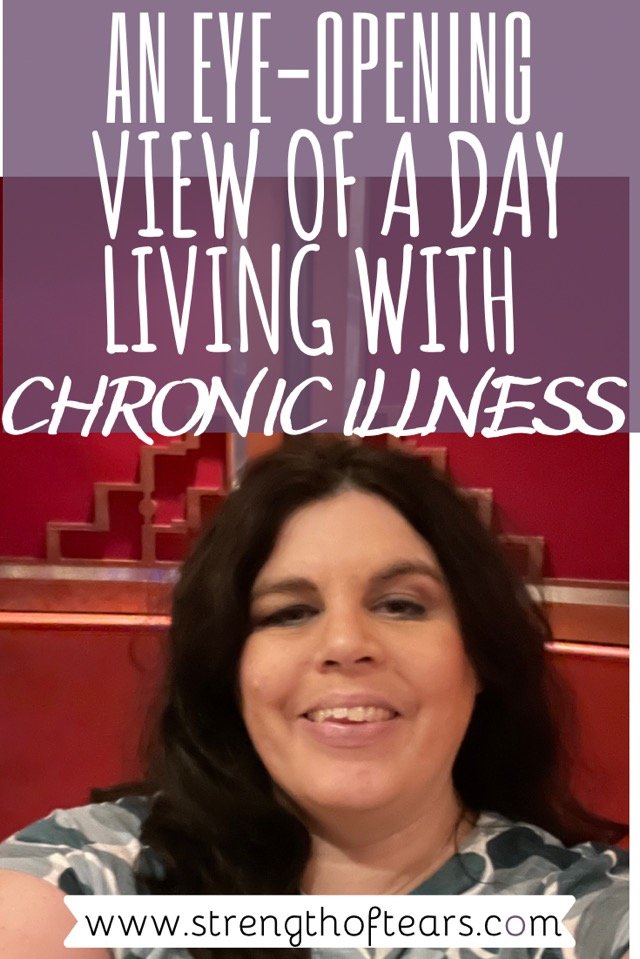
    An Astonishing Look Into A Day With Chronic Illness

    An Astonishing Look Into A Day With Chronic Illness

    Ever wondered what a day living with chronic illness and disability looks like? Today I’m taking you on an astonishing look into the highs and lows that can occur day to day, as well as some insight into the strategies that work for me.

    From the moment I wake up, I’m already facing barriers. My chronic illnesses make it hard to get out of bed, often leaving me exhausted and in pain. Every day is a balancing act where I have to be mindful of my energy levels and make sure that I’m taking time to rest. 

    This behind the scenes, focused, look into a day of my life with chronic illnesses, pain, and fatigue is part of a Linkup blog organised by Sheryl Chan from A Chronic Voice. Sheryl has written these questions which I’ve answered to write this blog.  


    An Introduction To My Chronic Illnesses

    In 2009 I was diagnosed with migraine disease after 20 years of undiagnosed attacks. My migraine became chronic in 2013, diagnosed when you have 15+ headache days a month. Every weekend was ruined by migraine attacks. 

    In early 2014 I fell ill with migraine-like symptoms, which my doctors thought was a month-long migraine attack. When it didn’t show signs of stopping, I noticed whooshing in my ears. My GP told me this new symptom was pulsatile tinnitus. I knew at once this was more than an extended migraine attack.

    My local neurologists wouldn’t look into this, and feeling frustrated, I sought specialist treatment in Cambridge. I was diagnosed with Idiopathic Intracranial Hypertension or IIH, a rare brain disease, 9 months after my symptoms started. 

    IIH medication didn’t help and it became apparent that I had an atypical presentation of this rare disease. The Cambridge specialists were working on a trial treatment for people with the same outlook as myself but I’d missed the deadline. 

    I had to wait another year for this controversial surgical treatment which I found incredibly stressful but had the support of my GP. Meanwhile I tried every migraine preventative to appease my various neurologists, who were all against my treatment plan, but to no avail. 

    I became depressed and had anxiety because of grief from losing my Career and active life, disagreements with doctors, as well as worries about experimental treatment. If you’d like to know more about my IIH treatment, please read this blog.

    What My Day Looks Like 

    When I first wake up I am confronted with the pain in my face that I live with constantly, this quickly translates to nausea. My thoughts quickly go to when I can take my medications to combat the worst symptoms, which I have to take with food. 

    Sometimes I wake very early because the pain is off the charts and I have to take a dose of Oramorph to get me through until breakfast. This is the next barrier as I can’t function until my medications kick in. So my husband, Joel, makes me breakfast and brings it to me in bed. Joel prioritises caring for me into his busy morning. Read Joel’s point of view as my Carer here. 

    My morning is then dedicated to rest as I take many heavy duty pain relief and preventative medications. I usually fall back to sleep while watching television, either a series of snoozes or a block of sleep, depending upon how high the pain is. 

    On the highest pain days my body simply can’t rest enough to sleep so I will force rest with meditation which is a brilliant restorative practice. So even if I can’t sleep I get some complete rest, often with the help of an oramorph dose. Thankfully on low pain days I don’t even think about taking any oramorph as sleep is enough of a boost on its own.

    My Carer, Sam, arrives late morning and brings me a cup of herbal tea and opens my curtains, to help me wake up at noon. Joel does this at the weekend as it’s vital in helping me become operational. They also get clothes out for me so I don’t have to bend down as this increases my intracranial pressure. 

    Sam or Joel bring me lunch at 1:30pm so I can take my next lot of medicine, both helping me gather enough energy to shower. Some days are easier than others but I use a shower stool to save energy for getting dressed. It’s painful and tiring to wash my hair so I only do this once a week. 

    On my better days, I’m usually functioning at my best around 3-6pm, so this is when I usually focus on writing my blogs, coaching journal and self-help downloads. I also write for patients at Teva’s Life Effects which you can find here.

    My favourite part of the day is spending time with my family when I manage to make it down to the sofa for a change of scenery. This routine only started at the beginning of 2023 as I’ve been building up my stamina by swimming regularly for over a year. 

    I head down around 6pm and curl up on the long seat, sometimes napping. Then we eat dinner and watch TV as a family which has really helped my mental health as I feel more connected. 

    I stay down until about 9pm when I take my nighttime medication which is even stronger than my morning regime. I wind down watching TV in bed with Joel, when we get a chance to hold hands and snuggle. 

    When I actually settle down to sleep, I play Wordle and other puzzles to help keep my brain working. Then I settle down, wearing my frozen ice hat that helps soothe my pain so I can sleep as my pain is always at its worst at night. 

    An Eye-opening View Of A Day Living With Chronic Illness

    What I consider a daily self-care must do.

    Writing about what I’m grateful for in my journal helps me remember the positives, even on days that are awful. Living in constant pain is so exhausting and can be very negative if the pain gets on top of you. 

    Are you are able to do any exercise? If so, what do you enjoy and does it help with managing your pain?

    I started swimming in 2022, when my social worker organised for my Carer to take me. I’ve gradually built up to twice weekly. I find swimming helps my pain levels, unless I can’t get out of bed. I have to take Oramorph when I’ve finished, as showering and dressing wipes me out, despite having help.

    Things that help me de-stress in my everyday life.

    Things that improve my mental health are essential oils, doing my make-up, organising anything, and swimming. I have to pace myself so everything takes longer than someone without chronic illness.

    The household chore I have the most trouble with.

    Everything! Luckily I have a Carer and cleaners but I’m gradually doing little chores now that I’m downstairs more, such as plumping cushions, drawing curtains and wiping down the surfaces in the kitchen. The worst chore is when the hoover comes out (I don’t do it) but I struggle with the noise.

    What’s breakfast, lunch and dinner typically like. Any diet protocols?

    My nausea and pain levels dictate my diet and I crave certain foods whilst my body is going from zero to functional. I always have toast and marmalade for breakfast, and this is my go-to when I’m in lots of pain. For lunch I usually have a sandwich and fruit. Dinner is quite varied as this is my best time of day.  

    I went vegan in 2021 which I believe has contributed to my overall health being slightly improved. I plan the menu for the week so my family, who are pescatarians, generally eat vegan meals as we eat lots of vegetables, lentils or chickpeas and some meat substitutes. Sam preps or cooks a meal in the slow cooker and Joel finishes it off and serves so it’s a team effort.

    People I see most often and my favourite activities to do with them.

    Sam comes for 2 hours every weekday and Joel works at home so I love having a good natter and a giggle, although this increases my pain levels. I love going out with my family on my best days, which is usually quite spontaneous to make the most of low pain levels. 

    Joel is my best friend so we plan date nights at home, visits to the village pub and live music and comedy in the last few years. Music has always been our thing so this is vital to our healthy relationship, although I know I will put myself into a week or so of high pain afterwards.

    Do you have any pets and how are they a part of your life?

    Having rescue cats has rescued me since I became ill in 2014. The wonderful Salmiakki and Finleaf came to live with us in 2019. Salmiakki (a Swedish liquorice) owns me. He knows when I’m in high pain and demands to sit on me so I rest. They are house cats so they always keep me company. 

    If I could leap out of bed pain free for ONE day within my current environment and circumstances, I would…

    tidy and clean the whole house as I’m a control freak. Letting other people organise my house and leaving things that aren’t as tidy as I’d like, has been one of the hardest things to learn since getting sick. I would also see my best friends more often.

    Is there anything else you’d like to share about daily living with chronic illness/disability?

    I hope people will realise that we never know what someone else is really going through. Whether it’s how much help I need to get going each day, sleeping all morning or going to bed wearing an ice hat, I’m in pain for every second. Some of the time it’s barely noticeable but I feel it dragging me down. 

    By sharing what my day to day life is like I hope I can raise awareness of the bigger picture as people only see snippets of me online or see me on my best days in person. I am not sharing this for pity or sympathy and I am not complaining.

    The Takeaway

    Writing about my day living with chronic illness has been quite shocking to me to see how much help I still need even on the days when I’m able to manage more. I feel strongly the need to celebrate the connectivity I have with my loved ones, 

    Writing this has made me see how much progress I’ve made since I last wrote about my chronic pain conditions. However, my progress is still very small which has reminded me that I still need care every day to function.

    I hope that you have found this blog an insight into life with chronic pain. I would love to hear about what surprised you or if you have any questions about anything I’ve mentioned. Just leave a comment below. 
    #block-d5972ebefb99f0449a79 .sqs-gallery-block-grid .sqs-gallery-design-grid { margin-right: -20px; }
    #block-d5972ebefb99f0449a79 .sqs-gallery-block-grid .sqs-gallery-design-grid-slide .margin-wrapper { margin-right: 20px; margin-bottom: 20px; }

    ✋ Hey there! I hope you’re feeling stronger now. If so, sharing the love will help me help other mums with chronic invisible illnesses.⬆  Hit one of those sharing buttons or save these images to Pinterest and I will do a bed-bound happy dance – there’s an image for you!

  • An Exclusive Look At The Challenge An Unpaid Carer Faces

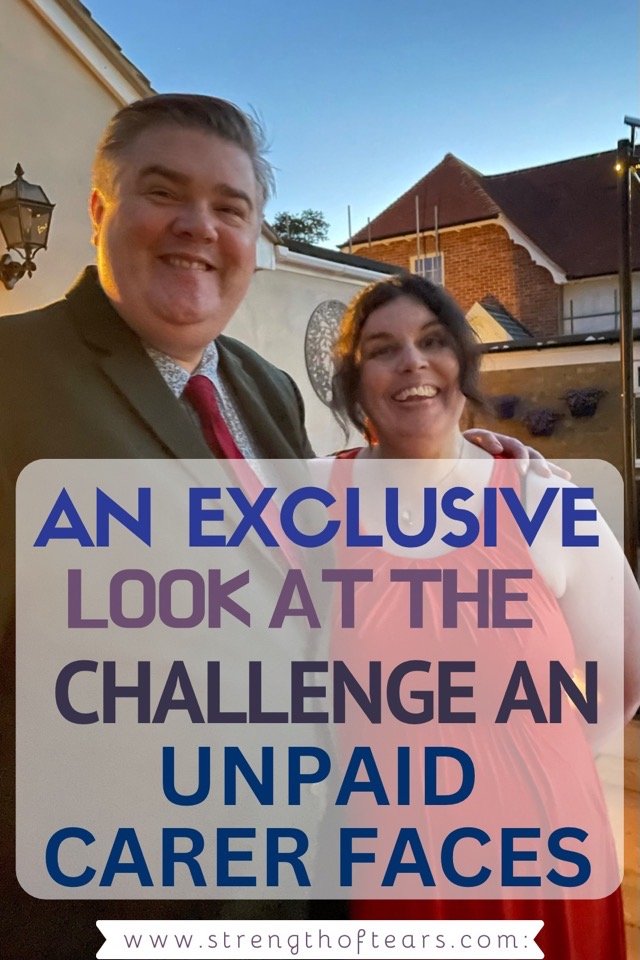
    An Exclusive Look At The Challenge An Unpaid Carer Faces

    An Exclusive Look At The Challenge An Unpaid Carer Faces

    A lavender and heart soap image with the title of the blog over it. An exclusive look at the challenge an unpaid carer faces.

    As part of this year’s Carers Rights Day on the 24th November, I have taken over my wife’s blog and am going to provide an exclusive look at life as an unpaid carer, how I manage the challenge of balancing demands on my time and energy, and what has changed as our relationship evolved to include caring for one of us with a chronic illness.

    When Laura became chronically ill in 2014, read about this here, and it eventually dawned on me that my role as Husband, Father, best friend and confidante would now be expanded to that of prime and unpaid Carer, life would become a little more complicated, especially as this would need to be balanced with being the main financial provider in the household.

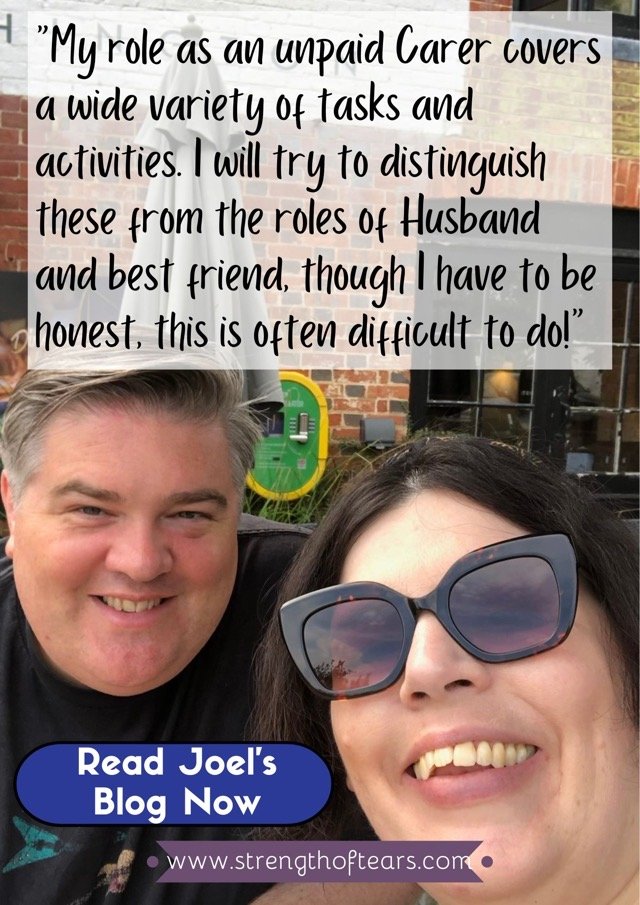
    My role as unpaid Carer covers a wide variety of tasks and activities. I will try to distinguish these from the roles of Husband and best friend, though I have to be honest, this is often difficult to do!  

    As an unpaid Carer for Laura, I need to consider her needs at all times, ensuring that her physical needs are met and that I am aware of those needs at all times of the day and night.  At a very basic level I need to ensure that Laura has taken her medicines, eaten regularly, has access to clean water and is washed and clothed every day.  

    I need to ensure Laura can access essential services, such as getting to a toilet safely. I need to be there to help if she falls or passes out, getting her to safety or calling the emergency services if needed. It sounds very mechanical listing it out but this is how I can distinguish my role as unpaid Carer from that of husband. As the person I love the most and have chosen to spend my life with, she is much more than just this list of needs.

    In addition, as Laura’s condition impacts her cognitive function, I handle the more complex elements of her care and help her organise and attend medical appointments and understand the risks and potential benefits of procedures to help her make decisions right for her. 

    As well as helping Laura with the more complex elements of her care, I also help her in her role as equal partner running the household, making sure she can perform her role in key decisions around finances, household maintenance, childcare and the general running of a family. 

    I also help her to understand what is happening when, and what decisions need to be taken.  As an unpaid Carer, I need to be mindful of Laura’s needs, breaking complex information down into easily understood pieces so she can make decisions that affect her and the family.

    What A Normal Day Looks Like For Me

    After my alarm I ensure the youngest is on track for college, then I’ll have a quick shower, and while brushing my teeth will check my work emails and calendar for the day.  

    My first caring concern is making sure Laura has her breakfast ready to take her medicines, so will prepare her favourite toast and marmalade, a cool cup of tea (too hot could burn her, or worse still melt a medicine capsule and release some horrid flavours!) and take her breakfast upstairs, to where I often have to wake her. 

    I’ll turn on her light, place everything she needs within reach, making sure the handle of the tea cup is where she can’t knock it over. I will then ensure she has her medicines, checking that she takes them, and has enough water for the morning.  

    Only then will I move onto my needs, getting dressed and ready for my day. Once she puts on her lifeline device, and has taken her medicines, I know she’s safe to be left as her medicines mean she often sleeps most of the morning.

    We are really lucky and have a paid Carer who attends daily around lunchtime. Read about how Sam fits into our team here. On the days when she is on holiday, or at weekends, I will give Laura a cup of tea close to lunchtime, and put out her clothes for the day, and prepare her some lunch.

    On the (thankfully) rare occasions that her condition and pain levels flare up, I will need to help Laura to shower, wash her hair, help to dry and dress her, as well as help with her access to her variety of beauty and medicinal creams.

    Throughout the day I am on hand to pick things up that Laura may have dropped, handle some cat related incident, or answer any questions when Laura is struggling to understand something.  As her Carer I’m there to listen to her emotional needs, be patient when her pain affects her mood, offer a listening ear, and a giggle or a hug. These are essential parts of caring for Laura and their impact cannot be underestimated.

    Let’s not forget our sons.  Eldest is now at University but youngest may well need picking up from college early, or late, depending on his schedule. I’m also there if he needs my taxi service for any appointments or social engagements.

    Later I will prepare dinner, again something our paid Carer will have prepared or put in the slow cooker. and sort any washing, cleaning or household task that needs doing.  I normally give the youngest the job of delivering Laura her dinner, which saves a trip up the stairs.

    Once we are all tidied away after dinner, I like to enjoy an evening watching TV with Laura, where we will chat about our day, catch up on anything important and just enjoy each other’s company.  Before bed-time, I ensure Laura’s bed is re-made, she has her nightwear to change into, has taken all of her medicines for the day and has enough water to drink. I make sure she has a small packet of biscuits to combat nausea if it comes on in the night, and that she has her ‘ice hat’ which she normally falls asleep with, as it helps manage her pain.

    As Laura can at times be prone to passing out, I tend to sleep lightly, always being alert to when she uses the toilet or if she needs me in the night. Should anything happen, as her unpaid Carer I can help to get her to safety.

    Did I mention work?  I am very fortunate to be able to work from home, and have access to work communications on my mobile phone too.  As a Systems Director I manage a small team of data managers across Europe. It is complicated work, and draws upon my many years of experience.

    I have many virtual meetings with people around the world, periods of intense concentration, people to support and invariably problems to solve.  I tend to think of my working hours as 8am – 4pm but this flexes as needed around my caring responsibilities. I am always able to catch up in the evenings in that window between dinner and time with Laura.

    My main responsibilities as an unpaid Carer are that Laura’s needs are first known and understood. These change daily and it is so important to never assume I know what these needs are, but rather ask Laura to ensure her voice is heard and that her needs are shaping her care.  

    Then it is to ensure these needs are met, from medication, food, water, cleaning, clothing to medical appointments, setting up household systems and communication with the family and support network.  As Laura’s prime Carer, being with her and on hand to help 24 hours a day I take it as my responsibility to consider how I can help to meet these needs wherever she requires my help.

    How Caring For Laura Impacts My Well-being

    Having hopefully painted a picture of how my day-to-day life works, and my main caring responsibilities for Laura and our family, I also have to think about myself! The transition to accepting the role of unpaid Carer for my wife has not been an easy one. Realising that our family life would be changed forever affected me tremendously.

    I am quite a positive person, always looking for solutions and trying to find the best in every situation, but seeing the person I love the most in so much pain, and their life going from a busy Mum and teacher, to being bed-bound and struggling with the simplest of things really hit hard, especially as I felt so helpless.  

    Being Laura’s unpaid Carer has been hard emotionally, and my mental wellbeing has suffered. Adjusting to a new life, while grieving for a lifestyle lost, with all the freedoms and spontaneity being compromised by putting someone else’s needs first took me through a difficult emotional journey. 

    Finding my role as Carer, however, gave me a focus and activity that I could understand in helping to work with something I couldn’t find a solution for. Realising that being an unpaid Carer was my way of helping, coupled with being the Father/Husband/Earner helped me to reconcile with a problem that I couldn’t solve, and adjust slowly to our new life.

    I have always been able to find positive perspectives, and I am thankful that I still have my wife, that we are together and we’re able to support each other through this transition in roles, and most importantly provide strong role models for our sons.

    My physical well-being has suffered a little over the years, especially as my work is quite sedentary, being office based, and with the onset of years and being overweight I am definitely not as fit as I used to be. When your partner is mainly bed bound, inevitably time spent together is also a sedentary experience too. So a renewed focus on fitness and activity is my latest goal in trying to address my well-being needs, and make sure I am fit enough for me, and importantly for Laura too!

    How My Caring Role Affects My Work-life

    My work-life as an unpaid Carer has had to become ever more flexible.  As I say, I am very lucky in that I can work from home, and flex my time around work and caring responsibilities.

    The main thing though is that I have to be a strong and confident advocate for my needs. What I mean by that is that I am always clear and confident in communicating how I will be the best employee while also balancing the needs of those who rely on me.

    I am always open and honest about my role as an unpaid Carer and when I am available and not. My employers don’t suffer from compromising with the time I need to dedicate to my caring duties. In fact, my employers benefit from my perspective, approach to prioritising, time management and ability to focus wholly on any problem or solution I work on.

    Being aware of ‘reasonable adjustment’ rights in the workplace is also something that has served me well. When I became a Father I worked compressed hours to care for my sons one day a week, which was so valuable to us as a young family, with high childcare costs. It ensured we felt we had balanced time and it became a real cornerstone for what I wanted in my work life, especially as an unpaid Carer for Laura.

    In the past I have been able to represent the needs of parents and Carers in setting up and running an award-winning colleague network, something I will forever be immensely proud of, as well as being a role model for other leaders with caring responsibilities.

    What My Support Network Is Like As An Unpaid Carer

    My support network is small but strong. I have relied at times on my father-in-law for contingency taxi or childcare. My emotional support though is what gets me through the tough times, with close friends to lean on, and becoming close to Laura’s paid Carer. 

    I am also part of a band, and music is such an escape valve for the hurricane of emotions I balance in my life. The release it gives me to just have to think about the next note in a song, comfortable in the knowledge that Laura is happy and safe, means that the emotional elastic band gets a chance to flex and not snap.

    Most importantly though, is the network of support we have created as a family.  We focus on the positives of life, balancing against the challenges and we remain solution focused. It feels like we work well as a team, each supporting the other. As a whole our family life is happy and fulfilled, which nourishes us all as we each achieve our ambitions.

    If I Could Have One Wish Granted To Make Caring Easier…

    I would wish that all of my wife’s illnesses and conditions would be alleviated and we could go back to a time where chronic illness was not a part of our family life. This is not wholly true, though, as we have all learnt so much about who we are as individuals, what great teamwork looks and feels like, and how we all can work together to succeed in the face of adversity.

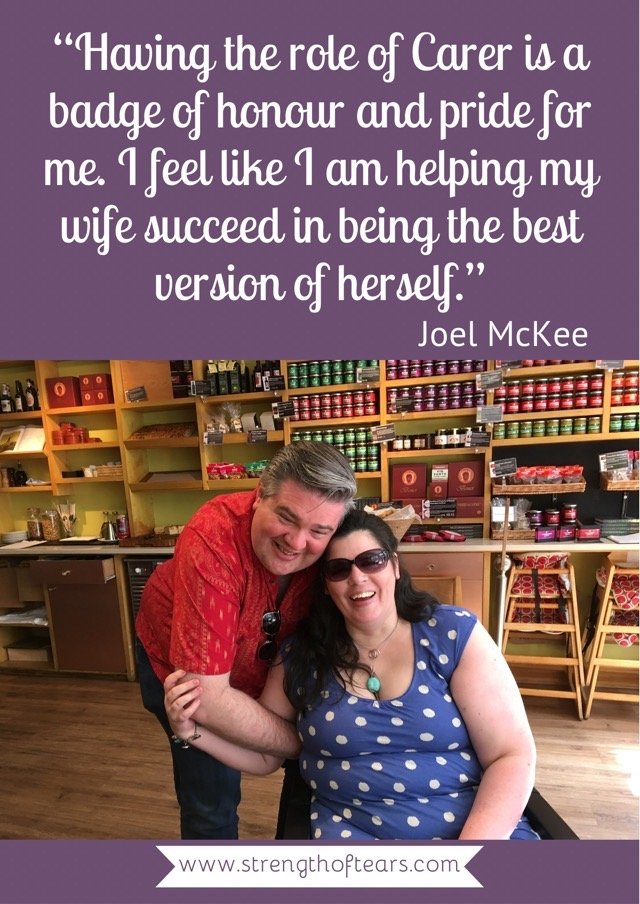
    Having the role of Carer is a badge of honour and pride for me.  I feel like I am helping my wife succeed in being the best version of herself, and that my role as her unpaid Carer also helps me be the most resilient, empathetic, understanding and above all most caring version of myself that I can be.

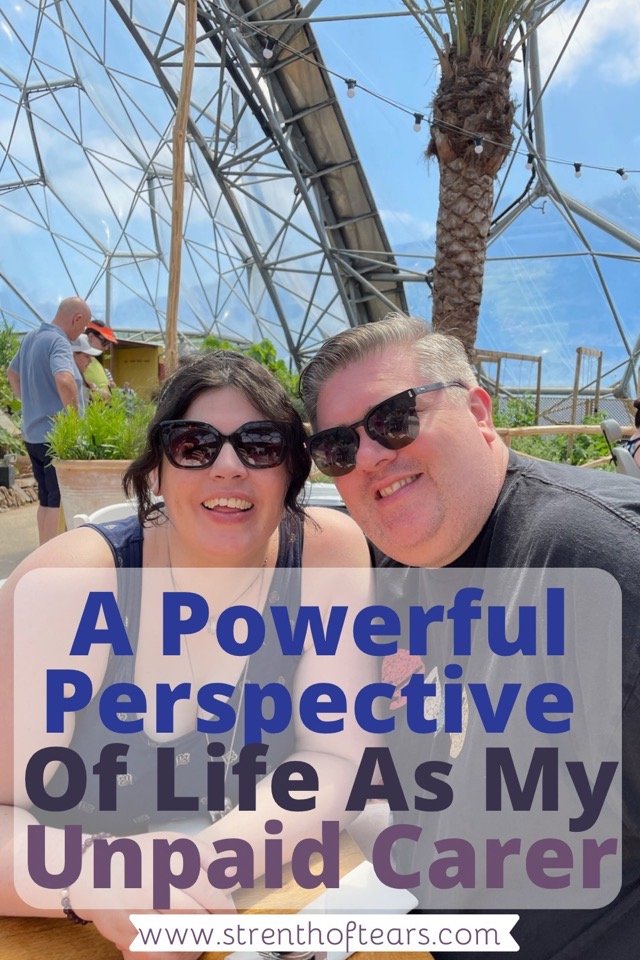
    A Powerful Perspective Of Life As My Unpaid Carer

    It’s been wonderful, challenging and entertaining to read my husband’s perspective about his role as my Carer, especially being one who isn’t paid at all. It’s eye-watering to read about the list of jobs he has to do in the morning before work, whilst I lay sleeping or waking casually to the smell of toast. I can honestly say I’ve never thought of it that way and this will hopefully help me to be more patient and show my gratitude even more than I do already. 

    My lack of awareness comes from both being in bed, isolated from the real world for the majority of the time, and due to my brain condition. My brain reacts to the extra pressure in my skull, the same way it would if I had a brain tumour so I can struggle to see things from others perspectives unless they tell me repeatedly how they feel. 

    I also think it’s partly down to the husband-wife relationship. Come on, you know we don’t always listen to what our spouse says! However, Joel hasn’t told me about a lot of what he’s written here about how he felt transitioning into the role of an unpaid Carer. 

    I was very unwell at the time and could not hold a conversation or retain any information. Thankfully my brain surgeries have allowed this aspect to right itself quite well so I can now take this on. I just wish I’d asked Joel how he felt more, I knew he was struggling of course, but I didn’t know how much. 

    I too am able to look at the positives of our situation now and know we’ve been able to teach our sons so much more about how to flex and grow to cope with challenging situations. As a team, we’re unstoppable and that includes my paid Carer Sam, who often acts as my proxy in the physical activities of running a household. I couldn’t be prouder of Joel and the boys for how they cope with ALL the challenges they face as unpaid Carers. 

    I would like to thank Joel for taking the time to write this piece, guided by my questions that came from this year’s Carers Rights Day campaign. Each year Carers Rights Day helps carers in the community know their rights and find out how to get the support they’re entitled to. The West Sussex Carers Support page says: 

    “This year our campaign will focus on the ways in which Caring Costs unpaid carers. From carers’ well-being and ability to access health services, to costs to their finances and employment options, to the current cost of living crisis which is being felt even more acutely by carers throughout the UK.”

    National Carer support organisations that help unpaid Carers know their rights are:

    Carers UK

    Carers Trust

    The UK government also have support materials for Carers

    There is also information on the new Carers Leave Bill that was passed in October 2022 here. We’ve found our local carers organisation very helpful, and highly recommend searching what is going on in your local area this Carers Rights Day. 

    Finally I want to publicly share how grateful I am to Joel for everything he does for me, everything he sacrifices and mostly everything he does to put a smile on my face, and my son’s face every single bloody day. He is an incredible human being and I love him even more after reading this article. In our 25 years together he has only ever shown me kindness and generosity and this seeps through the words on the page here. I am so honoured that you’ve shown another side of me to those who take time to read this blog. I appreciate you taking even more of your precious time to write about your perspective as my unpaid Carer

    #block-3522ab9dfd053e687057 .sqs-gallery-block-grid .sqs-gallery-design-grid { margin-right: -20px; }
    #block-3522ab9dfd053e687057 .sqs-gallery-block-grid .sqs-gallery-design-grid-slide .margin-wrapper { margin-right: 20px; margin-bottom: 20px; }

    ✋ Hey there! I hope you’re feeling stronger now. If so, sharing the love will help me help other mums with chronic invisible illnesses.⬆  Hit one of those sharing buttons or save these images to Pinterest and I will do a bed-bound happy dance – there’s an image for you!

  • 6 Reasons To Be Grateful For My Amazing PA This Good Care Month

    6 Reasons To Be Grateful For My Amazing PA This Good Care Month

    How Will The New Guidelines Affect People With Chronic Pain In The UK

    The NICE guidelines for managing chronic pain in the UK only recommend CBT; ACT; antidepressants; Acupuncture and exercise programmes. Pain relief is no longer recommended, although changes should be managed with the patient. Instead we’re losing quality of life because the guidelines for the chronic pain treatment UK is unclear. 

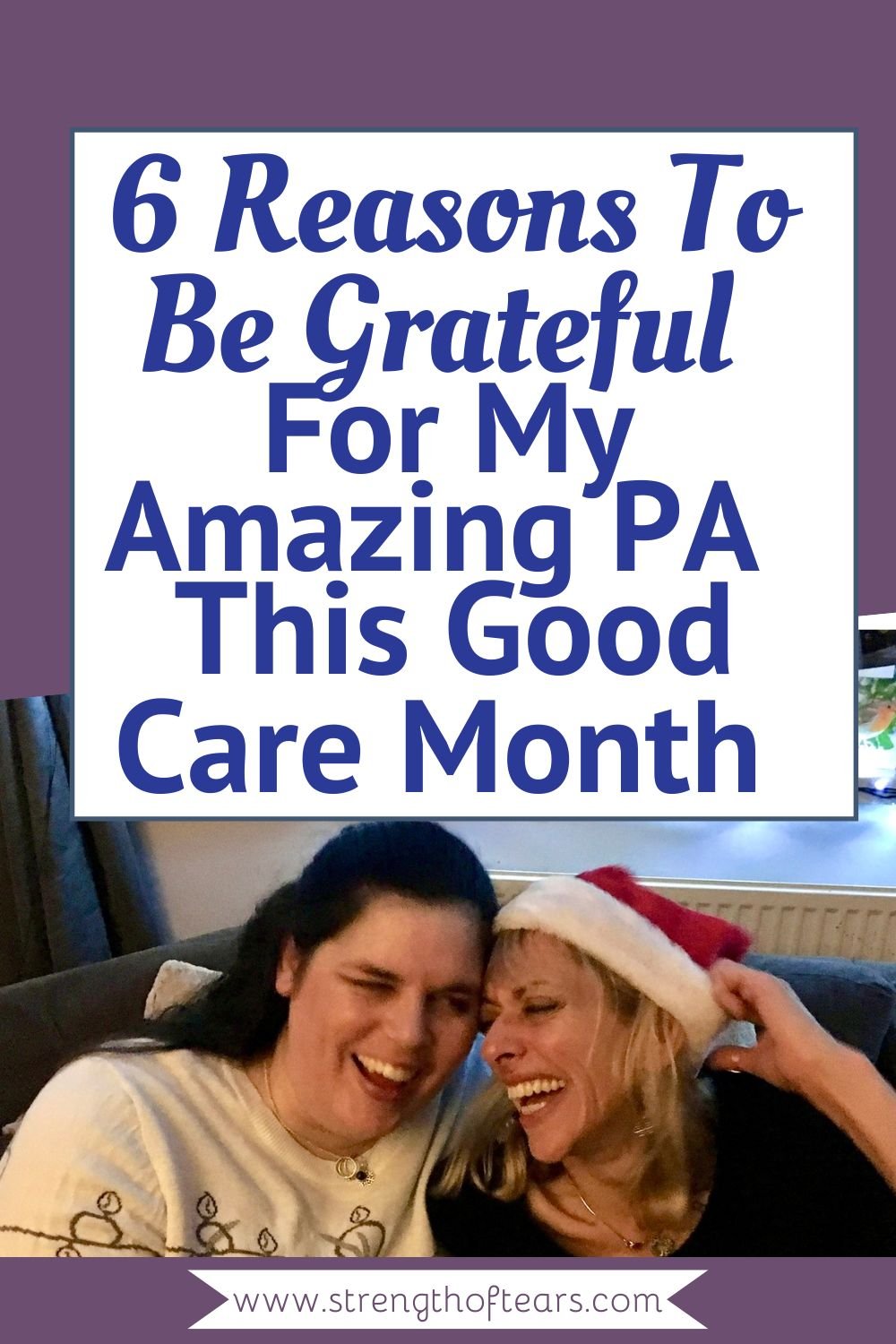
    6 Reasons To Be Grateful For My Amazing PA This Good Care Month

    Every July Hertfordshire Care Providers Association (HCPA) raises awareness of the caring profession in the UK, hoping to boost recruitment, thank those in social care and break some of the stigma attached to caring. Read about it here.

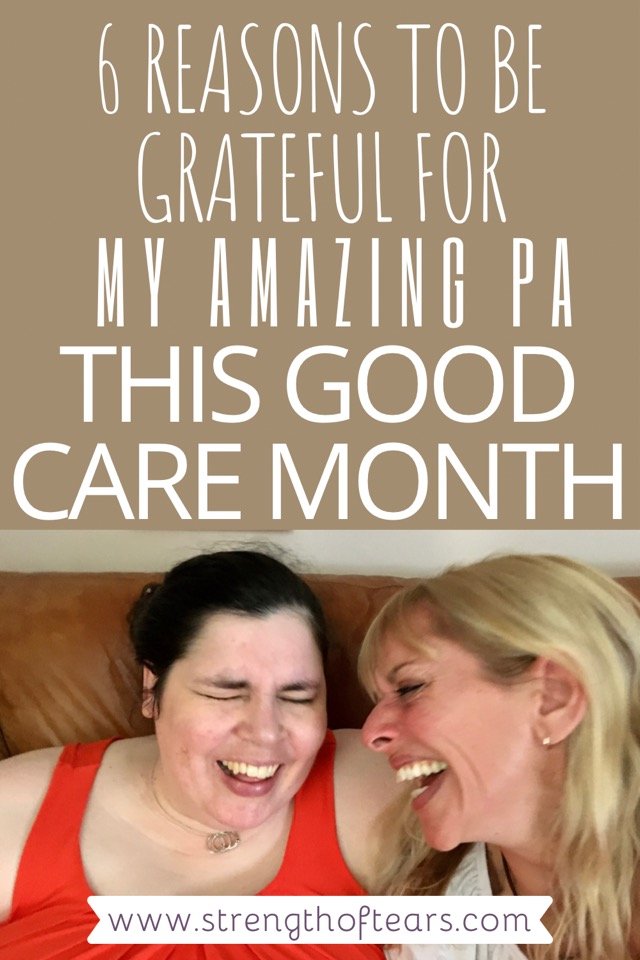
    During Good Care Month those who are cared for and caregivers share their stories. I want to illuminate Carer’s skills and qualities when working with vulnerable adults. Having a government assisted Carer has changed my family’s lives as it gives everyone a break from the harsh reality of life with a disabling condition.

    Unpaid care is becoming more common with the pressures on the care sector but social care can change lives for everyone, including unpaid carers already in place. This blog is a look at being an unpaid Carer from the perspective of a friend who cares for her husband.

    This blog is mainly a thank you letter to my amazing personal assistant (PA) or Carer, Sam. I share the reasons I’m grateful for her in my examples of the 6 Carer’s skills I see as a gift. My aim is for other Mums to feel that having a Carer isn’t giving in or not an option for them. 

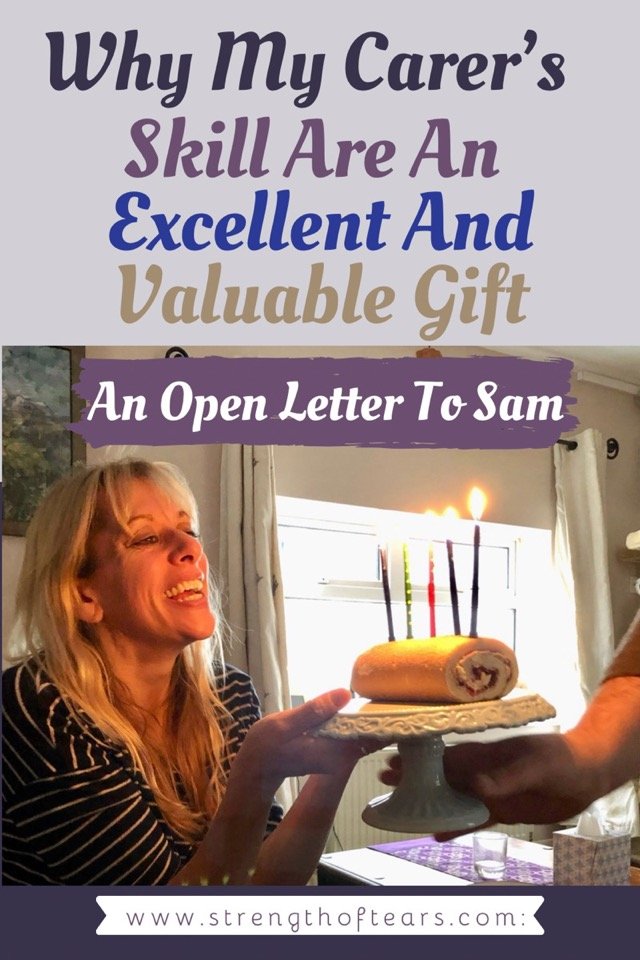
    This open letter will surprise Sam but I want to shout from the rooftops about how she supports me and my family and recognise how grateful I am personally for how she employs her expertise to give me the support and friendship I need as a younger adult client. 

    The guidelines are written for patient care by a committee of healthcare professionals. I’ll break down the guidelines and share how they affect patient’s quality of life from the perspective of medical professionals and those in the chronic illness community

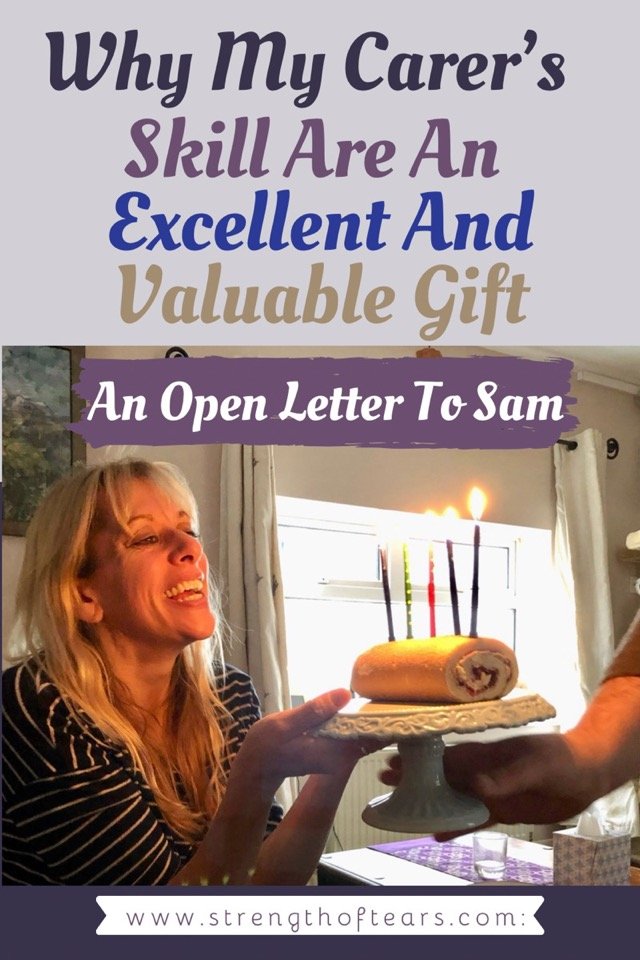
    Why My Carer’s Skills Are An Excellent And Valuable Gift

    The latest NICE guidelines recommend group based exercise, psychological therapies (ACT or CBT), antidepressants and acupuncture. Pain killers are no longer recommended for managing chronic primary pain.

    Dear Sam,

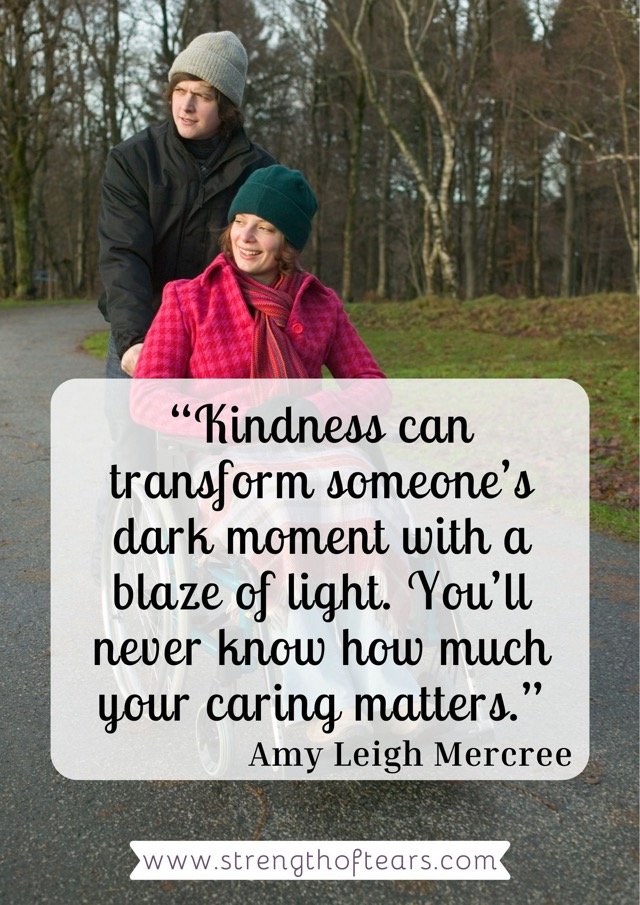
    As the author Amy Leigh Mercree once said “Kindness can transform someone’s dark moment with a blaze of light. You’ll never know how much your caring matters.” These words are so important for you, and every dedicated caregiver, to hear from the person you care for. 

    How often do the people you aid get the chance to tell you exactly how valuable you are to them? I’ve needed care for nearly 8 years, due to a rare and debilitating brain disease. I feel privileged to have the support of a professional Carer and feel incredibly lucky that that person, for the last 5 years, has been you. 

    I learnt of Good Care Month this year. As I feel strongly about shining a light on what Carers do, so when I saw a suggestion to write a thank you note to your Carer, I knew I had to write an open letter. This is my way of raising awareness of Carers skills and worth.

    Accepting you need help as a 37 year old Mum with chronic illness is tough. There are many stigmas around social care and caregivers but those linked to care for those in the 18-64 age group, stand out to me. There’s an even stronger barrier for me as a Disabled Mum. 

    One reason for this is that younger adults are more likely to receive local authority assistance for learning disabilities and mental health issues than physical disabilities. This means that most Carers who’ve worked with me haven’t really known how to engage with me or my family or I’d feel them pitying me. 

    I love that you’ve never done this Sam, you simply treat me like an equal. What you do for me and my family means so much more than I can write. However, some things are just between me and you, and can’t be shared in an open letter. So let’s just say that what I love most about you is our shared filthy sense of humour! 

    This Good Care Month, I’m sharing just 6 of the reasons that make me value you as my Carer:

    1. Building Strong Relationships

      As parents, it means so much that you’ve taken the time to build strong connections with us all, especially our boys. We all feel we can be ourselves and the boys don’t feel like there’s a stranger in their home and safe space. Feeling we can be ourselves is a gift. 

      You’ve thrown yourself into being a part of the team, realising that this is our way of having some control. We take pride in working together and as we prioritise listening to each other and solving problems together, you prioritise this too. Sam, you’re part of our family because, honestly, you’re as much of a weirdo as we are. 

      For others caring for adults under 65, please take the time to look at the family as a whole. One of the most valuable Carer’s skills is to build good relationships. If you’re coming into the family’s space make sure everyone feels comfortable when you’re there. 

    2. Helping With The Little Things

      By taking care of my needs you help me stay organised so I manage to stay on top of things. The small things you do for me matter, such as, getting my clothes out, ensuring I have enough water and helping me get dressed. This allows me to save my energy to use elsewhere. 

      You making lunch for me is the difference between me being able to write or needing rest on my better days. I can be Mum AND focus on my goals when I have energy, which is why this matters. I can’t imagine trying to keep everything straight without your help, although your clumsiness is an add-on I’m not sure I asked for – teehee! 

      Some skills are just a part of the job but this Good Care Month is the perfect time to recognise just how crucial doing the little things are for those of us with chronic illnesses and disabilities. Creating a routine is pivotal so that we don’t have to ask you, which takes energy itself. 

    3. Having Emotional Support

      Sam, you’re a huge support during tough times, whether I’m feeling low, having a pain flare or just need someone to talk to, I know you’re there for me. You’re switched on to how I am when you walk into the room; a rare gift that only those closest to me have. Being aware of this calms me as much as your excellent cuddles do. 

      We’re so lucky to have found the right fit with you, it hasn’t always been this easy. Knowing you’ll make sure I’m taking care of myself takes some of the pressure off of Joel. This just makes me value you more and so you’ve become like a sister to me. 

      Being emotionally supportive is one of the most vital Carer’s skills. As a sick and Disabled Mum, there’s always something to worry about and being ill is exhausting. Being aware that communication with a Carer will be easy helps every family member’s mental health.  

    4. Lending A Hand

      You’re always willing to get stuck in Sam, be it normal jobs around the house or the odd jobs that come up. Being mindful of this helps me take care of myself. I love sending a recipe and being sure you’ll prepare or cook dinner as my proxy, giving Joel one less job.

      However, it’s even more important to notice the things you do for us if Joel has a meeting or is away on business, like cleaning up after the cats, picking the boys up from school or taking me to appointments. Of all these Carer’s skills, this has the biggest impact on family life. 

      In Good Care Month it’s important to appreciate the smaller things as these often just happen. If someone has become part of the family, there’s often an open offer to grab essentials or check in when off duty. As long as boundaries aren’t crossed then this is a real gift. 

    5. Creating More Life Balance

      Sam, you help me create more balance in my life, both emotionally and getting the balance between work, goals and rest. For me, being certain that my family has less chores helps me feel less of a burden, supporting my mental health. It also gives my family more balance. 

      You help me keep a positive attitude by making me laugh, even if it’s you being daft. Yes this hurts when I’m in pain but it’s what I need. If you’re having a bad day you still make sure we giggle at something. Having you around is a tonic and we appreciate you more than you know. 

      A Carer’s skills at bringing more opportunities for life balance into the life of the person they’re caring for is incredible and important to mention in this Good Care Month blog. This is an unexpected outcome for the whole family, especially when things are tough.

    6. Supporting Goals and Dreams

    Sam, you take on board my goals and future vision when I’m speaking to you about unrelated things or even thinking out loud. You know my goals, such as building up my social life, and you’ve seen the frustration I feel when my illness holds me back. 

    This year my social worker helped me get back to swimming again regularly but I can only do that with your support. I look forward to our swim sessions, being confident you’ll keep me safe. To top this all off, you’re an amazing friend and I can’t imagine going through life without you by my side.

    This isn’t something you naturally consider when hiring a PA, but it makes such a difference to my life that I have to mention it. Be it having help with planning a rare trip out, holiday packing or talk of things you dream of or aspire to, a Carer can help you achieve. 

    Beyond these 6 Carer’s skills I want to thank you for the extra gifts you bring that are personal to us, Sam. You listen when I wander down my Wonderland rabbit hole chats, aware that my brain has to get from a to b, even if there’s a long detour. I appreciate your patience. 

    Thank you for driving more slowly when I’m in your car. I know you find it hard because you let me know every 10 minutes of the journey! I’m grateful for the effort you go to (and the panic that follows) when I’m nauseous and ask for something to eat you’ve never made.


    I wish I’d known 8 years ago what I know now. I felt I wasn’t sick enough for support and didn’t know what skills or qualities I needed to look for. Some Carers haven’t been right for us but thankfully you fitted in immediately and it’s a gift that we found you when we did. 

    My aim for this letter is to show how, when these 6 Carer’s skills are used well, a Carer is an invaluable resource. I hope PAs and Carers consider how to develop these in their own practice and that we break the stigma that Carers are only for ‘old people’.

    This Good Care Month, I also want to acknowledge those who could receive care. Your concerns about having a PA as a Mum are valid but know that excellent Carers are out there for us. I now see care as an opportunity to have someone help me be a more engaged Mum. 

    Looking back at the quote I shared at the beginning of this letter, I hope you can all see that having the right support matters. Sam, your kindness does allow light into some of my darkest moments and this means more to me and my family than you’ll ever truly comprehend. 

    I want you to know you’re a vital and valuable member of our team. Thank you Sam for all you do for me, Joel and the boys.

    Yours, Laura 💜💜

    In Conclusion…

    Good Care Month aims to raise the profile of the social care sector and promote career opportunities. It’s important because it’s a chance to give Carers the recognition they deserve. It takes a special kind of person to work in social care with these Carer’s skills. 

    The core qualities a Carer needs are passion, courage, dedication and compassion. One day it could be you needing care or caring for a loved one, so I want to make it clear that caring isn’t just wiping arses. However you may find yourself in strange situations, so a sense of humour is the quality I rank highest.

    Unpaid Carers are another topic but I want to mention it as the 2 hours of support I get each weekday from the local authority gives respite for Joel and my sons. They can take a break without any guilt and Joel feels assured as he knows I’m not alone and isolated. 

    My children have become young Carers and it’s fascinating to hear their perspective, which you can read in this blog I wrote recently. They’ve developed compassion and empathy, which are skills for life, and the way we communicate as a family has evolved greatly.As a family we’re found that the root of good care is in building strong relationships and working as a team so everything else falls into place. I hope I’ve shown that having a paid PA or Carer as a young Mum is worth it, if you take time to find the right fit for you. 

    There are so many Carer’s skills that I haven’t highlighted here but at the core is the ability to listen as everything is built around the needs of that person in their specific situation. Sometimes a Carer is faced with difficult decisions and this deserves our praise and respect. What is key is that the Carer works with us on our goals and priorities.

    If you would like some support with planning your wellbeing priorities please download my free guide to setting achievable goals that you can work on with your Carer.

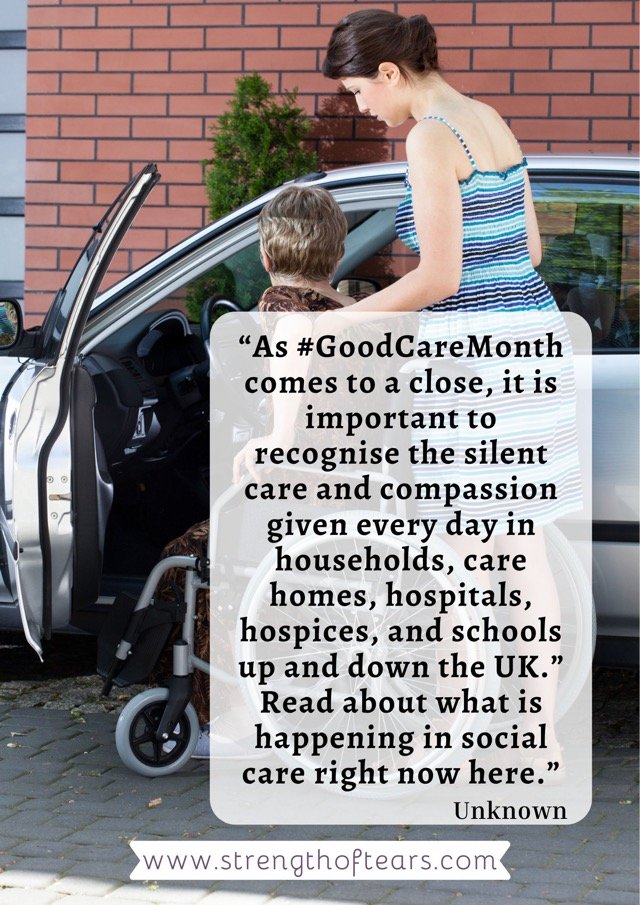
    “As #GoodCareMonth comes to a close, it is important to recognise the silent care and compassion given every day in households, care homes, hospitals, hospices, and schools up and down the UK.” Read about what is happening in social care right now here.

    — Unknown (see link below)

    Read more in this Good Care Month Article by UK Community Foundations

    Carers deserve our appreciation everyday, however, I’m glad to have had this opportunity to show my appreciation for Sam. Learn more about Good Care Month here and find out how to get involved yourselves, I hope these photos show how much joy can be found by having a Carer.

    Best Wishes to you all,

    Laura 💜

    #block-6d92efcbcbe02759f200 .sqs-gallery-block-grid .sqs-gallery-design-grid { margin-right: -20px; }
    #block-6d92efcbcbe02759f200 .sqs-gallery-block-grid .sqs-gallery-design-grid-slide .margin-wrapper { margin-right: 20px; margin-bottom: 20px; }

    ✋ Hey there! I hope you’re feeling stronger now. If so, sharing the love will help me help other mums with chronic invisible illnesses.⬆️  Hit one of those sharing buttons or save these images to Pinterest and I will do a bed-bound happy dance – there’s an image for you!

    P.S. if you’re a Carer or looking to hire a paid Carer or are given the opportunity to do so by your social worker, find out what you need to know with these resources: 

    Are You A Carer – www.england.nhs.uk/commissioning/comm-carers/carers

    Carer’s UK – www.carersuk.org

    Carers Trust – carers.org

    Support for Carers – www.nhs.uk/conditions/social-care-and-support-guide/support-and-benefits-for-carers

    Young Carers – carers.org/about-caring/about-young-carers

    Carers Mental Health www.northtynesideCarers.org.uk/looking-after-your-wellbeing-as-a-Carer

  • What Are Young Carers Capable Of With Focused Vision For The Future

    What Are Young Carers Capable Of With Focused Vision For The Future

    What Are Young Carers Capable Of With Focused Vision For The Future

    Families living with chronic illness come across many obstacles so many develop new ways of working when a parent or sibling becomes ill. The complexity of each family’s situation is unique and wide-ranging but I believe every family can have joyful moments. 

    Our family has worked as a team since I became disabled and mostly bed-bound due to chronic illness. We’ve found the importance of effective communication crucial to our family going beyond just coping. We chose to be open and honest and prioritising our well-being, so we can thrive individually and as a family. Read this blog about putting your well-being first.

    In late 2014, after my condition had worsened significantly, I was allocated a social worker who wanted me to have paid care to take the pressure off of Joel. My boys remember key moments from that time and can now articulate their feelings and reflect on their journey. 

    By seeing life through the eyes of young carers, we can recognise  the obstacles to an enriched future and empathise with them. By listening to young carers’ views we can adapt negative situations into positive experiences and focus on their individual needs. 

    What Are Young Carers?

    Young carers are under 18 or young adults who help to look after a relative with a disability, illness and mental health or addiction problems. Caring can be an isolating experience but with the right support there’s a much better chance of future success. 

    Young carers are likely to achieve at a level significantly lower than the expected levels for their stage in schooling. Covid19 has urgently increased the support Young carers need to narrow the gap. 

    It’s thought that as many as one in five young people are young carers (University of Nottingham 2018), with the COVID-19 pandemic many more children are taking on care responsibilities.

    What are Young carers tasks? 

    • Practical tasks, like cooking, cleaning or shopping.

    • Physical care, such as aiding someone with poor mobility.

    • Emotional support, including talking to someone in a panic.

    • Personal care, such as helping someone get dressed.

    • Organisation, including sorting mail and bills.

    • Managing collecting prescriptions or sorting medication.

    • Communication support, such as making phone calls.

    • Home help including looking after siblings.

    Young carers may be giving care from a young age and don’t know any difference, but others may become carers overnight. Children usually want to help loved ones but it’s your choice how much and the type of care you give, or whether you should be a carer at all.

    Young carers shouldn’t be caring for someone in the same way as an adult carer, some jobs just aren’t appropriate. Read this blog about caring, an interview with an adult carer. It’s vital that they don’t spend too much time as this can affect their achievement at school and keep them from normal childhood activities, isolating them.

    What Rights Are There For Young Carers UK

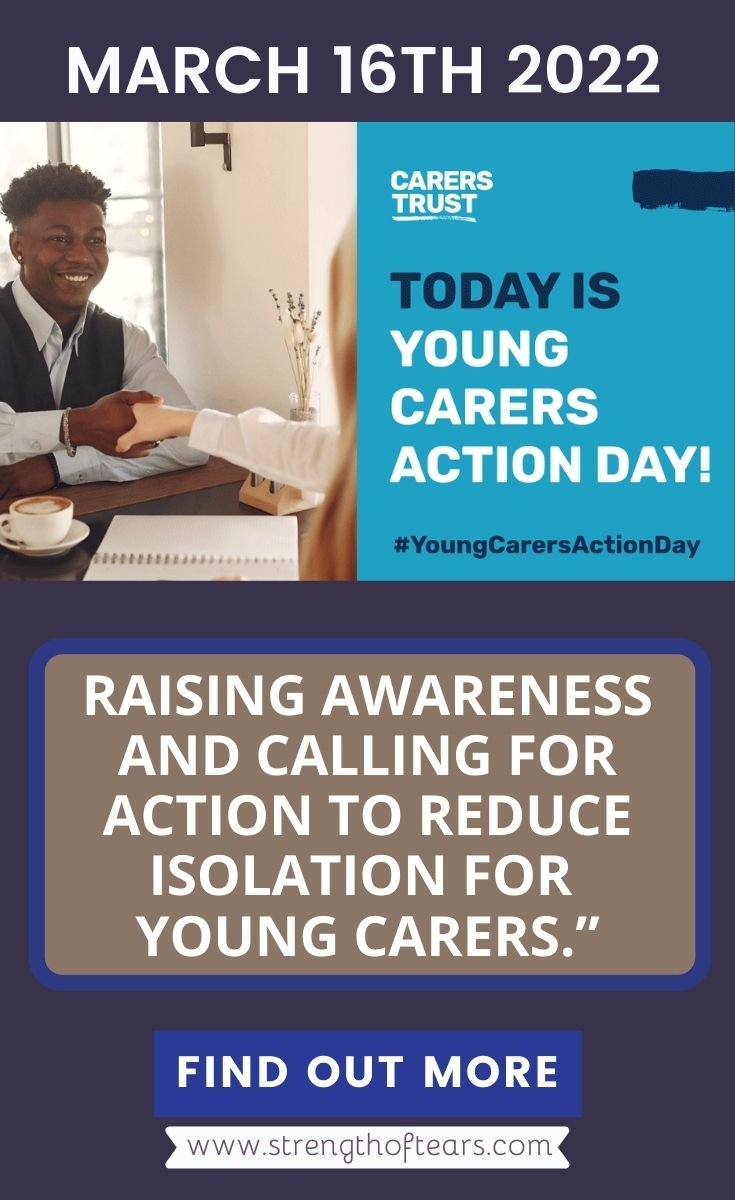
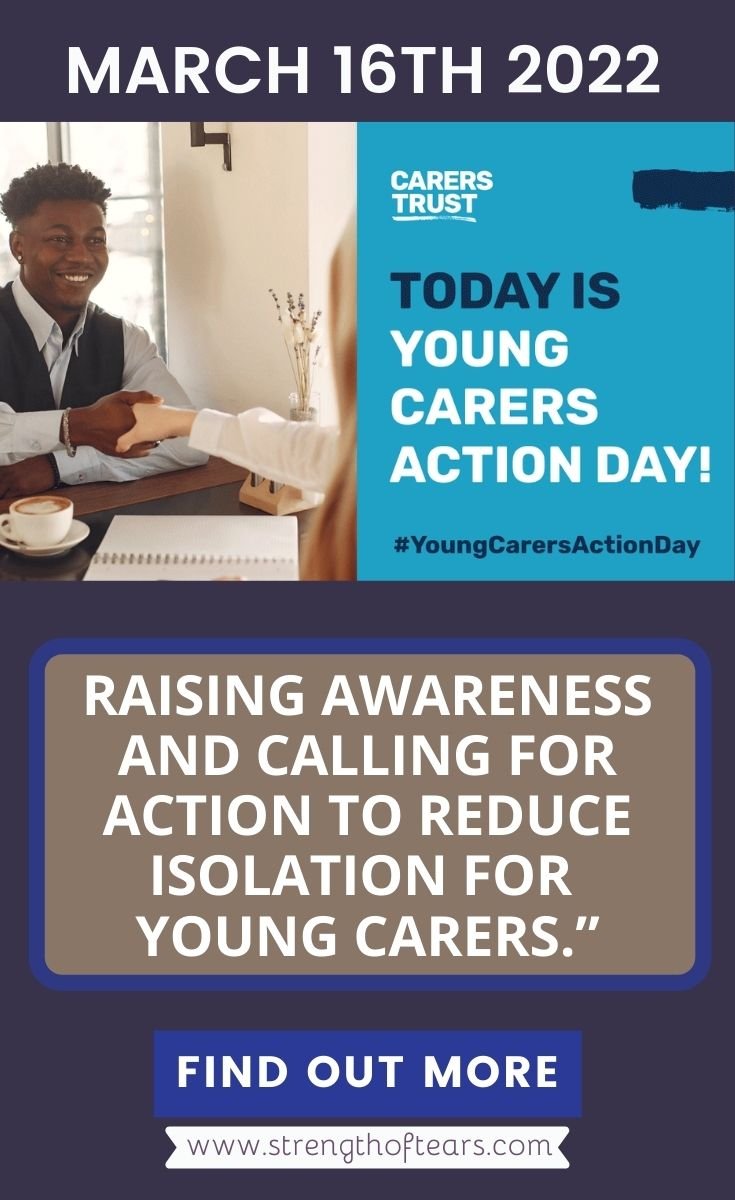
    Young Carers Action Day raises awareness and calls for action to increase support for young people with caring responsibilities. The recent 2022 action day put focus is on reducing isolation for young and young adult carers including access to short breaks from home and school. Read more here.

    Young Carers UK

    When good practice is in place, Young carers have access to essential freedom from caring responsibilities. This supports what are Young carers education, training, work and leisure opportunities for a better future.

    These actions are important support for young carers uk. When good practice is in place, Young carers have access to essential freedom from caring responsibilities. This supports what are Young carers education, training, work and leisure opportunities for a better future.

    “A young carer’s assessment can determine whether it’s appropriate for you to care for someone else, and takes into account whether you want to be a carer.”

    — NHS

    A whole family approach is expected practice and considers how care needs impact all affected, carer or not. It places an emphasis on the young carer’s views and identifies the required support so they know they can reach their full potential and thrive!

    What Support Is Available For Young Carers 

    Young carers need to know someone is looking out for them so there are vital services that help young people balance caring with being a child or young adult. This can be achieved by providing regular breaks and fun activities with other carers and even as a family. 

    These organisations help young carers acknowledge their parent’s or other family member’s illness or condition and are supported so that they can achieve like their peers. They are taught how to cope, build positive relationships, avoid isolation and plan for their future.

    One enterprise is the ME-WE project aiming to strengthen 15-17 year old Carers’ resilience as they become adults. The goal is to impact positively on their mental health and well-being and ease the negative influence of social and environmental factors in their lives. 

    What are Young carers, able to access as support is wide ranging. The support offers information, advice and practical support. I’ve listed links to many of these at the end of this blog, including pages that have invaluable information themselves.

    My Children’s Views On Caring For Me

    What are young carers’ views? This has become a crucial question in working with the whole family in UK formal assessments. I think all families caring for someone should ask this question every day. Being open and honest builds family connection and empathy

    Children have a unique insight into what happens in their family but it’s hard to know when and how to talk about so much around chronic illnesses. Hearing my boys talk about crisis times when they were so young has shown me how seeing my pain must have affected them. 

    Do I wish they hadn’t had to go on this journey, watching their mum in debilitating pain, crying as I crawled up the stairs each night? Do I wish they could have had opportunities I couldn’t offer? Not anymore. I now see the positive results from their experiences as carers.

    What are young carers able to benefit from that their peers can’t? 

    As a family we’ve developed trust and transparency in every facet of our lives. The boys will be able to cope with any obstacles they’ll face and I’m always here to help them focus on the vision for their futures. 

    The strategies we’ve developed over time have been shaped by family therapy and my research. But it takes time and effort to get to a point where your child can speak frankly about their experiences.

    18 Surprising Truths:

    What Are Young Carers Life Opportunities

    Young Carer’s Opportunities

    Families living with chronic illness come across many obstacles so develop new ways of working when a parent or sibling becomes ill. The complexity of each family’s situation is unique but I believe every family can have joyful moments.

    My Eldest son turned 18 last month, so here are 18 truths based on anecdotal evidence in the chronic illness community and my boys’ views as young carers. The quotes are from my interview with my boys and are cited here as E for Eldest and Y for Youngest. 

    Young Carers are statistically likely to achieve less academically and we know they’re affected emotionally. However families of any size or make-up, that use caregiver support and focus on joyful moments, can guide young carers towards a future full of opportunities. 

    Negative acts consume our innermost thoughts and are a part of life, especially when living with pain, illness or disability. If we zoom in on the positives we create balance but we learn from both. Making time to reflect on both and set goals is one of our regular family activities.

    As a parent being cared for, teaching my boys core life skills has been rewarding for me. I believe that effective communication and problem solving are key for a young person’s vision for the future. These truths show the positive impact caring can have.

    1. Teamwork – share chores to support the main adult carer and recognise your contribution. Develop a culture of gratitude and appreciation, where everyone feels listened to. 

    2. Connections – Prioritise and enjoy time with loved ones, making the most of every day. Create feel-good moments, joy and laughter for the whole family. 

    3. Communication – establish honesty so you can really listen to and work with each other to avoid conflict. “To talk about it openly to both Mum and Dad has helped my wellbeing.” (E)

    4. Empathy – Encourage others by being caring, supportive,  kind and compassionate. Be aware of other’s pain and know you can help them.

    5. Resilience – the ability to recover from setbacks and cope with difficult conditions. Young carers become very capable at coping with experiences that most young people wouldn’t. 

    6. Boundaries – know your limits and what behaviour you will accept. Know when to ask for help and what your roles are. “I was confident in Daddy’s ability to look after Mummy.” (Y)

    7. Self awareness – know the skills you have and the tools you need to help you cope in any situation. Know what triggers negative responses so you can switch to positive self-talk.

    8. Make connections – recognise behaviour patterns to pre-empt when to step in and offer more support. Be aware of accessibility by assessing adaptations, how noisy it is etc.

    9. Self control – regulate your emotions and choose what you want to happen and where to be. Learn to stand up for yourself and how to remain calm when angry or anxious etc. 

    10. Problem solving – make informed decisions alone or together and see it’s okay to make mistakes. Identify how to help someone who’s scared, confused, worried or panicking. 

    11. Perspective – appreciate others by learning not to judge and think how someone feels in any situation. “We’re more aware of other’s differences so we don’t discriminate.” (Y)

    12. Socialising- make time to see friends so you have a break from caring. Know who to talk to about different situations. 

    13. Self esteem – know your worth, be proud of your  achievements and recognise your value. “I’m proud of how I deal with Mummy’s illness and how mature I am.” (Y)

    14. Critical thinking – learn new skills and how to use them. Think creatively about your response to new or difficult situations. 

    15. Focus – know routines, feel secure and be willing to learn new things to understand the world around you. Learn to handle distractions so you can thrive.

    16. Adaptability – learn to cope when plans change “We go and see Mummy if she’s too ill to come downstairs.” (Y)

    17. Self reflection – think about the choices you made and how you responded to situations – “I have to be more responsible. I can’t just sit back, I have to help.” (E)

    18. Goal setting – use self reflection to recognise the skills you want to develop. Consider the steps you need to take, the help you’ll need and have a timeframe. Choose a reward, it doesn’t have to cost anything e.g. do something new.

    In conclusion…

    All children caring for a relative face restricted lives and most will suffer academically. The difficulties one family faces will be vastly different to another, so I’ve used anecdotes to represent this. I’m mostly sharing my boys’ personal narrative and our family’s truth.

    We’ve always included the boy’s feelings and viewpoints in decisions we’ve made about living with chronic illness. As they’ve grown older they’ve expressed themselves clearly due to the strategies we put in place. Working as a team, we remove isolation as we follow our path.

    As a family we continue to reflect and adapt as we reinforce positives and learn from the negatives. It’s vital for anyone living with someone who needs care, to listen to each other and be patient. In time you’ll see your children grow around the idea of pain, illness or disability. 

    “The two things you absolutely need to be a carer are compassion and a sense of humour.”

    — Sam – My paid carer

    All children want to help so if you live with someone needing care they will support them. It’s essential that they feel appreciated and part of the team. Your family deserves the positive impact of caring so utilise the help that’s out there for your child’s life opportunities, like these.

    Visit Carers Trust here.

    Visit Carers UK here.

    Visit Action For Children here.

    Visit Young Minds here.

    And please help raise awareness on Young Carers Action Day on the 16th March 2022. See the resources here.

    Because mental and emotional well-being are crucial to a young carers success, I want to share this free wellness planner I’ve created to help you prioritise for better life balance too. This is also a taster of the the Thrive Not Just Survive Journal, for mums with invisible illnesses coming out soon. Simply click on this link to sign up for your free copy. Please feel free to ask me any questions you have about using this resource.


    ✋ Hey there! I hope you’re feeling stronger now. If so, sharing the love will help me help other mums with chronic invisible illnesses.⬇  Hit one of those sharing buttons or save these images to Pinterest and I will do a bed-bound happy dance – there’s an image for you!
    #block-yui_3_17_2_1_1647359695975_63406 .sqs-gallery-block-grid .sqs-gallery-design-grid { margin-right: -20px; }
    #block-yui_3_17_2_1_1647359695975_63406 .sqs-gallery-block-grid .sqs-gallery-design-grid-slide .margin-wrapper { margin-right: 20px; margin-bottom: 20px; }