Tag: communication skills

  • The Best Emotional Development Examples Of Self Care Activities

    The Best Emotional Development Examples Of Self Care Activities

    The Best Emotional Development Examples Of Self Care Activities

    View fullsize

    The Best Emotional Development Examples Of Self Care ActivitiesEmotional development grows rapidly in under fives, laying the foundation for all learning, but the pandemic has affected this. We need to change how we help them to learn self care skil…

    The pandemic has affected everyone, especially young children, so we need to adapt how we teach them so we address the highlighted issues and the gaps and growth in their learning. Emotional development examples of this may be a lack of self care, managing big feelings or increased anxiety about being left at school or nursery. 

    Emotional and social development grows rapidly in under fives, laying the foundation for all learning. During my 15+ years of teaching, I specialised in the Early Years Foundation Stage (EYFS), working closely with parents to understand each child’s emotional needs. Read the new framework for what a child learns in the EYFS here.

    This blog shares advice and activities I’ve used to help children make progress: 

    • The Skills And Support Needed For Emotional Development

    • 21 Quality Self Care For Emotional Development Examples

    • How Self Care Sets The Foundation For Success

    “Personal, Social and Emotional Development (PSED) is recognised as one of the building blocks of success in life. It supports children’s development by helping them to interact effectively and develop positive attitudes to themselves and others.”

    — Ann Langston

    View fullsize

    This post contains affiliate links for sensory play resources

    The Skills And Support Needed For Emotional Development

    The skills we use to meet an infant or child’s emotional needs are usually instinctive. Having regular interaction with them helps us respond more effectively to their needs. Creating fun experiences to support a child’s emotional growth makes them feel heard. For example, using puppets to teach nervous children how to make friends. 

    These are common emotional development examples of a child needing us: 

    • Crying or screaming 

    • Turning away from someone or something

    • Not making attachments

    • Throwing tantrums

    • Unhealthy relationships 

    • Not cooperating or taking turns 

    • Disruptive behaviour    

    • Distress or anxiety 

    • Unresponsiveness 

    • Fighting with peers or siblings

    Our response to these behaviours needs to be calm, so we need clear boundaries as all kids will test us and we’ll overreact at times. To improve poor behaviour we need to be a consistent example to our children. I’ve developed skills I share with my boys, in managing my emotions better by making time to reflect and write about how I feel. 

    This has reminded me that we can foster children’s self-worth by helping them explore their similarities and differences to others. Choosing books and media representing ability, gender, sexuality, race etc. will help but we also need to talk about this. Read this blog on talking about race with children for ideas.
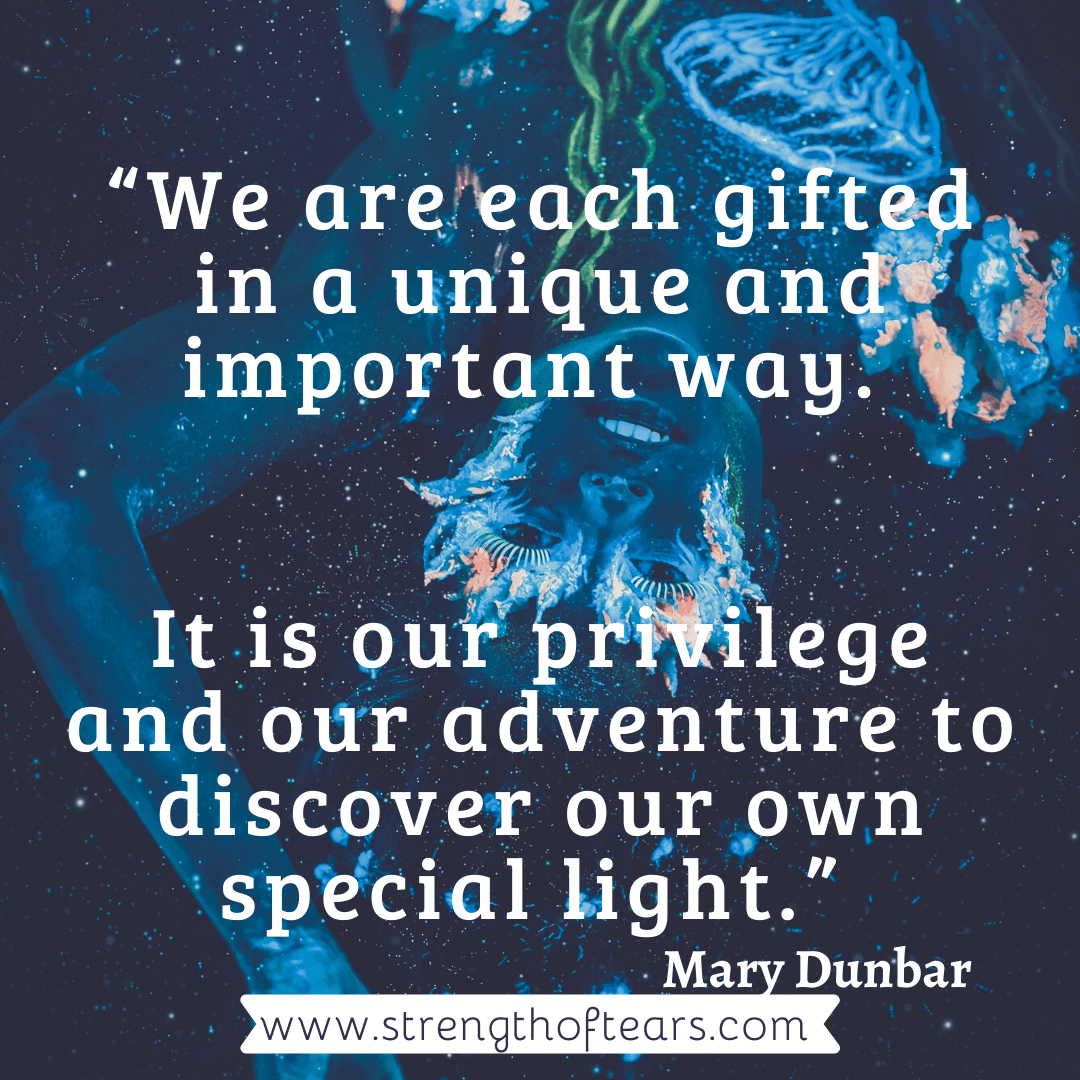
    “We are each gifted in a unique and important way. It is our privilege and our adventure to discover our own special light.” By Mary Dunbar

    Emotional well-being underpins every area of development. These are areas of the official guidance for PSED for development from birth to 5 years, that affect self care. I’m basing the 21 self care activities around these emotional development examples, of skills to teach your children for future success. 

    Self Regulation 

    1. Managing Feelings – Understand and name feelings and learn to manage emotions by keeping calm. There’s a new focus on 3+ self-regulating. Read more about this here.

    2. Self Control – Give children strategies for staying calm when frustrated. 

    3. Focused Attention – Communicate responses to stress effectively. 

    Managing Self

    1. Self Confidence – Support older children with self reflection so they build resilience to      persevere with challenges. Help children set and achieve a simple goal. 

    2. Self care – Build a sense of self as a valued individual that’s different to others. Develop healthy habits for looking after bodies and minds.

    Building Relationships

    1. Socialising – Build confidence in a variety of quality experiences which build a sense of     belonging to a family or community.

    2. Healthy attachments – Develop attachments in warm, supportive relationships. Manage feeling sad when a parent leaves. This is in response to social change due to Covid19.

    3. Understanding Needs – Show sensitivity to their own and others’ needs. Help children develop a positive attitude to people’s differences. 

    21 Quality Self Care For Emotional Development Examples.JPG

    21 Quality Self Care For Emotional Development Examples

    Bubble baths aside, teaching children self care skills helps them thrive despite any challenges. Self care is anything you do to help yourself feel better or keep yourself feeling good. Dancing, sports, laughing, having pets etc. help your child build trust and learn how to manage strong feelings. I write about other activities that help, here.

    Quality self care routines have played a crucial role in how my family has coped with my illnesses, evident in the resilience my boys have. These emotional development examples of self care for your child, are based on the EYFS skills.

    1. Adult Attachments

    Healthy Attachments make your child feel safe. Building bonds begin with a baby and parent, extending to family and others they spend time with. To build attachments we need to be engaged, sensitive, positive and affectionate to them. Hold them, have chats (gurgles count) and let them know you see them  by responding to their needs.

    2. Frequent Feelings

    With older infants and beyond, we can name a child’s feelings for them to help them understand what is happening to their body. You might say ‘you’re sad because… you hurt yourself or your sister wouldn’t play’. Start with simple games such as, making feelings cards or emoji charts so they can identify and name feelings themselves. 

    3. Constant Calm

    A child’s world is full of stimulation but being calm helps them relax, focus and learn. Strategies to help your child stay calm include; giving them time to eat, think and reflect; tuning in to their needs; using distractions; minimising noise and having time and space to explore. Sign up to my newsletter at the end of this page for my free guide for staying calm.

    4. Routines Rule

    Routines give children certainty and a feeling of control. But changes will happen so we need to teach skills for learning how to cope with unplanned changes.

    • Visual timetables have images showing what’s happening that day, in order. They’re used in childcare settings but you can print this one for the home.

    • Organisation helps them follow rules, such as having coat hooks by the door. 

    • Make changes to this one thing at a time, being guided by the child. 

    • Use a timer or song to help them adjust to routine changes. 

    • Explain changes to them e.g. “After Nursery we’re_,then we are going to_”


    5. Invite Independence 

    Children naturally become independent but as they’re offered more variety, tantrums are more common. We can manage this by encouraging and teaching them how to ask for help respectfully. We can support independence by planning for extra time, asking instead of demanding and offering choices. All kids can learn to do chores if we make them fun e.g. sing whilst making lunch, hop to bed, splash in the bath.

    6. Backing My Behaviour 

    Children aged 4-5 develop self awareness of their behaviour before recognising how their actions can affect others. Support their knowledge by: 

    • Remaining calm and soothing them when upset.

    • Naming and explaining their feelings.

    • Treating your child the way you want them to behave.

    • Pointing out people’s expressions, in life and media, to help them read others.

    • Showing how their words and actions affect someone else. 


    7. Boundary Basics

    All children test limits, the earlier the better for strong foundations. Children need clear boundaries so, a) show them who’s boss; b) have healthy routines that set clear guidelines; c) have zero tolerance rules for safety; d) be consistent.

    8. Clear Communication

    Babies cry to communicate a need, it’s our first non-verbal connection. This develops into expressions and gestures, which we all use more than verbal language. To extend early skills, narrate everything you do and feel and give your child time to talk. Repeat their babble and early words back to them, without correcting it. 

    Widen their vocabulary and interactions by reading and listening to them and use new words as you act out pretend situations with them. Let your child develop at their own pace but seek professional advice if you’re concerned about speech delay. 

    9. Support Self-esteem

    How we feel about ourselves affects our actions, so self-esteem supports mental health and sets us up for success. Helping children feel good about themselves starts by building a strong connection with your child so they trust you to meet their needs.

    Let them initiate play with some creative input, to encourage them to try new activities and experiences. This boosts their confidence to do more without us a safety net.

    10 Personal Practices

    One of the most recognisable self care practices is managing our hygiene and personal needs. Children need to choose the resources they need whilst knowing they can ask for help. We need to encourage and reward their independence.

    • Toddlers will want to dress themselves so allow extra time in your daily routine and make their clothes accessible so they feel in control. 

    • Toilet training should be child led but we can prepare kids by being open and explaining using it. Have everything you need ready for when they are. 

    • Teach them how and when to wash hands, reinforcing this when you wash. 

    • Encourage your child to get what they need to keep clean e.g. a toothbrush. Describe what you do, so they’re ready to slowly take on their personal care.

    Create a varied diet with healthy choices so your child sees how you act around food as a role model. To avoid tantrums, introduce one new flavour at a time and give ‘a or b choices. Get older kids involved in preparing meals.

    11. Healthy Habits

    Self care routines help kids tune into their mind and body. Establishing the activities below early, allows the brain to build habits which prevent mental health problems. 

    • Have regular dental and eye care checks.

    • Eat the rainbow of fruit and vegetables each day, including balanced meals.

    • Balance screen time with playing with your child at home and going outside.

    • Do mindful exercise, such as yoga or karate, to keep them focused on now.

    • Do visualisations together using a calming story, such as being on an island.

    • Do a sport or hobby that requires their commitment.

    • Practice daily quiet time where you connect with nature, exercise or books.

    • Let your child choose activities even if it differs from how you see self care. 

    12. Respectful Relationships

    Having positive relationships helps us develop respect and trust for others. A baby bonds with us through skin to skin contact, creating a foundation of trust and  good communication. When we let young children know we’re thinking of them, it helps to reassure them. Children who have this will feel safer and more secure, equipping them for strong relationships in the future.

    13. Effective Empathy

    Empathy is learnt through experience, from around the age of 4 years old. We teach children to understand others’ feelings by imagining what someone is feeling by playing out ‘real life’ situations. Children with a foundational awareness are more likely to make kind choices, such as looking after a child who’s sad. Empathy is key for learning tolerance and sensitivity towards people who are different to them. 

    14. Benefits Of Belonging

    Children who feel they belong benefit by establishing self confidence and believing in themselves. We teach them the key skills of cooperative play, working with others and having consistent routines. Their relationships with family and friends shapes their self identity, with possible influences from cultural or religious groups. 

    During childhood they are likely to become part of the community through toddler groups, schools and community groups such as Brownies, Football or Music groups. Fostering a child’s sense of belonging allows them to thrive because they feel safe.

    15. Visibly Valued 

    Children need to know that we value everything they are, not what they do. We can help them stand tall by recognising their good points, listening to them and spending one on one time with them. We need to show them we’re there through good and bad by not comparing them to others or overly criticising them. Their self worth depends on knowing they are loved and valued so show them you support their choices. 

    16. Celebrate Differences

    As children reach school age they become more aware of differences in their peer group. Children naturally explore similarities and differences so we can guide their understanding and ensure they know it’s okay to ask questions. Encourage them to learn about race, ability, gender, neurodiversity etc. Learning together and having open dialogue about bias and prejudice as they grow, gives kids the tools to show up. 

    17. Manage My Feelings

    Young children often struggle to manage big feelings, which can lead to meltdowns. Children who understand their emotions have a more successful life. Help them by:

    • Talking about and naming feelings when calm, rather than hiding this.

    • Showing them it’s normal to have different feelings – talk about how you feel.

    • Validating their feelings, however small, to teach them it’s normal to feel that.

    • Encouraging them to express how we feel by helping to put this into words.

    • Seeing what triggers them, so you can help them manage their response.

    • Identifying big feelings to help avoid tantrums; feeling sad or scared is okay. 

    • Letting them see how you manage emotions in a socially acceptable way.

    • Separating emotions from behaviour; its what they do that has consequences. 

    18. Self-Regulation Recipe

    Children build upon managing feelings by learning to self regulate (read about this here). Teach children how to act effectively on their emotions with these skills:

    • Help deal with big emotions by using distractions, adjustments and choices.

    • Explore a range of calm down strategies so your child has different options. 

    • Regularly practice emotional responses to see what works best for them.

    • Provide a safe environment for them to express themselves.

    • Play games that foster control, such as turn taking, to practice self-regulation.

    • Recognise that sometimes we have to let go of control and learn to wait.

    • Plan which tools help them cope and build on this for each new trigger.

    *Remember it takes a lifetime to learn this skill set, so foster emotional development. 

    19. Plain Perseverance

    Waiting isn’t something that comes easy as it takes a lot of willpower. However, the delayed gratification we get is one of the best rewards we can earn. Teaching kids how to persevere with a challenge helps us cope with pressure later in life. Show your child that you put the effort in when something is hard and don’t give up when you fail. Support your child in what they choose to get better at, reminding them how they’ve improved so they see that the effort is worthwhile if they want to succeed. 

    20. Goal Setting

    Setting goals is essential for lifelong learning, but we often expect too much of ourselves. So we need to be a good example to our children, showing them that failure is a healthy part of success. Children need to explore what’s important to them in a safe space, such as creating art or learning spellings, to build self confidence. They need to choose their own simple goals with our support. We can show them how to break a goal into achievable steps and use simple rewards as motivation.

    “Watch your kids. They already have goals. Allow them to unfold and encourage them… What would be a long term goal for them that’s fun as well as challenging?” 

    — Eve Menezes Cunningham

    21. Regular Reflection

    Self reflection is vital for meeting our goals and improving ourselves. True self care takes work and children need to use regular reflection to do this. Show them how by:

    • Celebrating who they are, not what they do.

    • Playing with them to see what they’ve been doing and thinking.

    • Making time and space for self reflection or mindfulness.

    • Mirroring them in play to develop their self-awareness – what do they do/say?

    • Teaching them ways to revisit their day such as drawing, writing or journaling.

    • Making time as a family each day, to talk about our wins and what to improve.

    • Talking through what helped and what interfered with them meeting their goal.

    The skills in the emotional development examples above are arranged so you build the foundations of emotional intelligence, layering up skills before developing the more complex strategies. They can all be adapted to meet your family’s needs.  

    How Self Care Sets The Foundation For Success 

    Our children watch and listen to everything we do as soon as soon as they’re born and develop as they grow. It’s important to reflect on how well you connect with your feelings, build strong relationships, achieve your goals and understand what matters most to you. Reflect on these areas of your self care to spot any gaps. 

    • You understand and healthily manage your emotions

    • You recognise your emotions and how they affect you

    • You communicate clearly and manage conflict

    • You develop and maintain good relationships

    • You have supportive and trusting relationships

    • You know your strengths and weaknesses

    Our children have been affected emotionally and behaviourally by the pandemic. Observing our children helps us assess them and identify gaps and strengths in their emotional development. Ask yourself these questions to understand how your child is coping in a post covid restriction world, so you can support and stretch them.

    • Are you aware of any difficulties they have with attachment, socialising, self-care or general well-being?

    • Do they enjoy playing with others? 

    • Do they engage in varied play and social experiences?

    • Do you know when to help them and when to encourage independence?

    • Do they listen to and cooperate with other children and adults?

    • Do they recognise when they need time to calm down? 

    Strong foundations in emotional intelligence is crucial for us to achieve in life. We can motivate and inspire our children to build up skills in all the emotional development examples mentioned in this blog, so they grow into well-rounded and healthy adults.

    If you have any concerns about your own or your child’s mental health or you’re worried about a developmental delay with your child, please consult a doctor or mental health professional. Click here to understand our mental health needs. 

    Stay Safe

    Laura 💜

    P.S. Download your free home learning resources guide here. These are also great for homework or just to catch up on areas you think they need support with, whilst you play with them.


    ✋ Hey there! I hope you’re feeling stronger now. If so, sharing the love will help me help other mums with chronic invisible illnesses.⬇ Hit one of those sharing buttons or save the images to Pinterest and I will do a bed-bound happy dance – there’s an image for you! 
    #block-7132edc5ea3b4294a9c0 .sqs-gallery-block-grid .sqs-gallery-design-grid { margin-right: -20px; }
    #block-7132edc5ea3b4294a9c0 .sqs-gallery-block-grid .sqs-gallery-design-grid-slide .margin-wrapper { margin-right: 20px; margin-bottom: 20px; }

  • It’s Here: Genuine Support For Strong Instagram Mums

    It’s Here: Genuine Support For Strong Instagram Mums

    It’s Here: Genuine Support For Strong Instagram Mums

    It's Here: Genuine Support For Strong Instagram MumsI’ve been pondering over the group idea for months. I'm not a fan of Facebook and I’m definitely not a fan of a Facebook group. I settled on having an Instagram group but wouldn’t have enough energ…

    So, I’ve been procrastinating all year about whether to start a support group for mums. Should it just be for mums with chronic illness or mental health problems? Should it be a group for mums with teenagers like me or mums with young children, as that’s where my expertise lies? Do I even want to have a group? 

    You see, I’m a member of a business growth membership and we’ve been told that having a group helps to build super fans; that having a Facebook group is a fantastic way to grow our business. The thing is, I’m not a fan of Facebook and I’m definitely not a fan of the idea of running a Facebook group. 

    I’ve had some awful experiences in Facebook groups and, as this weird year of 2020 has transpired, I’ve spent less and less time on the platform. I can’t cope with the moaning that occurs in lots of these groups. I don’t ever want to run a moany group, it’s just not me. I’d also need lots of help to run a Facebook group; another issue. 

    So I started thinking about all the Instagram Mums following me and knew that if I was going to start something, I needed to think outside the box. Instagram seemed a good place to start. So whilst November seemed to rush in and a second lock down in England slapped us in the face, I’d found a way to offer genuine support.

    This blog is part of the November Link Up kindly hosted by Sheryl Chan of A Chronic Voice. Please check out the other great posts in the link up.

    The prompts this month are: 

    • Incorporating

    • Experimenting 

    • Sanitising

    • Launching 

    • Writing

    Incorporating

    As I said, I’ve been pondering over the group idea for months. I know I wouldn’t have enough energy for running a group on my own, something my business peers don’t usually have to consider in the same way I do (I have to keep reminding myself this, due to comparisonitis). Incorporating this into my life was going to be a challenge. 

    The first challenge was finding the support I needed. I needed to find mums I could trust but I couldn’t think of any who had the time or energy to put into a traditional support group. I certainly didn’t have the energy to monitor a group on my own. Knowing this helped me realise that a traditional group really wasn’t for me! 

    I love the feel I get from the Mums who are part of the community following over @strengthoftears_mum. This mostly consists of what I call frazzled mums, a term incorporating mums who are stressed out, have chronic illnesses, anxiety or depression. Despite all this, the positive vibe and support is there when someone needs a rant or has a flare.

    I wanted to bring this energy into my group so I settled on the idea of having an Instagram group. I still needed support to help me get this idea off the ground. They helped me plan as we chatted through ideas. Incorporating self care was particularly important for us all.

    I needed a name. I didn’t want to use the term frazzled mum for this group so incorporating ‘Strong Mums’ from my mailing list name seemed ideal. I use this term as it highlights the strength we build as we face the challenges of motherhood; I want the community to empower women!

    If you’re a mum wanting support and access to my free resources sign up to my Strong Mum’s Mailing List today.

    Motherhood is the biggest gamble in the world. It is the glorious life force. It’s huge and scary-It’s an act of Infinite optimism.

    — Gilda Radner

     Experimenting 

    I knew I’d be experimenting with choosing Instagram for this, but it’s my happy place on social media so it makes sense to me. I don’t find Instagram as moany as other platforms so making this a space for mums to meet other Instagram mums seemed the right choice for me. I set about researching the idea and trying to explain my plan.

    Before starting this I wanted to create a logo, using the teardrop from my Strength Of Tears brand, experimenting with my branding colours. I shared these with my peers in my business growth membership and their comments helped me link my website branding to the group.

    Using Instagram as a platform for a group is experimenting, as this won’t work the same way as a traditional group. Making this group for the audience I already had seemed too restrictive so I’be now broadened the group to mums with kids of any age, including step-mums and carers. 

    I have to remind myself it’s fine to keep experimenting with how the group will run as it builds momentum, and how we grow as an engaged community who lift each other up. I’m excited to be creating a space for Instagram Mums to connect and empower one another.

    I’ve been in similar networking groups but I haven’t come across this. Experimenting with creating a support group in a private group chat, makes me excited by the potential it has to be a positive, inclusive and supportive space.

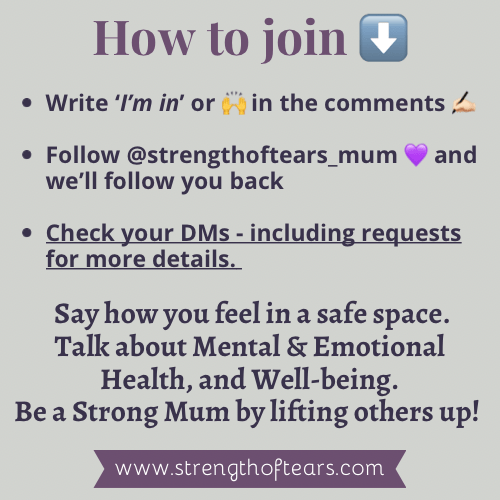
    Image on how to join the Instagram Strong Mums  Social Support Group. Details of  how to join are on this image, click the link and write 'I'm In' on the post. Other instructions say to follow the site and check your DMs for details

    Join on Instagram

    All Mums welcome, just click on the link to head to the Instagram post that gets you into the group!

    Sanitising

    In the year of constantly needing to sanitise, this group has been a welcome distraction for me and I hope this continues under lock down number 2. I hope that the group will provide a welcome distraction for my growing community. Hopefully it will become the place people turn to over the next few weeks and months. 

    Our small following is already engaged and as soon as this recent lock down was announced I had mums in the private group chat sharing their concerns and supporting each other. 

    I want this group to provide genuine connections. I see us offering regular mental health check ins as part of our self care approach, especially as we head to the end of a very tough year. I want mums to be able to find sanctuary from the world in our private group chat, whether they’re kids are tiddly or grown. 

    Mother’s give up so much, so that their children can have so much.

    — Catherine Pulsifer

    Launching 

    Launching this new community has gone better than I hoped. I decided to bite the bullet about 2 weeks ago, kind of by accident, and we already have over 60 followers. It was a quiet launch as I had no idea I was doing it until I was at a zoom networking meeting and I blurted it out, hoping people would spread the word.

    So, I had to launch the account that day! This stopped my procrastination but I had no idea how others would react. Mums are interested but I think many are so used to Facebook that using Instagram is initially confusing. I know it’s not everyone’s cup of tea, but I’m glad I just went for it. 

    For us to grow, I need the Instagram mums who’ve joined the community to tag their mum friends. As I’ve said, the group is for mums from pregnancy to flown the nest. We have mums with babies, teenagers and children who have their own kids in the DM support group. We’re there to lift each other up and the support group is ideal for this.

    Now is an important time to have a support system and as lock down continues it will be increasingly important, as mums face new challenges. I also know that not everyone reading this sees themselves as Instagram Mums but I bet you would really benefit from connecting with others, even if you think you’re not tech savvy. 

    I plan on launching our Join Us day on a Thursday and I’ll continue launching new ideas as the group grows so that there’s something for everyone. [Over time the page became too much for me to manage and so the group is now hosted on my main account.] If you want to come and explore then visit Strength Of Tears_Mum’s ‘JOIN US’ post.

    Writing

    Writing posts for the group will involve changing the way I plan my social media and my style of writing. I also need to make sure I’m not giving myself too much extra work [I did so you can now follow everything from my main account]. 

    My biggest challenge will be writing clear instructions for the mums joining in. They will be asked to share the post to their stories to help spread the word. This sounds easier than it will be; my brain doesn’t like staying focused. I expect to be re-writing it a few times to get it right. 

    With the new challenges, I’ll be writing about topics others have a say in, mainly what my audience want to discuss. This could be news or awareness events or writing more general check in posts. The DM’s additional support group will be monitored for consistent support. 

    How To Join My New Free Instagram Mums Group

    I hope that if you’re still here, you’re a mum interested in joining us. We’d love to have your support in building this community and empowering women. It’s a great place to meet other mums and if you want a support system you’re welcome to join our Strong Mums Social Support in our private DM Group.

    We’re on a mission to connect as many mums as possible. All mums are welcome, including step-mums and carers, whatever age your kids are. Women running businesses that support mums in finding solutions are welcome, however, selling is not. This group lifts mums up so they feel strong enough to face life’s challenges. 

    It’s not a follow loop or a follow to unfollow page, anyone doing this will be removed. You don’t have to follow everyone or a certain number of people on any of our posts. 

    Do you want to be part of this network of Instagram mums supporting each other? 

    #block-5dd4dc34194de8b54d8c .sqs-gallery-block-grid .sqs-gallery-design-grid { margin-right: -20px; }
    #block-5dd4dc34194de8b54d8c .sqs-gallery-block-grid .sqs-gallery-design-grid-slide .margin-wrapper { margin-right: 20px; margin-bottom: 20px; }

    I want to support mums any way I can, especially around self care, so as well as these book suggestions, I have created a free, simple step by step well-being planner to help you stop chronic illness crushing you!


    How do you like to connect online? What do you look for from a support or social group?

    Tell me in the comments.  

    Stay safe,

    L 💜

    P.S I can help you put yourself as a mama first by creating personalised well-being strategies that work around your life. My free well-being plan will help prioritise your own needs, such as building connections, making time for self care or doing the things you love. Or if you want be the first to know when my well-being journal launches sign up to my Strong Mums mailing list here

    #block-54af845da7fff36a95bd .sqs-gallery-block-grid .sqs-gallery-design-grid { margin-right: -20px; }
    #block-54af845da7fff36a95bd .sqs-gallery-block-grid .sqs-gallery-design-grid-slide .margin-wrapper { margin-right: 20px; margin-bottom: 20px; }

    ✋ Hey there! I hope you’re feeling stronger now. If so, sharing the love will help me help mums with chronic invisible illnesses ⬆ Hit one of those sharing buttons or save these images to Pinterest and I will do a bed-bound happy dance – there’s an image for you!
  • Autumnal Growth: What Happens When Old Relationships Are Burned

    Autumnal Growth: What Happens When Old Relationships Are Burned

    Autumnal Growth: What Happens When Old Relationships Are Burned

    Autumnal Growth: What Happens When Old Relationships Are BurnedThis October has hit me hard with one of those feelings so familiar: chronic illness relationships and trust. I believe we go through seasons of connections and I’ve been burned too many…

    This October has hit me hard with one of those feelings so familiar: chronic illness relationships and trust. I believe we go through seasons of connections and I’ve been burned too many times. So I’ve taken control before suffering any long term damage. 

    As Autumn brought in the harsh weather, I protected myself by starting the bonfire season early; burning the array of gorse and heather. This patchwork quilt of friends living with or without chronic illness, is in need of stimulation for regrowth. 

    These are my thoughts on the consequences of ending old relationships with friends and connections in online communities and changing up other relationships so I only have those that I need in my life.

    This is my first post joining in with the October link up hosted by Sheryl Chan of A Chronic Voice. Thank you to Sheryl for hosting this and I look forward to joining in. Please check out the other great posts in the link up.

    The prompts this month are: 

    • Producing

    • Acquiring 

    • Switching 

    • Disappointing 

    • Forming

    Producing

    This year has been hard on all relationships. Families aren’t used to spending this much time together, so time to reflect is more important than ever. Improving our weaknesses and celebrating our strengths makes us more productive. 

    Friendships are harder work, especially for those with chronic illness who have more challenges. Friendships fail in normal times because we cancel at the last minute, get unwanted advice or it’s too much work. When mine fail, they usually seem to fade.

    To me a good friend is one who produces some kind of chocolate when you see them or a great GIF online. With chronic illness in the middle, listening is key. Read this article to understand more about losing friendships when you live a chronic illness.

    This month I’m producing my first product to support mums with anxiety and chronic illness. I’ve been procrastinating over it and couldn’t work out why until hang-ups from old relationships triggered my anxiety. Read my blog about coping with anxiety here.

    Sign up to my Strong Mum’s Mailing List to get access to my free guide on grounding techniques to reduce anxiety. Check out my free resources here.

    I’d reached out for support from one online community, but the response gave me flashbacks to the hurt I’d felt in old relationships. I didn’t know I was still harbouring so much pain; a small thing became a big thing and pushed me off my intended path. 

    I didn’t know why this had agitated me so much so I spoke to my husband about it. As we discussed my thoughts, I linked it to a past experience when Joel had had to communicate for me as it blew up rapidly. He protected me and I left that group. 

    Joel’s always there for me in times when I’ve struggled to cope. He’s shown such support for what I produce, especially on the blog. He’s proof that relationships can last the change of the seasons of chronic illness, by adapting and growing together.

    Joel and Laura.JPG

    _Disclaimer this blog post contains affiliate links and any purchases made through such links will result in a small reward for me and my crafting habits. Oh and there’s some free recommendations too, Im nice like th.jpg

    Acquiring 

    The expectation of acquiring peace from how I’d been treated in the past, didn’t last long. I remembered how I’d trusted blindly and sought out a confidante. It stung as I relived how they’d discarded me and then rewritten history, with me as the bad guy. 

    The betrayal I’d felt from the breakdown of this and other old relationships is more deep rooted than I thought it was. Read this article on how to actively deal with betrayal. I told Joel and my best friend, Sam, how I felt about both situations.

    They suggested that a group wasn’t the place for me to show such vulnerability. This hit home. I knew I’d let myself trust in a one sided relationship again. This felt like the rug being pulled from under me but I knew deep down that this wasn’t the same as before. 

    I’ve lost so many people that I thought I could trust since becoming ill. I know this happens when chronic illness makes the rules but I struggle to understand it. Saying that, I have acquired a deeper understanding of my role in friendships. 

    I put so much of myself into a relationship and I always put others’ needs before my own and this is a problem. This latest incident really has shown me that I need to put my needs first. So I’m acquiring a more balanced approach to online connections.

    Switching

    Taking time to reflect on these things is the most important way to grow and make better decisions. Learning from my mistakes and successes helps me switch up what’s working and what isn’t. 

    Understanding how old relationships have affected me when they die, has shown me I need to stick to my values. I’ll always be loyal, trustworthy and brutally honest at times but I need to place more emphasis on what I need to flourish. 

    So I’m switching up how much energy I put into the communities that I’m part of. I’m doing a relationship audit to ensure that I stick to the online groups I need and I’m actually being selfish and considering what I get out of being a part of each group. 

    I’m also switching up how I spend my time interacting in these groups. I have so little energy that I need to pace myself and in the past I haven’t done this well. This is where I’ve let myself become vulnerable; offering more to others than I should have. 

    This has left me in a position of weakness as I’ve spent time helping others and ended up with a low stock of energy for myself. This leaves me with so little time to create and now this is my business, I have to plan my time so I can be productive. 

    I’m going to make sure that my time is valued by those I share it with. So I’m switching up the time I spend in groups, focusing on new connections with other chronic illness bloggers, who can help me grow, and with frazzled mums I can give a voice to. 

    There’s only one thing more precious than our time and that’s who we spend it on

    — Leo Christopher

    Disappointing 

    As we go through the seasons of chronic illness we have disappointing periods. Our brains are wired to focus on negatives, which is why we worry about the things we didn’t do instead of what we achieved. Read about my chronic illness in this blog.

    I’ve been disappointed by so many people claiming to support me since I became ill:

    • The ‘best’ friends of 10+ years who’ve abandoned me because I couldn’t go out socially. 

    • The Carers I’ve allowed into nearly every aspect of my life, who ditched me for asking them to change how they did this or that.

    • The owners of the chronic illness group who gave me a ‘safe space’ and used what they knew against me.

    The spiny thorns of these old relationships cut so deep, I had a strong emotional reaction after showing my vulnerability again. Just like Gorse used to be treated, we should only have as many relationships as we can carry, to avoid over-exploitation. 

    I felt dismissed by the lack of understanding of how my IIH affects my understanding, leaving me exposed. It’s disappointing that I didn’t protect myself better. Choosing to use a ‘safe space’ again after my previous betrayal has been a harsh reminder. 

    But I needed to see this from a new perspective. My husband reminded me the group has evolved from its original cluster. I also had a long absence this year due to my new diagnosis, so new members don’t know me. It was disappointing but not harmful.

    I have trusted friendships within this group and from others who are important to me. Having relationships with others living with chronic illness is important. We both know where support is in hard times, so I’ll focus on these to avoid future disappointment

    I was always fraught with guilt and it’s such a waste of an emotion. It keeps you out of the moments of being where you are

    — Kyra Sedgewick

    Forming

    Despite all this disappointment I’ve been reminded of how lucky I am to have formed friendships with people I trust completely. As the unhealthy friendships weeded themselves out of my life, I discovered the friends that would always be there.

    Reminding ourselves that we don’t have to accept the negatives is vital. We can rewire our brains with positive messages, such as making a point of focusing on all of our wins, forming little nuggets of gold. These are my golden moments this October! 

    This Autumn I’m headed towards my 7th year of chronic illness, in the midst of shielding during the pandemic. This year I’ve been forming even tighter bonds with my trusted circle, despite the months that have passed without contact. 

    This Autumn is the 2nd with my carer/best friend. We see each other every weekday and it’s a form of therapy for us both. After forming a support bubble with Sam we’ve developed a relationship more like sisters, which will bring comfort in the months to come, 

    It isn’t just these old relationships that I can rely on. There’s support in many guises so my new focus is on forming new natural friendships within the groups I enjoy being in. It’s important that I stay protected but I need to have that social contact. 

    Make new friends, but keep the old; Those are silver, these are gold.

    — Joseph Parry

     A Lifetime Of Pruning To Reach The Friendship’s Buds

    a lifetime of pruning to reach the friendship buds.jpg

    It seems that over a lifetime of both new and old relationships; Autumntime is when we prune back what isn’t necessary to make way for the relationships that matter. This helps them grow better in the future months until they come to fruition. 

    I have gone through so many emotions, stemming from one small incident that I blew way out of proportion. Maybe we need these little fires so we learn that we need to protect ourselves and manage our expectations. 

    Having a brain condition is a constant journey. Maybe I spend my life on an avenue of disappointments, acquisitions and productivity, forming new pathways so I can switch up as I grow. This October will allow me time to choose where I head. 

    I know how lucky I am to have Joel in my life, especially as so many don’t make it through the tough times. I believe that being open to positivity and talking about what we want to achieve, as well as what we have, only strengthens our bond. 

    As I assess my connections to replace the dead wood and celebrate my companions, I’ll be surrounded by an arrangement of characters. I want to sense the myriad scents and colours of heathers and bright yellow buds of the gorse.

    I want to laugh with friends until our bellies ache, share sarcastically witty responses and give and receive comfort when sad or angry. I want us to be equally supportive, non-judgemental, loyal and honest to the core. I want to be a good listener and have fun.  

    I want to create strong foundations with new friends and build strength in my old relationships, whilst remembering to protect myself. I desperately want to hold a conversation without wandering off the beaten track and losing my destination.

    I want to head towards this harsh winter knowing I have friends and family I can rely on and make sure I’m a dependable friend for them in return. Maybe it takes adversity to find the real beauty in the relationships we have.

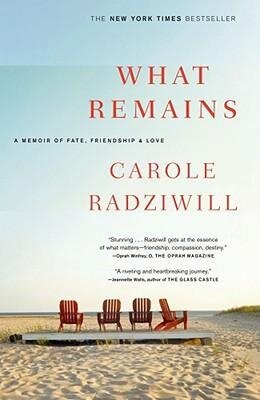
    My Recommended Reading List

    These books are what I recommend related to this topic. These show a range of relationships and I hope that they can support you in your own relationship problems or show you how to build stronger bonds in friendships or with your partner.

    #block-518d9da750ab4c42bd40 .sqs-gallery-block-grid .sqs-gallery-design-grid { margin-right: -20px; }
    #block-518d9da750ab4c42bd40 .sqs-gallery-block-grid .sqs-gallery-design-grid-slide .margin-wrapper { margin-right: 20px; margin-bottom: 20px; }
    How are your friendships? Do you need to do a friend audit? Tell me in the comments.  

    Stay safe,

    L 💜

    P.S I can help you out yourself first by creating personal wellbeing strategies using my free wellbeing plan. This will help prioritise your own needs, such as building self-esteem and making time for self care or doing the things you love. Or if you want to get on a waiting list for updates on my first ever well-being journal, please sign up to my Strong Mums mailing list here

    #block-e20598a00fa27bfedb2a .sqs-gallery-block-grid .sqs-gallery-design-grid { margin-right: -20px; }
    #block-e20598a00fa27bfedb2a .sqs-gallery-block-grid .sqs-gallery-design-grid-slide .margin-wrapper { margin-right: 20px; margin-bottom: 20px; }

    ✋ Hey there! I hope you’re feeling stronger now. If so, sharing the love will help me help other mums with chronic invisible illnesses.⬇  Hit one of those sharing buttons or save the images to Pinterest and I will do a bed-bound happy dance – there’s an image for you!