Tag: family well-being

  • An Exclusive Look At The Challenge An Unpaid Carer Faces

    An Exclusive Look At The Challenge An Unpaid Carer Faces

    An Exclusive Look At The Challenge An Unpaid Carer Faces

    A lavender and heart soap image with the title of the blog over it. An exclusive look at the challenge an unpaid carer faces.

    As part of this year’s Carers Rights Day on the 24th November, I have taken over my wife’s blog and am going to provide an exclusive look at life as an unpaid carer, how I manage the challenge of balancing demands on my time and energy, and what has changed as our relationship evolved to include caring for one of us with a chronic illness.

    When Laura became chronically ill in 2014, read about this here, and it eventually dawned on me that my role as Husband, Father, best friend and confidante would now be expanded to that of prime and unpaid Carer, life would become a little more complicated, especially as this would need to be balanced with being the main financial provider in the household.

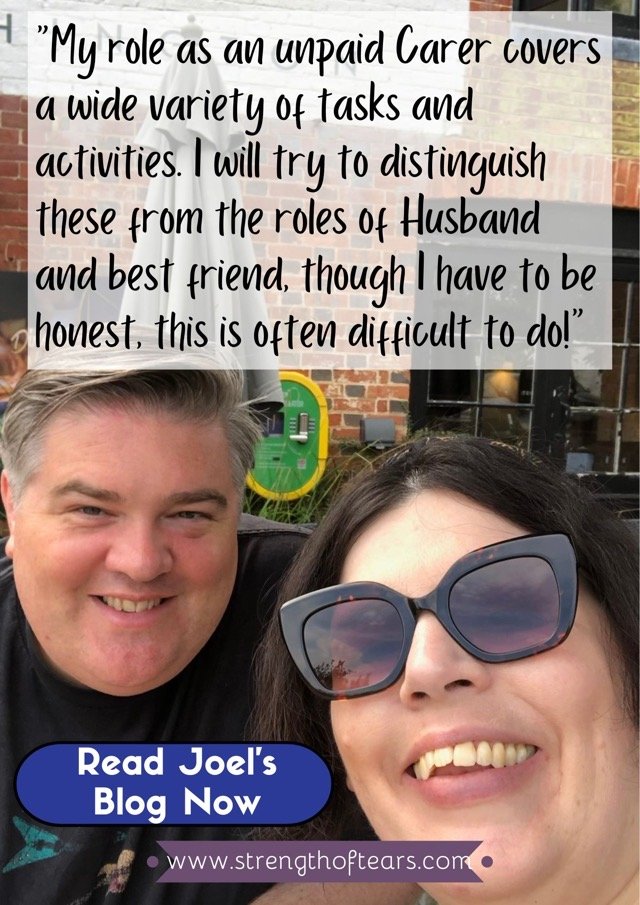
    My role as unpaid Carer covers a wide variety of tasks and activities. I will try to distinguish these from the roles of Husband and best friend, though I have to be honest, this is often difficult to do!  

    As an unpaid Carer for Laura, I need to consider her needs at all times, ensuring that her physical needs are met and that I am aware of those needs at all times of the day and night.  At a very basic level I need to ensure that Laura has taken her medicines, eaten regularly, has access to clean water and is washed and clothed every day.  

    I need to ensure Laura can access essential services, such as getting to a toilet safely. I need to be there to help if she falls or passes out, getting her to safety or calling the emergency services if needed. It sounds very mechanical listing it out but this is how I can distinguish my role as unpaid Carer from that of husband. As the person I love the most and have chosen to spend my life with, she is much more than just this list of needs.

    In addition, as Laura’s condition impacts her cognitive function, I handle the more complex elements of her care and help her organise and attend medical appointments and understand the risks and potential benefits of procedures to help her make decisions right for her. 

    As well as helping Laura with the more complex elements of her care, I also help her in her role as equal partner running the household, making sure she can perform her role in key decisions around finances, household maintenance, childcare and the general running of a family. 

    I also help her to understand what is happening when, and what decisions need to be taken.  As an unpaid Carer, I need to be mindful of Laura’s needs, breaking complex information down into easily understood pieces so she can make decisions that affect her and the family.

    What A Normal Day Looks Like For Me

    After my alarm I ensure the youngest is on track for college, then I’ll have a quick shower, and while brushing my teeth will check my work emails and calendar for the day.  

    My first caring concern is making sure Laura has her breakfast ready to take her medicines, so will prepare her favourite toast and marmalade, a cool cup of tea (too hot could burn her, or worse still melt a medicine capsule and release some horrid flavours!) and take her breakfast upstairs, to where I often have to wake her. 

    I’ll turn on her light, place everything she needs within reach, making sure the handle of the tea cup is where she can’t knock it over. I will then ensure she has her medicines, checking that she takes them, and has enough water for the morning.  

    Only then will I move onto my needs, getting dressed and ready for my day. Once she puts on her lifeline device, and has taken her medicines, I know she’s safe to be left as her medicines mean she often sleeps most of the morning.

    We are really lucky and have a paid Carer who attends daily around lunchtime. Read about how Sam fits into our team here. On the days when she is on holiday, or at weekends, I will give Laura a cup of tea close to lunchtime, and put out her clothes for the day, and prepare her some lunch.

    On the (thankfully) rare occasions that her condition and pain levels flare up, I will need to help Laura to shower, wash her hair, help to dry and dress her, as well as help with her access to her variety of beauty and medicinal creams.

    Throughout the day I am on hand to pick things up that Laura may have dropped, handle some cat related incident, or answer any questions when Laura is struggling to understand something.  As her Carer I’m there to listen to her emotional needs, be patient when her pain affects her mood, offer a listening ear, and a giggle or a hug. These are essential parts of caring for Laura and their impact cannot be underestimated.

    Let’s not forget our sons.  Eldest is now at University but youngest may well need picking up from college early, or late, depending on his schedule. I’m also there if he needs my taxi service for any appointments or social engagements.

    Later I will prepare dinner, again something our paid Carer will have prepared or put in the slow cooker. and sort any washing, cleaning or household task that needs doing.  I normally give the youngest the job of delivering Laura her dinner, which saves a trip up the stairs.

    Once we are all tidied away after dinner, I like to enjoy an evening watching TV with Laura, where we will chat about our day, catch up on anything important and just enjoy each other’s company.  Before bed-time, I ensure Laura’s bed is re-made, she has her nightwear to change into, has taken all of her medicines for the day and has enough water to drink. I make sure she has a small packet of biscuits to combat nausea if it comes on in the night, and that she has her ‘ice hat’ which she normally falls asleep with, as it helps manage her pain.

    As Laura can at times be prone to passing out, I tend to sleep lightly, always being alert to when she uses the toilet or if she needs me in the night. Should anything happen, as her unpaid Carer I can help to get her to safety.

    Did I mention work?  I am very fortunate to be able to work from home, and have access to work communications on my mobile phone too.  As a Systems Director I manage a small team of data managers across Europe. It is complicated work, and draws upon my many years of experience.

    I have many virtual meetings with people around the world, periods of intense concentration, people to support and invariably problems to solve.  I tend to think of my working hours as 8am – 4pm but this flexes as needed around my caring responsibilities. I am always able to catch up in the evenings in that window between dinner and time with Laura.

    My main responsibilities as an unpaid Carer are that Laura’s needs are first known and understood. These change daily and it is so important to never assume I know what these needs are, but rather ask Laura to ensure her voice is heard and that her needs are shaping her care.  

    Then it is to ensure these needs are met, from medication, food, water, cleaning, clothing to medical appointments, setting up household systems and communication with the family and support network.  As Laura’s prime Carer, being with her and on hand to help 24 hours a day I take it as my responsibility to consider how I can help to meet these needs wherever she requires my help.

    How Caring For Laura Impacts My Well-being

    Having hopefully painted a picture of how my day-to-day life works, and my main caring responsibilities for Laura and our family, I also have to think about myself! The transition to accepting the role of unpaid Carer for my wife has not been an easy one. Realising that our family life would be changed forever affected me tremendously.

    I am quite a positive person, always looking for solutions and trying to find the best in every situation, but seeing the person I love the most in so much pain, and their life going from a busy Mum and teacher, to being bed-bound and struggling with the simplest of things really hit hard, especially as I felt so helpless.  

    Being Laura’s unpaid Carer has been hard emotionally, and my mental wellbeing has suffered. Adjusting to a new life, while grieving for a lifestyle lost, with all the freedoms and spontaneity being compromised by putting someone else’s needs first took me through a difficult emotional journey. 

    Finding my role as Carer, however, gave me a focus and activity that I could understand in helping to work with something I couldn’t find a solution for. Realising that being an unpaid Carer was my way of helping, coupled with being the Father/Husband/Earner helped me to reconcile with a problem that I couldn’t solve, and adjust slowly to our new life.

    I have always been able to find positive perspectives, and I am thankful that I still have my wife, that we are together and we’re able to support each other through this transition in roles, and most importantly provide strong role models for our sons.

    My physical well-being has suffered a little over the years, especially as my work is quite sedentary, being office based, and with the onset of years and being overweight I am definitely not as fit as I used to be. When your partner is mainly bed bound, inevitably time spent together is also a sedentary experience too. So a renewed focus on fitness and activity is my latest goal in trying to address my well-being needs, and make sure I am fit enough for me, and importantly for Laura too!

    How My Caring Role Affects My Work-life

    My work-life as an unpaid Carer has had to become ever more flexible.  As I say, I am very lucky in that I can work from home, and flex my time around work and caring responsibilities.

    The main thing though is that I have to be a strong and confident advocate for my needs. What I mean by that is that I am always clear and confident in communicating how I will be the best employee while also balancing the needs of those who rely on me.

    I am always open and honest about my role as an unpaid Carer and when I am available and not. My employers don’t suffer from compromising with the time I need to dedicate to my caring duties. In fact, my employers benefit from my perspective, approach to prioritising, time management and ability to focus wholly on any problem or solution I work on.

    Being aware of ‘reasonable adjustment’ rights in the workplace is also something that has served me well. When I became a Father I worked compressed hours to care for my sons one day a week, which was so valuable to us as a young family, with high childcare costs. It ensured we felt we had balanced time and it became a real cornerstone for what I wanted in my work life, especially as an unpaid Carer for Laura.

    In the past I have been able to represent the needs of parents and Carers in setting up and running an award-winning colleague network, something I will forever be immensely proud of, as well as being a role model for other leaders with caring responsibilities.

    What My Support Network Is Like As An Unpaid Carer

    My support network is small but strong. I have relied at times on my father-in-law for contingency taxi or childcare. My emotional support though is what gets me through the tough times, with close friends to lean on, and becoming close to Laura’s paid Carer. 

    I am also part of a band, and music is such an escape valve for the hurricane of emotions I balance in my life. The release it gives me to just have to think about the next note in a song, comfortable in the knowledge that Laura is happy and safe, means that the emotional elastic band gets a chance to flex and not snap.

    Most importantly though, is the network of support we have created as a family.  We focus on the positives of life, balancing against the challenges and we remain solution focused. It feels like we work well as a team, each supporting the other. As a whole our family life is happy and fulfilled, which nourishes us all as we each achieve our ambitions.

    If I Could Have One Wish Granted To Make Caring Easier…

    I would wish that all of my wife’s illnesses and conditions would be alleviated and we could go back to a time where chronic illness was not a part of our family life. This is not wholly true, though, as we have all learnt so much about who we are as individuals, what great teamwork looks and feels like, and how we all can work together to succeed in the face of adversity.

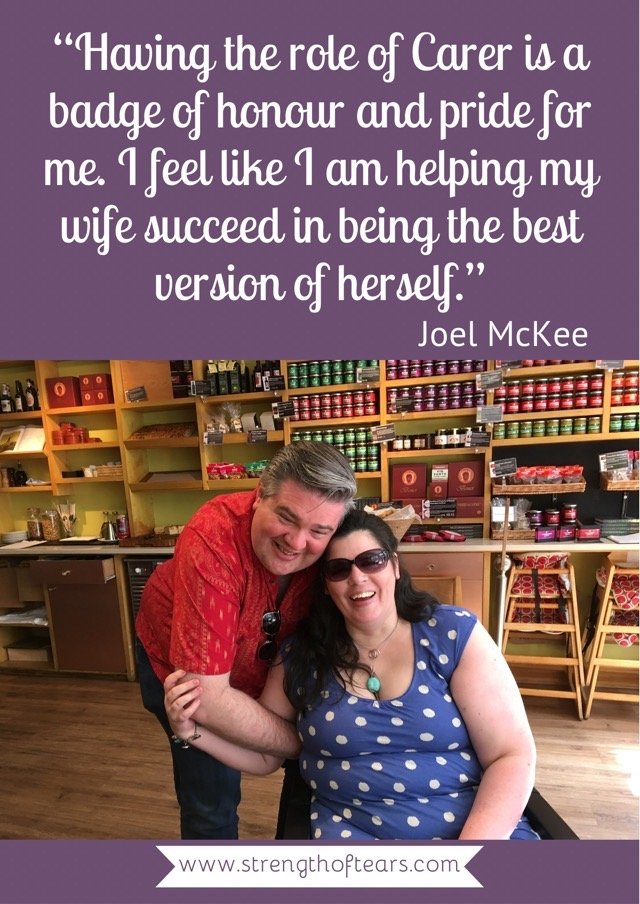
    Having the role of Carer is a badge of honour and pride for me.  I feel like I am helping my wife succeed in being the best version of herself, and that my role as her unpaid Carer also helps me be the most resilient, empathetic, understanding and above all most caring version of myself that I can be.

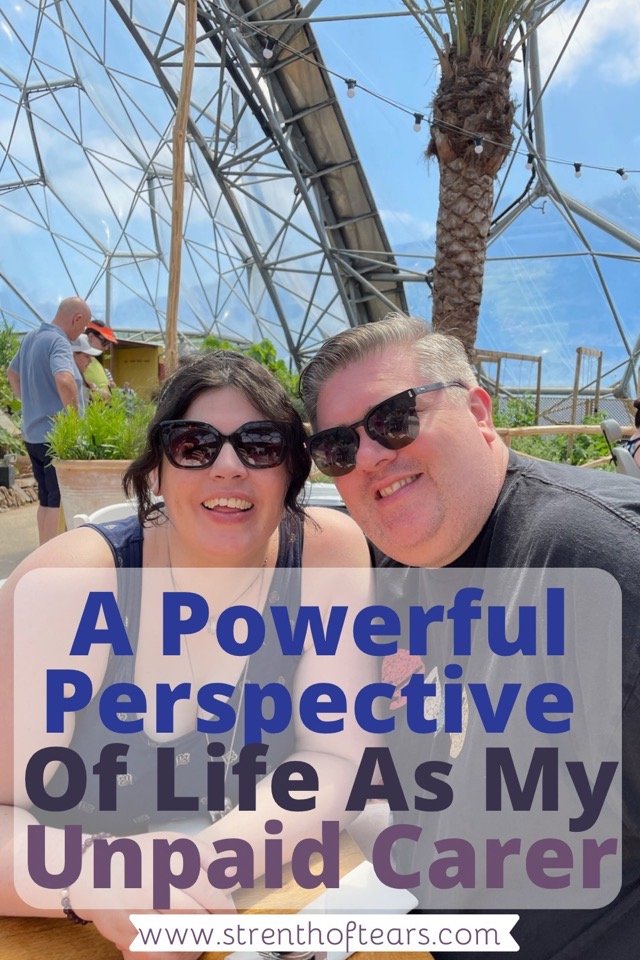
    A Powerful Perspective Of Life As My Unpaid Carer

    It’s been wonderful, challenging and entertaining to read my husband’s perspective about his role as my Carer, especially being one who isn’t paid at all. It’s eye-watering to read about the list of jobs he has to do in the morning before work, whilst I lay sleeping or waking casually to the smell of toast. I can honestly say I’ve never thought of it that way and this will hopefully help me to be more patient and show my gratitude even more than I do already. 

    My lack of awareness comes from both being in bed, isolated from the real world for the majority of the time, and due to my brain condition. My brain reacts to the extra pressure in my skull, the same way it would if I had a brain tumour so I can struggle to see things from others perspectives unless they tell me repeatedly how they feel. 

    I also think it’s partly down to the husband-wife relationship. Come on, you know we don’t always listen to what our spouse says! However, Joel hasn’t told me about a lot of what he’s written here about how he felt transitioning into the role of an unpaid Carer. 

    I was very unwell at the time and could not hold a conversation or retain any information. Thankfully my brain surgeries have allowed this aspect to right itself quite well so I can now take this on. I just wish I’d asked Joel how he felt more, I knew he was struggling of course, but I didn’t know how much. 

    I too am able to look at the positives of our situation now and know we’ve been able to teach our sons so much more about how to flex and grow to cope with challenging situations. As a team, we’re unstoppable and that includes my paid Carer Sam, who often acts as my proxy in the physical activities of running a household. I couldn’t be prouder of Joel and the boys for how they cope with ALL the challenges they face as unpaid Carers. 

    I would like to thank Joel for taking the time to write this piece, guided by my questions that came from this year’s Carers Rights Day campaign. Each year Carers Rights Day helps carers in the community know their rights and find out how to get the support they’re entitled to. The West Sussex Carers Support page says: 

    “This year our campaign will focus on the ways in which Caring Costs unpaid carers. From carers’ well-being and ability to access health services, to costs to their finances and employment options, to the current cost of living crisis which is being felt even more acutely by carers throughout the UK.”

    National Carer support organisations that help unpaid Carers know their rights are:

    Carers UK

    Carers Trust

    The UK government also have support materials for Carers

    There is also information on the new Carers Leave Bill that was passed in October 2022 here. We’ve found our local carers organisation very helpful, and highly recommend searching what is going on in your local area this Carers Rights Day. 

    Finally I want to publicly share how grateful I am to Joel for everything he does for me, everything he sacrifices and mostly everything he does to put a smile on my face, and my son’s face every single bloody day. He is an incredible human being and I love him even more after reading this article. In our 25 years together he has only ever shown me kindness and generosity and this seeps through the words on the page here. I am so honoured that you’ve shown another side of me to those who take time to read this blog. I appreciate you taking even more of your precious time to write about your perspective as my unpaid Carer

    #block-3522ab9dfd053e687057 .sqs-gallery-block-grid .sqs-gallery-design-grid { margin-right: -20px; }
    #block-3522ab9dfd053e687057 .sqs-gallery-block-grid .sqs-gallery-design-grid-slide .margin-wrapper { margin-right: 20px; margin-bottom: 20px; }

    ✋ Hey there! I hope you’re feeling stronger now. If so, sharing the love will help me help other mums with chronic invisible illnesses.⬆  Hit one of those sharing buttons or save these images to Pinterest and I will do a bed-bound happy dance – there’s an image for you!
  • The Best Emotional Development Examples Of Self Care Activities

    The Best Emotional Development Examples Of Self Care Activities

    The Best Emotional Development Examples Of Self Care Activities

    View fullsize

    The Best Emotional Development Examples Of Self Care ActivitiesEmotional development grows rapidly in under fives, laying the foundation for all learning, but the pandemic has affected this. We need to change how we help them to learn self care skil…

    The pandemic has affected everyone, especially young children, so we need to adapt how we teach them so we address the highlighted issues and the gaps and growth in their learning. Emotional development examples of this may be a lack of self care, managing big feelings or increased anxiety about being left at school or nursery. 

    Emotional and social development grows rapidly in under fives, laying the foundation for all learning. During my 15+ years of teaching, I specialised in the Early Years Foundation Stage (EYFS), working closely with parents to understand each child’s emotional needs. Read the new framework for what a child learns in the EYFS here.

    This blog shares advice and activities I’ve used to help children make progress: 

    • The Skills And Support Needed For Emotional Development

    • 21 Quality Self Care For Emotional Development Examples

    • How Self Care Sets The Foundation For Success

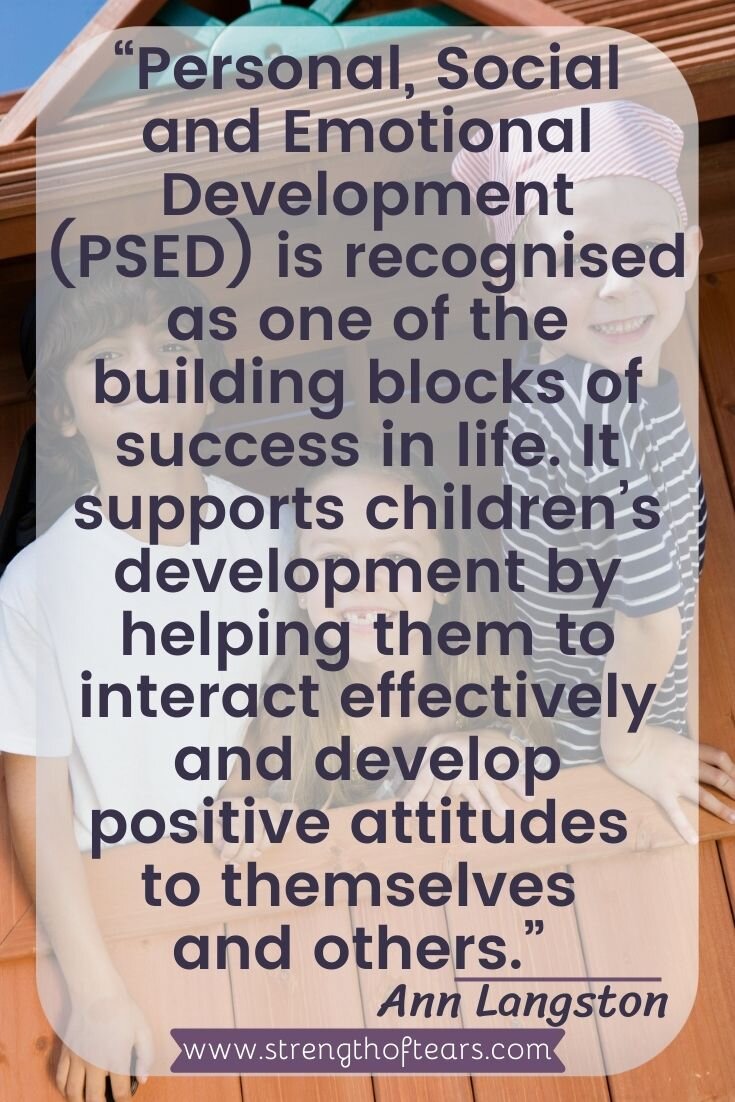
    “Personal, Social and Emotional Development (PSED) is recognised as one of the building blocks of success in life. It supports children’s development by helping them to interact effectively and develop positive attitudes to themselves and others.”

    — Ann Langston

    View fullsize

    This post contains affiliate links for sensory play resources

    The Skills And Support Needed For Emotional Development

    The skills we use to meet an infant or child’s emotional needs are usually instinctive. Having regular interaction with them helps us respond more effectively to their needs. Creating fun experiences to support a child’s emotional growth makes them feel heard. For example, using puppets to teach nervous children how to make friends. 

    These are common emotional development examples of a child needing us: 

    • Crying or screaming 

    • Turning away from someone or something

    • Not making attachments

    • Throwing tantrums

    • Unhealthy relationships 

    • Not cooperating or taking turns 

    • Disruptive behaviour    

    • Distress or anxiety 

    • Unresponsiveness 

    • Fighting with peers or siblings

    Our response to these behaviours needs to be calm, so we need clear boundaries as all kids will test us and we’ll overreact at times. To improve poor behaviour we need to be a consistent example to our children. I’ve developed skills I share with my boys, in managing my emotions better by making time to reflect and write about how I feel. 

    This has reminded me that we can foster children’s self-worth by helping them explore their similarities and differences to others. Choosing books and media representing ability, gender, sexuality, race etc. will help but we also need to talk about this. Read this blog on talking about race with children for ideas.

    “We are each gifted in a unique and important way. It is our privilege and our adventure to discover our own special light.” By Mary Dunbar

    Emotional well-being underpins every area of development. These are areas of the official guidance for PSED for development from birth to 5 years, that affect self care. I’m basing the 21 self care activities around these emotional development examples, of skills to teach your children for future success. 

    Self Regulation 

    1. Managing Feelings – Understand and name feelings and learn to manage emotions by keeping calm. There’s a new focus on 3+ self-regulating. Read more about this here.

    2. Self Control – Give children strategies for staying calm when frustrated. 

    3. Focused Attention – Communicate responses to stress effectively. 

    Managing Self

    1. Self Confidence – Support older children with self reflection so they build resilience to      persevere with challenges. Help children set and achieve a simple goal. 

    2. Self care – Build a sense of self as a valued individual that’s different to others. Develop healthy habits for looking after bodies and minds.

    Building Relationships

    1. Socialising – Build confidence in a variety of quality experiences which build a sense of     belonging to a family or community.

    2. Healthy attachments – Develop attachments in warm, supportive relationships. Manage feeling sad when a parent leaves. This is in response to social change due to Covid19.

    3. Understanding Needs – Show sensitivity to their own and others’ needs. Help children develop a positive attitude to people’s differences. 

    21 Quality Self Care For Emotional Development Examples.JPG

    21 Quality Self Care For Emotional Development Examples

    Bubble baths aside, teaching children self care skills helps them thrive despite any challenges. Self care is anything you do to help yourself feel better or keep yourself feeling good. Dancing, sports, laughing, having pets etc. help your child build trust and learn how to manage strong feelings. I write about other activities that help, here.

    Quality self care routines have played a crucial role in how my family has coped with my illnesses, evident in the resilience my boys have. These emotional development examples of self care for your child, are based on the EYFS skills.

    1. Adult Attachments

    Healthy Attachments make your child feel safe. Building bonds begin with a baby and parent, extending to family and others they spend time with. To build attachments we need to be engaged, sensitive, positive and affectionate to them. Hold them, have chats (gurgles count) and let them know you see them  by responding to their needs.

    2. Frequent Feelings

    With older infants and beyond, we can name a child’s feelings for them to help them understand what is happening to their body. You might say ‘you’re sad because… you hurt yourself or your sister wouldn’t play’. Start with simple games such as, making feelings cards or emoji charts so they can identify and name feelings themselves. 

    3. Constant Calm

    A child’s world is full of stimulation but being calm helps them relax, focus and learn. Strategies to help your child stay calm include; giving them time to eat, think and reflect; tuning in to their needs; using distractions; minimising noise and having time and space to explore. Sign up to my newsletter at the end of this page for my free guide for staying calm.

    4. Routines Rule

    Routines give children certainty and a feeling of control. But changes will happen so we need to teach skills for learning how to cope with unplanned changes.

    • Visual timetables have images showing what’s happening that day, in order. They’re used in childcare settings but you can print this one for the home.

    • Organisation helps them follow rules, such as having coat hooks by the door. 

    • Make changes to this one thing at a time, being guided by the child. 

    • Use a timer or song to help them adjust to routine changes. 

    • Explain changes to them e.g. “After Nursery we’re_,then we are going to_”


    5. Invite Independence 

    Children naturally become independent but as they’re offered more variety, tantrums are more common. We can manage this by encouraging and teaching them how to ask for help respectfully. We can support independence by planning for extra time, asking instead of demanding and offering choices. All kids can learn to do chores if we make them fun e.g. sing whilst making lunch, hop to bed, splash in the bath.

    6. Backing My Behaviour 

    Children aged 4-5 develop self awareness of their behaviour before recognising how their actions can affect others. Support their knowledge by: 

    • Remaining calm and soothing them when upset.

    • Naming and explaining their feelings.

    • Treating your child the way you want them to behave.

    • Pointing out people’s expressions, in life and media, to help them read others.

    • Showing how their words and actions affect someone else. 


    7. Boundary Basics

    All children test limits, the earlier the better for strong foundations. Children need clear boundaries so, a) show them who’s boss; b) have healthy routines that set clear guidelines; c) have zero tolerance rules for safety; d) be consistent.

    8. Clear Communication

    Babies cry to communicate a need, it’s our first non-verbal connection. This develops into expressions and gestures, which we all use more than verbal language. To extend early skills, narrate everything you do and feel and give your child time to talk. Repeat their babble and early words back to them, without correcting it. 

    Widen their vocabulary and interactions by reading and listening to them and use new words as you act out pretend situations with them. Let your child develop at their own pace but seek professional advice if you’re concerned about speech delay. 

    9. Support Self-esteem

    How we feel about ourselves affects our actions, so self-esteem supports mental health and sets us up for success. Helping children feel good about themselves starts by building a strong connection with your child so they trust you to meet their needs.

    Let them initiate play with some creative input, to encourage them to try new activities and experiences. This boosts their confidence to do more without us a safety net.

    10 Personal Practices

    One of the most recognisable self care practices is managing our hygiene and personal needs. Children need to choose the resources they need whilst knowing they can ask for help. We need to encourage and reward their independence.

    • Toddlers will want to dress themselves so allow extra time in your daily routine and make their clothes accessible so they feel in control. 

    • Toilet training should be child led but we can prepare kids by being open and explaining using it. Have everything you need ready for when they are. 

    • Teach them how and when to wash hands, reinforcing this when you wash. 

    • Encourage your child to get what they need to keep clean e.g. a toothbrush. Describe what you do, so they’re ready to slowly take on their personal care.

    Create a varied diet with healthy choices so your child sees how you act around food as a role model. To avoid tantrums, introduce one new flavour at a time and give ‘a or b choices. Get older kids involved in preparing meals.

    11. Healthy Habits

    Self care routines help kids tune into their mind and body. Establishing the activities below early, allows the brain to build habits which prevent mental health problems. 

    • Have regular dental and eye care checks.

    • Eat the rainbow of fruit and vegetables each day, including balanced meals.

    • Balance screen time with playing with your child at home and going outside.

    • Do mindful exercise, such as yoga or karate, to keep them focused on now.

    • Do visualisations together using a calming story, such as being on an island.

    • Do a sport or hobby that requires their commitment.

    • Practice daily quiet time where you connect with nature, exercise or books.

    • Let your child choose activities even if it differs from how you see self care. 

    12. Respectful Relationships

    Having positive relationships helps us develop respect and trust for others. A baby bonds with us through skin to skin contact, creating a foundation of trust and  good communication. When we let young children know we’re thinking of them, it helps to reassure them. Children who have this will feel safer and more secure, equipping them for strong relationships in the future.

    13. Effective Empathy

    Empathy is learnt through experience, from around the age of 4 years old. We teach children to understand others’ feelings by imagining what someone is feeling by playing out ‘real life’ situations. Children with a foundational awareness are more likely to make kind choices, such as looking after a child who’s sad. Empathy is key for learning tolerance and sensitivity towards people who are different to them. 

    14. Benefits Of Belonging

    Children who feel they belong benefit by establishing self confidence and believing in themselves. We teach them the key skills of cooperative play, working with others and having consistent routines. Their relationships with family and friends shapes their self identity, with possible influences from cultural or religious groups. 

    During childhood they are likely to become part of the community through toddler groups, schools and community groups such as Brownies, Football or Music groups. Fostering a child’s sense of belonging allows them to thrive because they feel safe.

    15. Visibly Valued 

    Children need to know that we value everything they are, not what they do. We can help them stand tall by recognising their good points, listening to them and spending one on one time with them. We need to show them we’re there through good and bad by not comparing them to others or overly criticising them. Their self worth depends on knowing they are loved and valued so show them you support their choices. 

    16. Celebrate Differences

    As children reach school age they become more aware of differences in their peer group. Children naturally explore similarities and differences so we can guide their understanding and ensure they know it’s okay to ask questions. Encourage them to learn about race, ability, gender, neurodiversity etc. Learning together and having open dialogue about bias and prejudice as they grow, gives kids the tools to show up. 

    17. Manage My Feelings

    Young children often struggle to manage big feelings, which can lead to meltdowns. Children who understand their emotions have a more successful life. Help them by:

    • Talking about and naming feelings when calm, rather than hiding this.

    • Showing them it’s normal to have different feelings – talk about how you feel.

    • Validating their feelings, however small, to teach them it’s normal to feel that.

    • Encouraging them to express how we feel by helping to put this into words.

    • Seeing what triggers them, so you can help them manage their response.

    • Identifying big feelings to help avoid tantrums; feeling sad or scared is okay. 

    • Letting them see how you manage emotions in a socially acceptable way.

    • Separating emotions from behaviour; its what they do that has consequences. 

    18. Self-Regulation Recipe

    Children build upon managing feelings by learning to self regulate (read about this here). Teach children how to act effectively on their emotions with these skills:

    • Help deal with big emotions by using distractions, adjustments and choices.

    • Explore a range of calm down strategies so your child has different options. 

    • Regularly practice emotional responses to see what works best for them.

    • Provide a safe environment for them to express themselves.

    • Play games that foster control, such as turn taking, to practice self-regulation.

    • Recognise that sometimes we have to let go of control and learn to wait.

    • Plan which tools help them cope and build on this for each new trigger.

    *Remember it takes a lifetime to learn this skill set, so foster emotional development. 

    19. Plain Perseverance

    Waiting isn’t something that comes easy as it takes a lot of willpower. However, the delayed gratification we get is one of the best rewards we can earn. Teaching kids how to persevere with a challenge helps us cope with pressure later in life. Show your child that you put the effort in when something is hard and don’t give up when you fail. Support your child in what they choose to get better at, reminding them how they’ve improved so they see that the effort is worthwhile if they want to succeed. 

    20. Goal Setting

    Setting goals is essential for lifelong learning, but we often expect too much of ourselves. So we need to be a good example to our children, showing them that failure is a healthy part of success. Children need to explore what’s important to them in a safe space, such as creating art or learning spellings, to build self confidence. They need to choose their own simple goals with our support. We can show them how to break a goal into achievable steps and use simple rewards as motivation.

    “Watch your kids. They already have goals. Allow them to unfold and encourage them… What would be a long term goal for them that’s fun as well as challenging?” 

    — Eve Menezes Cunningham

    21. Regular Reflection

    Self reflection is vital for meeting our goals and improving ourselves. True self care takes work and children need to use regular reflection to do this. Show them how by:

    • Celebrating who they are, not what they do.

    • Playing with them to see what they’ve been doing and thinking.

    • Making time and space for self reflection or mindfulness.

    • Mirroring them in play to develop their self-awareness – what do they do/say?

    • Teaching them ways to revisit their day such as drawing, writing or journaling.

    • Making time as a family each day, to talk about our wins and what to improve.

    • Talking through what helped and what interfered with them meeting their goal.

    The skills in the emotional development examples above are arranged so you build the foundations of emotional intelligence, layering up skills before developing the more complex strategies. They can all be adapted to meet your family’s needs.  

    How Self Care Sets The Foundation For Success 

    Our children watch and listen to everything we do as soon as soon as they’re born and develop as they grow. It’s important to reflect on how well you connect with your feelings, build strong relationships, achieve your goals and understand what matters most to you. Reflect on these areas of your self care to spot any gaps. 

    • You understand and healthily manage your emotions

    • You recognise your emotions and how they affect you

    • You communicate clearly and manage conflict

    • You develop and maintain good relationships

    • You have supportive and trusting relationships

    • You know your strengths and weaknesses

    Our children have been affected emotionally and behaviourally by the pandemic. Observing our children helps us assess them and identify gaps and strengths in their emotional development. Ask yourself these questions to understand how your child is coping in a post covid restriction world, so you can support and stretch them.

    • Are you aware of any difficulties they have with attachment, socialising, self-care or general well-being?

    • Do they enjoy playing with others? 

    • Do they engage in varied play and social experiences?

    • Do you know when to help them and when to encourage independence?

    • Do they listen to and cooperate with other children and adults?

    • Do they recognise when they need time to calm down? 

    Strong foundations in emotional intelligence is crucial for us to achieve in life. We can motivate and inspire our children to build up skills in all the emotional development examples mentioned in this blog, so they grow into well-rounded and healthy adults.

    If you have any concerns about your own or your child’s mental health or you’re worried about a developmental delay with your child, please consult a doctor or mental health professional. Click here to understand our mental health needs. 

    Stay Safe

    Laura 💜

    P.S. Download your free home learning resources guide here. These are also great for homework or just to catch up on areas you think they need support with, whilst you play with them.


    ✋ Hey there! I hope you’re feeling stronger now. If so, sharing the love will help me help other mums with chronic invisible illnesses.⬇ Hit one of those sharing buttons or save the images to Pinterest and I will do a bed-bound happy dance – there’s an image for you! 
    #block-7132edc5ea3b4294a9c0 .sqs-gallery-block-grid .sqs-gallery-design-grid { margin-right: -20px; }
    #block-7132edc5ea3b4294a9c0 .sqs-gallery-block-grid .sqs-gallery-design-grid-slide .margin-wrapper { margin-right: 20px; margin-bottom: 20px; }