Tag: Idiopathic Intracranial Hypertension

  • How To Challenge And Overcome Resistance To Change In Life
    How To Challenge And Overcome Resistance To Change In Life

    How To Challenge And Overcome Resistance To Change In Life

    How To Challenge And Overcome Resistance To Change In LifeWhen I became chronically ill, I believed I was a burden, with little self worth. My family supported me in fighting this and taking back control of my life where I could. To challenge and ov…


    Life with chronic illness isn’t easy for anyone, especially a mum with anxiety. I lack control over my own life due to chronic migraine and my rare brain condition, IIH. This life has challenged my whole family but has motivated us to adapt. With hard work, emotional strength, patience and trusted support we’ve been able to change. 

    Knowing I have power over my thoughts and actions made me see how my mind can get stuck going over past events when I’m feeling low or depressed. I’d tell myself ‘I’m a burden’ or ‘It’s all in my head’, only confiding in my husband, Joel. However, dealing with so much at once tested us. 

    We needed to discuss our feelings with someone neutral so we’d have full support from each other and our loved ones moving forward. I knew effective change would take time and support so I swallowed my pride and asked for help. I’ve learnt to be present with my thoughts and that honest self-talk is vital to my ability to cope.

    To challenge and overcome resistance to change I also needed to appreciate how my brain and body work together. By studying my patterns of behaviour in the past and present, I could plan for sustainable change. This has helped give me the mental strength to accept development and disarm any power this held over my self worth. 

    The four key ways I’ve developed my attitude towards positive change are:

    • Accepting you can only control how you think and act

    • Listening to the stories you tell yourself 

    • Knowing with whom to discuss how you feel 

    • Changing your behaviour patterns over time

    As this covers 4 ways you can take practical action and improve your mental health, I recommend downloading my free journal prompts to support you in looking at behavioural patterns and developing self worth so that any and all changes you make are effective.

    _Disclaimer this blog post contains affiliate links and any purchases made through such links will result in a small reward for me and my crafting habits. Oh and there’s some free recommendations too, Im nice like th - Edited (1).JPG

    Accepting You Can Only Control How You Think And Act

    Big changes in our lives impact our thoughts, and subsequently our mental health, because of what we are exposed to. Our minds are wired to respond to stress with primal instincts, as if facing physical threats. This can lead to strong reactions to emotions, such as my anxiety when adjusting to new situations.

    When I became chronically ill my world changed from an active life to a confined one  overnight. My world became my family, house and garden which was okay but as my health deteriorated further, my world became even smaller. At the time I wanted to run from it all. I talk in detail about my chronic illness journey in this blog.

    I believed I was a burden to my family, especially to Joel, as I could no longer play the role I always had. I became depressed with little self worth, even wondering if my family would be better off without me. But I knew I had to fight to be the mother and wife my family needed, even if it was different. 

    I learnt how the brain and body responds to stress and that mine was trying to protect me from threat, which helped me manage stress. This article explains ways to can manage and reduce stress. I learnt that to overcome resistance to change my negative thinking, I had to take control. Only I had the power to make the changes I needed to live the best life I could.

    You Can Only Control Your Attitude and Actions Quote.jpeg


    Listening To The Stories You Tell Yourself 

    To do this I needed to unpack how my past experiences impacted my current thoughts. I exposed vulnerabilities in my relationship with chronic illnesses. Due to many absences from secondary school due to undiagnosed migraine, I’d been labelled a hypochondriac. Now I was struggling to believe my own pain was real.

    I’d been diagnosed with atypical migraine after 20 years so I was stuck in a negative thought pattern whilst trying to get my IIH diagnosis. I’d buried embarrassment and regret more deeply with each misdiagnosis, convinced nobody believed me. I needed help to navigate my journey so found my life coach, Josie, to help me unpick it all

    These truths may be uncomfortable, but they can be the basis of meaningful change. Figuring out your own story could take 20 minutes or 20 years. And you may not make one big transformation; maybe it’s a series of incremental changes. You just have to feel your way through.

    — Brené Brown

    Being aware of this helps me reinforce my truth and grow stronger. My past has less control over my narrative and I have more power to overcome resistance to change. I may still take small steps forward but my self belief continues to grow. 


    Knowing With Whom To Discuss How You Feel 

    I’ve had to reshape my life from necessity which makes change a bigger challenge. My brain condition stole my ability to communicate well and many of my supposed close friends dropped out of my life. I felt guilty for letting others down and because my judgement was impaired, I didn’t know who to trust with how I felt. 

    However, my true friends showed themselves when they rallied to help and comfort me when I had my first treatments. Their loyalty gave me strength to set boundaries to protect myself from those who didn’t support me as I navigated this new life.

    But I was still grieving my old life and needed reassurance that it was okay to feel angry, sad and lost. The four of us built our communication skills in family counselling so we could discuss our feelings whilst respecting each other. We built strong support systems with others who we trusted over time, which was crucial for each of us. 

    Having confidantes has helped us cope with every surgery I’ve had, each one giving me back more of my old self. We developed ways to discuss our feelings as a family and I grew to trust those who were there for me without doubts or conditions again. This helped me overcome resistance to change and be grateful for what I now have.


    Changing Our Behaviour Patterns Over Time   

    It’s normal to resist change, we usually run from it but accepting we’re scared helps us embrace the inevitability of change. Exploring why past experiences made us feel this way, can help grow our ability to adapt. Change is most likely during our career, so this Forbes article shares 12 ways to successfully manage change in business.
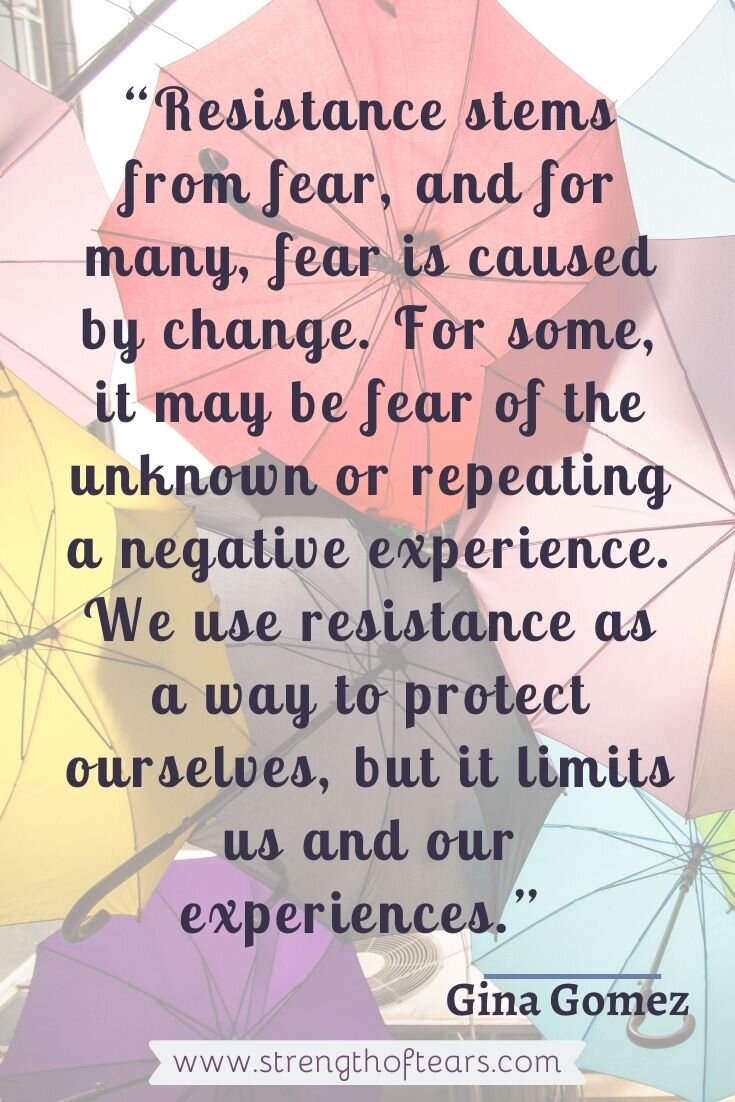
    resistance stems from fear, and for many, fear is caused by change quote.jpg

    Make it stand out

    Whatever it is, the way you tell your story online can make all the difference.

    I managed change in my role as lead teacher but I had no idea how much change I was capable of until my situation left me no choice. To embrace my new life, I looked at my emotional reactions to positive and negative changes in my past. This enabled me to transform feelings of blame and guilt into pride and self respect. 

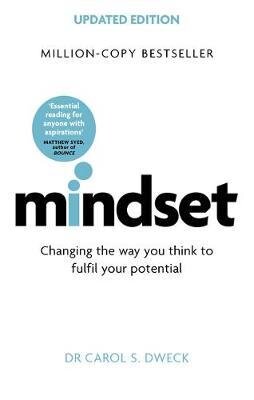
    When trying to adapt established behaviours we need to set our intentions and know it will make a positive difference to our lives. Click here to read my blog about how I developed my ‘Growth Mindset’ for going through change. Our brains continue to develop throughout life, forming new connections through repetitive actions or habits.

    As a worrier, my brain is wired to release dopamine to reinforce connections each time I worry. This feel-good chemical is released whether the action is good or bad, making it hard to stop worrying and difficult to overcome resistance to change.

    However, when we recognise that changing our habits will bring a huge difference to our lives, we can use the same wiring. Creating new behaviour patterns also releases dopamine each time we repeat an action. Focusing on small steps forward leads to more success, so with willpower and time it becomes our default behaviour. 

    Serotonin is released to communicate our desire to change. I use journaling to reflect on daily progress with new habits and to celebrate my small wins. Each win releases these feel-good hormones and helps us establish positive change. If you’re interested in journaling to support your own growth and mental health, try my free prompts.   


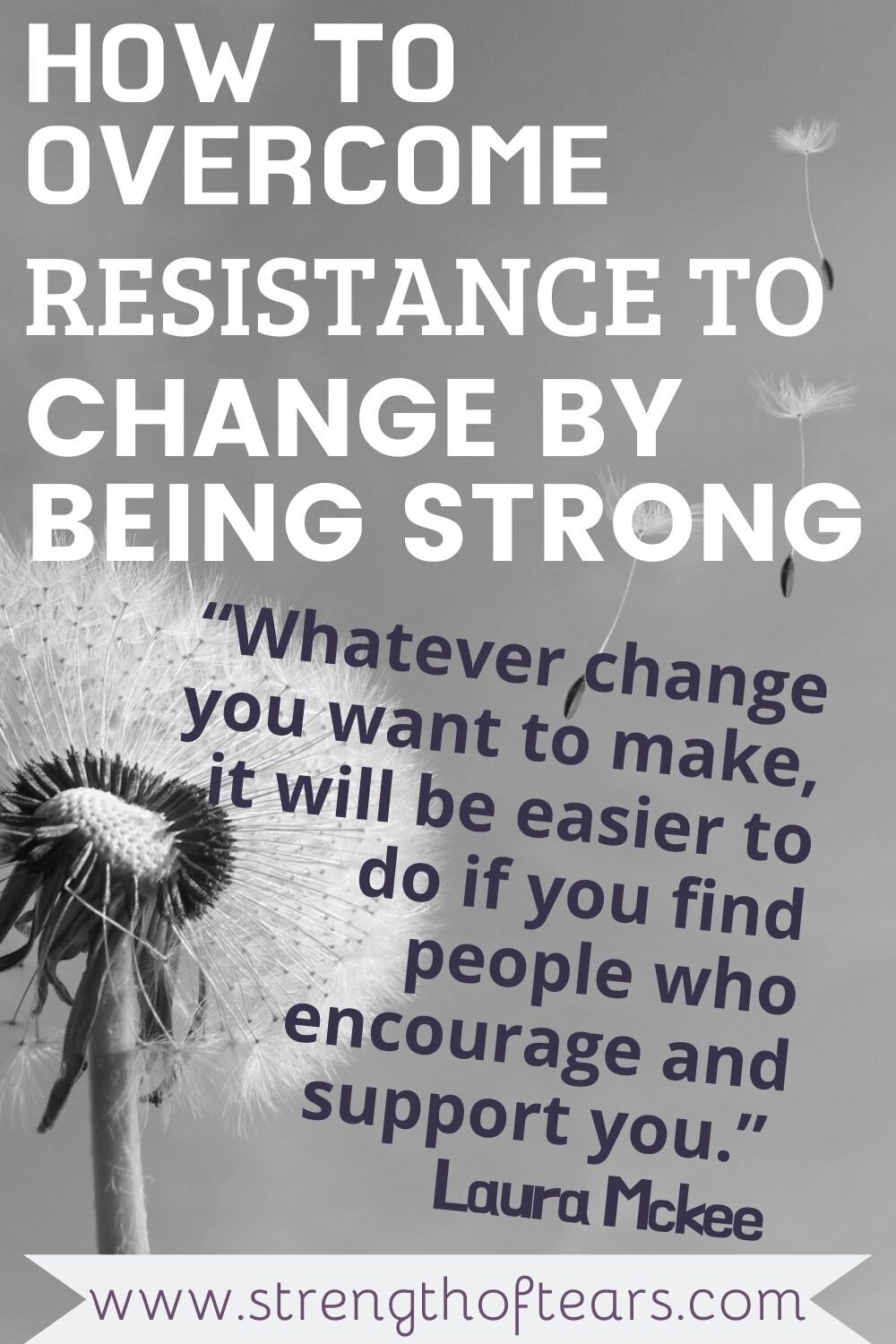
    How To Overcome Resistance To Change By Being Strong
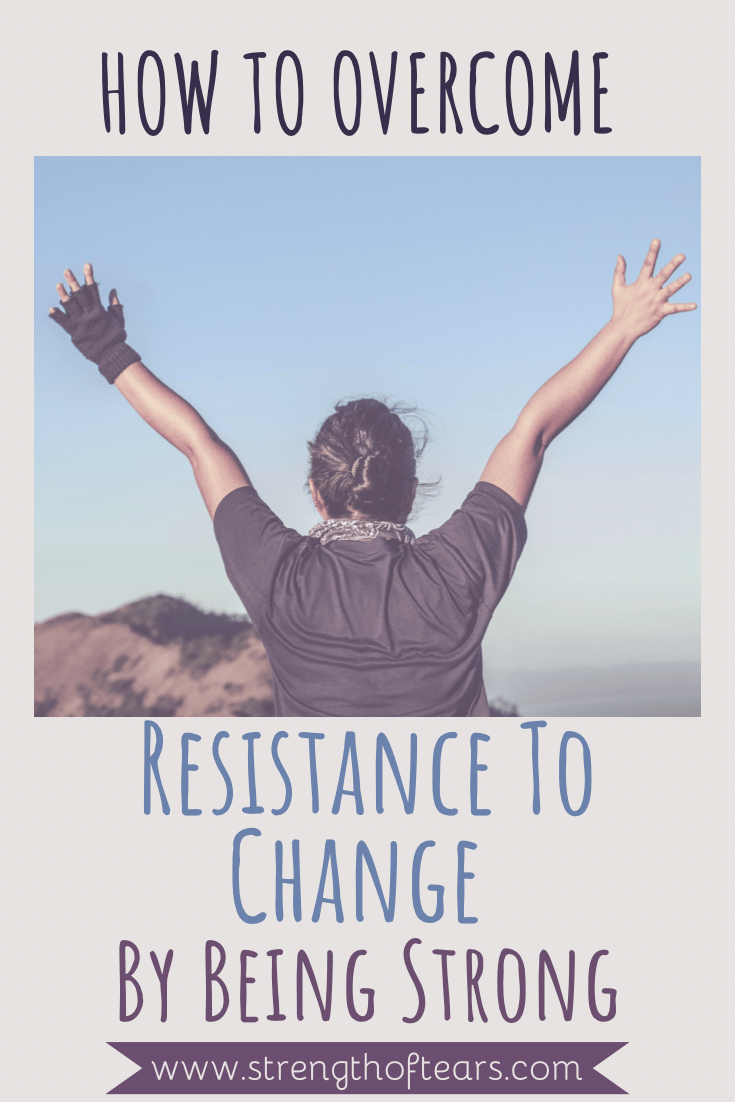
    How to overcome resistance to change by being Strong.jpeg

    Everything in my life changed with my IIH and this has been difficult to accept because I have such little control over the situation. I’ve learnt to focus on changes I can control and now focus on making positive transformations despite my illnesses.

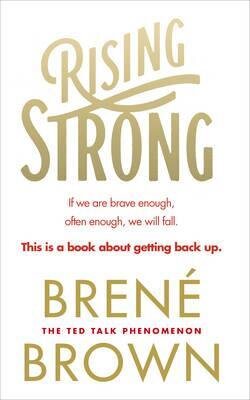
    Despite getting through the darkest days, self-talk held me back, making it harder to overcome resistance to change. Brené Brown’s perspective on the stories we tell ourselves was a revelation for me and was critical in helping me adapt successfully. 

    Now I’m usually able to reject negative thoughts that could slow my progress as I understand the link between the brain and changing behaviour patterns. My recognition of the science behind this has helped me be better prepared for future developments. However, big life changes still have potential to upset my emotions. 

    Whatever change you want to make, it will be easier to do if you find people who encourage and support you.

    — Laura McKee

    The difference in my life nowadays has helped me learn when, who and how to talk about my feelings. Having boundaries has meant removing people from my life who hold me back and making room for those who genuinely encourage and support me. 

    I believe I’ll keep moving forward by accepting what I can control, promoting positive self-talk, having authentic support and recognising that change won’t happen quickly. These steps have given me the strength to persevere and push myself to overcome my resistance to change; even on the hardest days.

    Stay safe,

    Laura 💜

    P.S. If you just want the main points…

    When my world changed overnight, I had to embrace a life with chronic illnesses. So I set boundaries with myself and others so I had support to focus on what I could control. I learnt that my negative self-talk was making it harder for me to change. So I looked at my brain and behaviour patterns to adapt my habits for making sustainable change for a better life.
    #block-6bab4cdb0c7118445fe1 .sqs-gallery-block-grid .sqs-gallery-design-grid { margin-right: -20px; }
    #block-6bab4cdb0c7118445fe1 .sqs-gallery-block-grid .sqs-gallery-design-grid-slide .margin-wrapper { margin-right: 20px; margin-bottom: 20px; }

    If you find it hard to make changes to habits or struggle to cope with change, I can help you create small, achievable goals using my free well-being plan in my VIP resources area. This will help you develop your self-worth and stop doubting yourself.

    Or if you want to wait for my upcoming ‘Thrive Not Survive Journal’, and be the first to know when it’s for sale, sign up to my Strong Mums mailing list here.
    #block-15ceb995cfb3d016c8ab .sqs-gallery-block-grid .sqs-gallery-design-grid { margin-right: -20px; }
    #block-15ceb995cfb3d016c8ab .sqs-gallery-block-grid .sqs-gallery-design-grid-slide .margin-wrapper { margin-right: 20px; margin-bottom: 20px; }

    ✋ Hey there! I hope you’re feeling Able to Start Making changes to support your own and Your Families well-being. By sharing this Post You’ll help mums with mental health and/or chronic illnesses. ⬆️ Hit one of these sharing buttons for social media and I’ll do a bed-bound happy dance – there’s an image for you.

  • 6 Amazing Mums Helpful Secrets For IIH Awareness Month

    6 Amazing Mums Helpful Secrets For IIH Awareness Month

    6 Amazing Mums Helpful Secrets For IIH Awareness Month

    When I was diagnosed with Idiopathic Intracranial Hypertension (IIH) in 2014, I worried about the impact on my boys’ lives. They were 10 and 11 and it was hard on them. I was lucky as my husband stood by me as we adapted our parenting.

    But every parent with this condition has a different experience, for September’s IIH Awareness Month, I asked 6 amazing mums from the IIH UK Facebook support group, about their secrets as a mum with Idiopathic Intracranial Hypertension to help other mums in a similar position. 

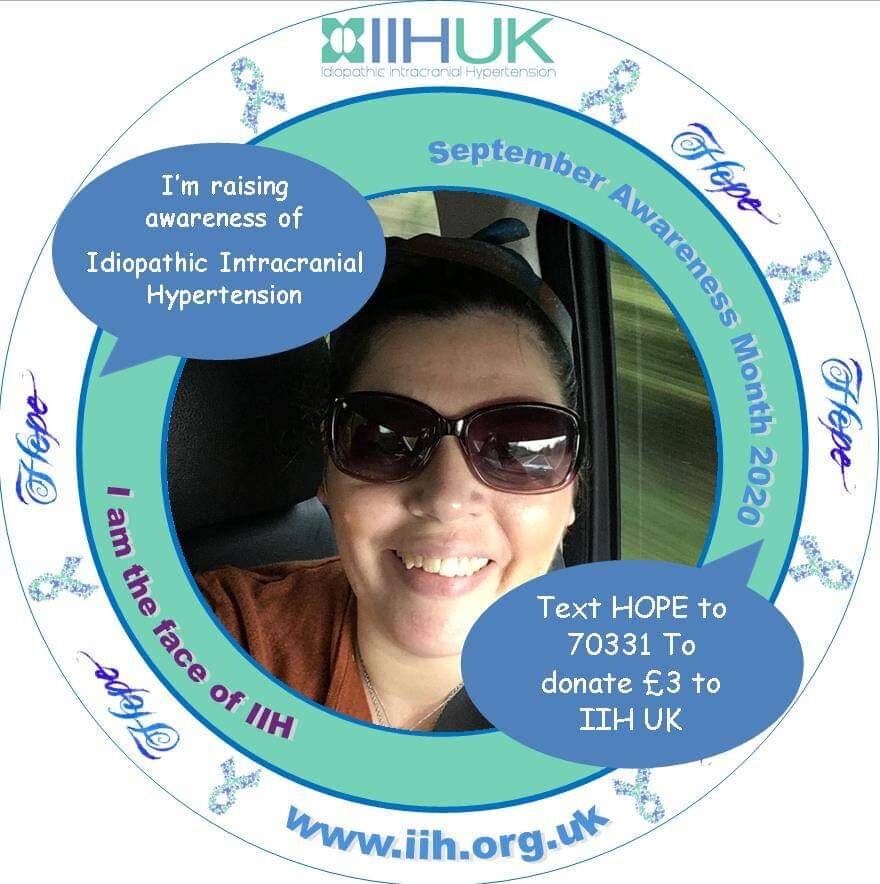
    We’ve done this in the hope that we can fundraise for IIH UK so we’re sharing how IIH affects us as and our children to raise awareness of this rare brain disease. We’d be very grateful if you could make a donation to IIH UK to fund research.

    This invisible illness affects our role as a parent but many of us push through the pain, hiding how we feel from friends and family. One mum I spoke to said that when she’s in so much pain she cries, she hides to avoid  her children seeing her like that. We’ve spoken up this IIH Awareness Month with the hope of sharing the secrets of being a mum with IIH life.

    What Is IIH And Who Gets It?

    IIH occurs when levels of cerebrospinal fluid (CSF), which plays an important role in cushioning the brain, gets too much and the skull can’t expand so the pressure increases. The meaning of the term Idiopathic Intracranial Hypertension is:

    • Idiopathic – unknown cause

    • Intracranial – in the skull

    • Hypertension – high pressure

    This condition is found more commonly in women but does affect about 10% of men. It’s common in teens and young women, but can affect children and adults of any age. IIH occurs in 1-3 people in every 100,000. This is higher in those who are obese.

    The ladies I’ve asked, Sophie, Keri, Leah, Alexandra and Claire and myself range from 21 up to two of us, including myself, being in our forties. Two ladies have been diagnosed in the last year, with many feeling we had symptoms before our diagnosis. 

    During IIH Awareness Month, I believe it’s important to use this platform as a voice for these mums to share their experiences and thoughts about parenting with IIH. By sharing what we live with each day we can show our similarities and differences.  

    How Is IIH Diagnosed And What Are The Symptoms?

    IIH Awareness Month is about raising awareness of this condition. To be diagnosed with IIH someone needs to have brain scans and a lumbar puncture (LP), also called a spinal tap. These 5 things to rule out other conditions and confirm IIH:

    1. Papilloedema (swelling of the optic (eye) nerves 

    2. Normal neurological examination (sixth nerve palsy causing double vision is allowed)

    3. Normal brain imaging. This is usually a CT or MRI scan

    4. Normal brain CSF analysis

    5. Elevated lumbar puncture with an opening pressure, usually above 25cm

    As diagnosis requires an LP or spinal tap, this can be quite distressing. Read this leaflet for more information about the procedure.

    Sophie was the only mum here to have had a negative experience with an LP. She said “the first one I ever had knocked me for six. I ended up in hospital for a week… due to too much pressure removed. It was very hard on my boy because he’d never been away from his mummy.”

    Papilloedema occurs when CSF pressure compresses the nerves supplying the eye. This affects vision and may lead to vision loss, meaning emergency treatment, such as shunt surgery, may be needed to save vision. Please read this leaflet from IIH UK about shunts.

    I asked the ladies about their 3 worst symptoms. This differed between each of us, with a few ladies saying their symptoms differ daily. Alexandra said “My symptoms differ from day to day, however I have a handful of symptoms that affect me most.”

    All six of us said that headaches or ‘migraine’ was one of our worst symptoms. Sophie described it as: “Migraines, where I physically can not open my eyes or move my head. [Migraine] has also caused me to have memory loss from the pain.”

    She goes on to say “I find that this condition comes with a problem. People stereotype it as headaches, and nothing else, [saying] ‘go take a paracetamol, you’ll be fine!’. I hate that, when my head is so bad, I can’t open my eyes.”

    However 6% of people with IIH never have papilloedema and headaches are more telling as to their diagnosis. This is called IIH Without Papilloedema (IIHWOP) and is harder to diagnose. I was given this diagnosis in 2014. You can read about my diagnosis story here.

    Another common symptom is brain fog, feeling like you’re spaced out, which is described well by Keri: “I drive my children nuts as I start a conversation and then just stop, as I can not remember what I was saying.” This and having difficulty understanding words is called aphasia. 

    For IIH Awareness Month I want to share the mostly common symptoms other than headache and Papilloedema, that the mums shared with me:

    • Vomiting and nausea

    • Memory loss or brain fog

    • Pulsatile Tinnitus – a whooshing or throbbing in the ears (in time with the heartbeat)

    • Dizziness and Vertigo

    • Black outs

    • Temporary Eyesight/Vision problems

    • Tunnel Vision

    • Hearing sensitivity

    • Neck pain

    • Eye pain, described as “stabbing pain behind the eye”

    • “loss of feeling in my legs and arms”

    Alexandra spoke about her worry about “The loss of feeling and vision [being] quite dangerous, especially being a mother. I don’t have any sign that the loss is coming on so things as simple as walking downstairs with my son can be potentially dangerous!”

    Watch this short video about the symptoms made by IIH UK

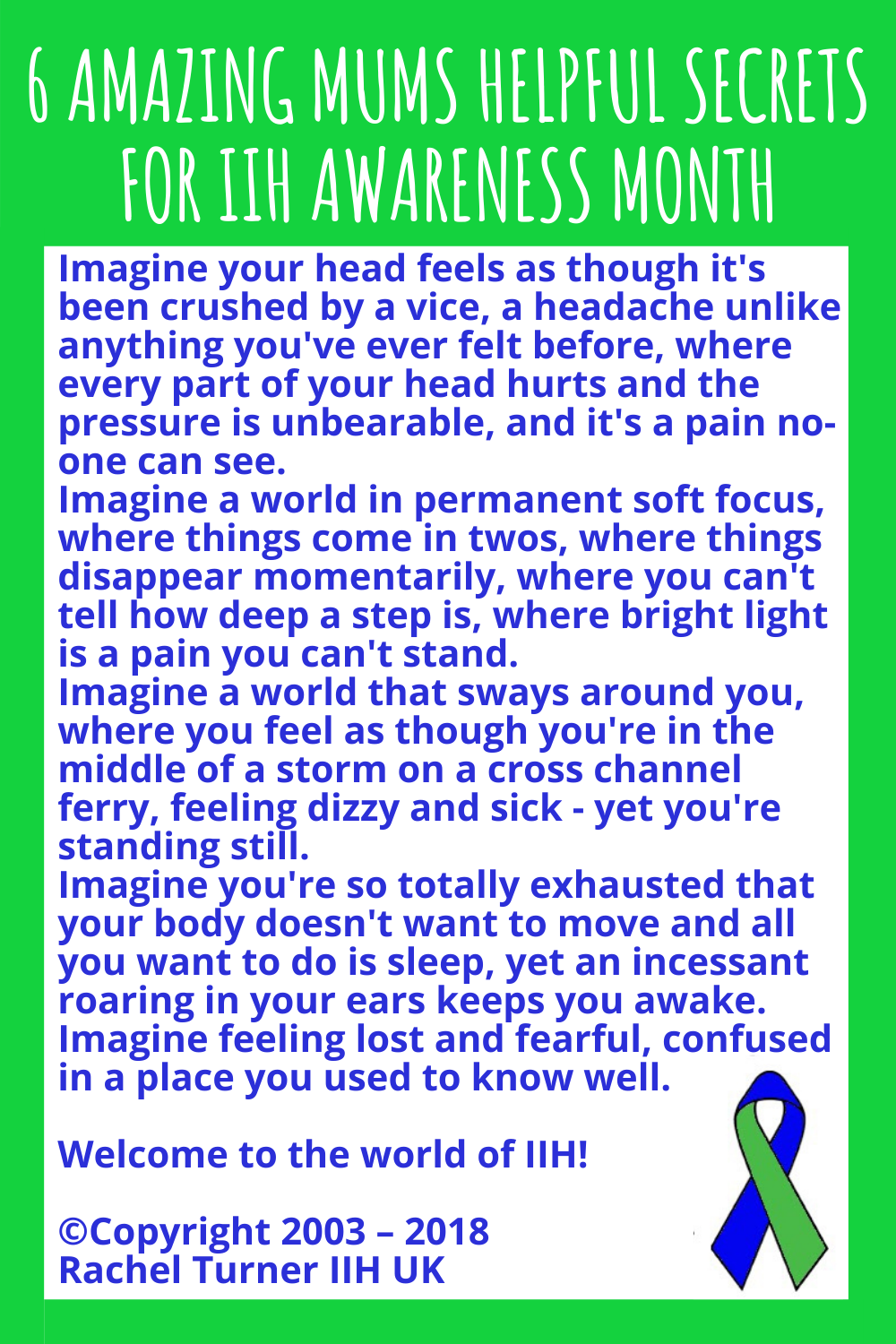
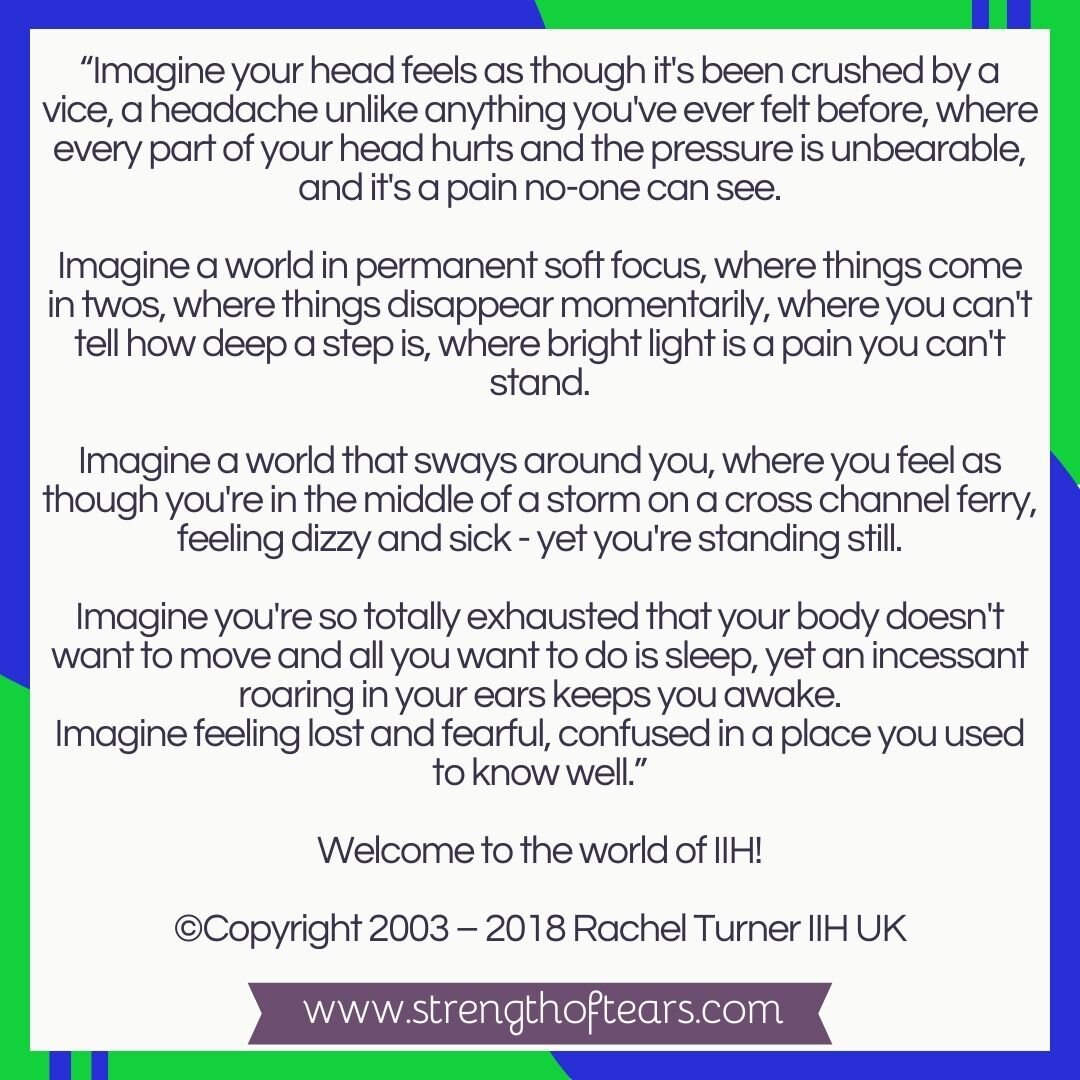
    As it’s IIH Awareness Month I’ve also included this descriptive piece written by one of a group of founding members of IIH UK, Rachel Turner.

    View fullsize

    Imagine your head poem written by Rachel Turner,,one of a group of founding members of IIH UK . This poem is written to raise awareness of the symptoms people with Idiopathic Intracranial Hypertension or IIH experience. This IIH awareness month we w…

    What Treatment Is Available?

    IIH is often treated with weight loss as, although not all people who are overweight develop IIH, there is a big link. Medical studies have shown an increased chance of developing IIH as weight increases. This leaflet from IIH UK explains more about this.

    Despite there being a strong link between weight gain and IIH, only one of our Mums spoke positively about weight loss, saying that it put her into remission for a long time. Another said that she didn’t “necessarily believe weight loss is the answer for this condition.“

    For more IIH Awareness Month detail I asked the mums about other treatment such as Topiramate, a common migraine treatment which most of the Mums are on and Diamox, which decreases CSF production but causes many side effects, which is why Sophie came off this medication.

    Surgery is also used to decrease CSF production, usually via shunts. I’ve had stent surgery but none of the others have had surgery, some due to other illnesses. Lumbar punctures can also be used to release excess CSF and 2 of these mums said they’ve had a countless LPs as they are unable to have surgery due to pre-existing conditions. 


    The relief from a LP is typically short lived as CSF is secreted from the choroid plexus at a rate of 25 mL/hour and consequently the volume removed in a so-called therapeutic tap is rapidly replaced

    — Jensen RH

    All treatments for IIH impact your quality of life, with the many side effects of medication or if you’re recovering from LPs and/or surgeries. The mums I spoke to for IIH Awareness Month have shared how they’ve been affected but we’re all different so our treatment is personal to us. Read this article from the British Medical Journal for medical insight into managing

    What Is It Like To Be A Mum With IIH?

    Claire has 2 children and was diagnosed in 2018 but had symptoms in 2015 whilst pregnant. She says that the worst part of having IIH is “not being able to take my girls out as much as I can never plan anything, as I don’t want to disappoint my youngest who doesn’t understand if mummy has to cancel things.”

    Leah has 3 young children and was diagnosed in the last 3 months of when I wrote this IIH Awareness Month Blog. She feels that she’s not “the fun mum who used to dance and sing. When my kids ask ‘can you play’?…and there little faces just drop.” But her “children are so good and do understand that I’m more unwell than I am well”.

    Keri has 3 adult children and was diagnosed two years ago but thinks she’s been suffering for 20 years or so with what she was told was migraine. She said “IIH has changed me. I am not as confident as I used to be.” As a working mum Keri has reasonable adjustments in place and says “if I’m feeling tired or have headaches” I can have office based time but “by Friday I am ready to collapse and I spend the whole weekend recouping.”

    Sophie has 2 children and was pregnant at time of writing. She was diagnosed in 2013/14 and says “when my head is so bad, I can’t open my eyes.” But after an LP, her husband and son notice she has higher energy levels and is less grumpy. 

    Having a support network of some kind is something I feel I couldn’t do without and as part of IIH Awareness Month we want others around us to stand by us. Sophie says she’s “happy I do have the support of my family and friends, even with the lack of understanding.” 

    Leah said “I do have a lot of support from my mum, she’s my rock. I would be lost without her and my mother in law.” Claire said “My partner has taken up a lot of the cleaning as I struggle with bending up and down too much as it makes my head feel weird.”

    Alexandra was diagnosed with IIHWOP in 2019 and has a young son. He knows that mummy can be sick quite a lot. She talked about the impact on her mental health, which is important to raise this IIH Awareness Month. She said “some days I find myself shouting for no reason… It breaks my heart because my toddler obviously doesn’t understand.” 

    People with IIH are at risk of developing mental health problems or have preexisting conditions worsen or reacting with medication. Sophie said ‘it’s left me alone and unaided by the world because know one understands. The condition changes our quality of life considerably.

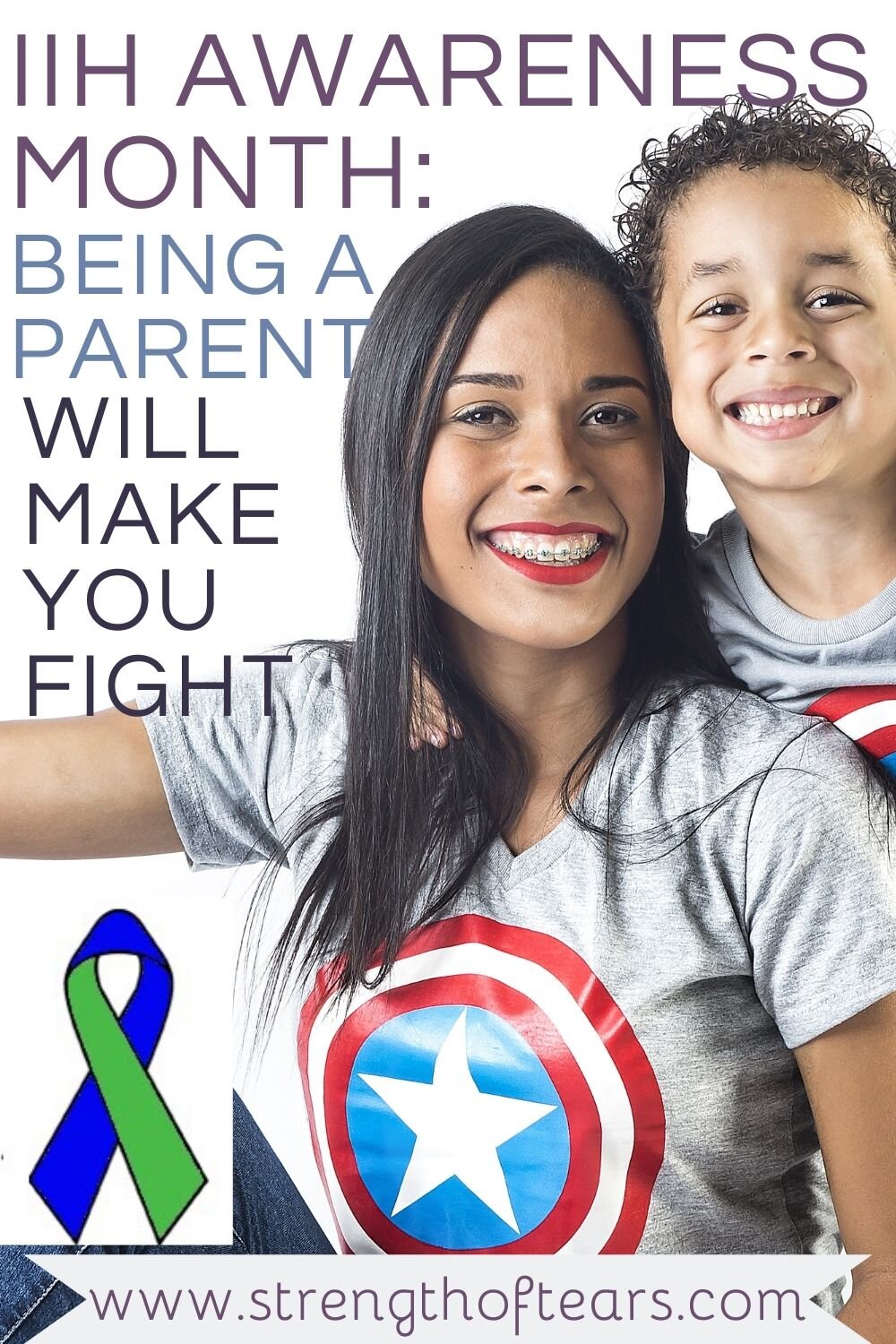
    IIH Awareness Month: Being A Parent Will Make You Fight

    Due to the symptoms of increased pressure, our behaviour changes with some long term and some short term effects. We all manage this differently but it’s definitely harder to mother with this condition.

    It has affected my role as a parent in many ways and the mums I’ve spoken to for IIH Awareness Month feel the same. Our children, at almost any age, understand that we’re sometimes too unwell to play or do activities together. 

    As my boys are now teenagers, they understand that I struggle to chat on bad days. They’ve understood what surgery I’ve had and they look out for and after me. The common theme from speaking to these mums is that it’s our kids that keep us going.

    Claire’s the main carer for her disabled daughter so “doesn’t have much choice but to carry on.” She can have all her “symptoms at the same time and they can last for weeks and they affect everything. They restrict what she can do with her daughter but she can still be there “laying down as it helps with the nausea and dizziness.”

    Leah, who’s husband works 8 weeks on and 3 weeks off, feels that IIH has changed her family a lot. “My children do understand but they miss their old mum. If I’m having a good day I try to sing and dance and boom the music just so they know I am still here.” Dancing makes her head hurt but she still does it because she is a mum first. 

    Keri has adult children so can say she needs time out, however, she is still fighting an invisible illness. She said “I try not to complain about being in pain with either my head or my eyes or the fact that I’m tired because otherwise I’d be complaining all the time and that’s not fair on my family.”

    Sophie, who has young children, said “I don’t get extra help with anything. I was a mother first and I will be a mother last.” Despite this she says “I have to lay down from pure fatigue and migraines and hide and cry a lot but I don’t let anyone see.” She’s had one experience when she couldn’t remember her son’s name for a day. 

    For myself, having older boys, I’ve always been as honest as possible, my husband has helped me explain the surgeries to them. We’ve learnt strategies to help them cope with the ups and downs and we’ve developed stronger relationships. 

    I know I wouldn’t have fought to be here writing this today if I wasn’t their Mum. I spend most days in bed and miss out on going out as a family. So I’ve learnt to be more present and limit distractions when they come and see me, so that even short chats are meaningful. 

    In my opinion, Mums with IIH think, speak and interact with their kids with more intention. I believe we make the most of the good or better days that we have and that most of us try to hold on to the hope that one day there may be a cure! Sharing these stories in IIH Awareness Month, shows what makes us strong.

    The Takeaway

    IIH is a brain condition that causes debilitating symptoms due to raised pressure in the skull. It causes severe headaches, vision problems, and even loss of sight as well as many other symptoms.

    As it’s mostly younger women who develop this condition, I focused this blog on mums for IIH Awareness Month as I wanted to share the impact IIH can have on the role of a mother. 10% of sufferers are men however.

    Some of us have a stressful time trying to get an actual diagnosis. Mums that I’ve spoken to have had symptoms for years before being diagnosed. Keri and I are both examples of being misdiagnosed with migraine. 

    Being a mum with IIH is different for each of us. For those with young children there’s additional mum guilt, although we all get it, because their children are active. Alexandra said it’s “very sad to me as he is just a toddler and I should be able to play and do fun things all of the time but I just can’t.”

    Having a support network of some kind is something I feel I couldn’t do without. Leah said “I do have a lot of support from my mum, she’s my rock. I would be lost without her and my mother in law.” Claire said “My partner has taken up a lot of the cleaning as I struggle with bending.”

    I’d like to thank everyone trying to raise the profile of IIH Awareness Month by contributing to this blog and sharing the difficulties we face. Many of us find balance over time. As Sophie said “this is a lifelong condition” that makes us feel that we’re not being ‘us’ anymore”.

    Alexandra said “There are days I cannot even get out of bed…I feel horrible because I can’t always play and be the fun mummy I would love to be.” Leah sums up “Most of us are constantly wondering what we did to deserve this, but that’s life, we get what’s thrown at us.”

    IIH changes us as women, mothers, partners and the relationships we have with our children and family. We want people to take notice that this is a condition we will live with for our whole life and many of us lose vision to some degree and can even become blind. It really is not just a headache! 

    Stay safe,

    Laura 💚💙

    Click here to find out more about me

    To help us raise awareness please share this blog on your social media with friends and use #IIHAwarenessMonth. We’d love to be able to raise money for IIH UK so please add the donate button if you share on Facebook or donate now by clicking the link below and making your one off donation.


    ✋ Hey there! I hope you’re feeling stronger now. If so, sharing the love will help me help other mums with chronic invisible illnesses.⬇ Hit one of those sharing buttons or save these images to Pinterest and I will do a bed-bound happy dance – there’s an image for you!

    #block-yui_3_17_2_1_1599924948898_114996 .sqs-gallery-block-grid .sqs-gallery-design-grid { margin-right: -20px; }
    #block-yui_3_17_2_1_1599924948898_114996 .sqs-gallery-block-grid .sqs-gallery-design-grid-slide .margin-wrapper { margin-right: 20px; margin-bottom: 20px; }
  • Emerging Strong From My Chronic Pain Conditions Challenge

    Emerging Strong From My Chronic Pain Conditions Challenge

    Emerging Strong From My Chronic Pain Conditions Challenge

    Emerging Strong From My Chronic Pain Conditions Challenge This story is about the impact chronic pain conditions have had on my life. I have a rare brain disease called Idiopathic Intracranial Hypertension or IIH, as well as Migraine and Hypothyroid…

    This story is about the impact chronic pain conditions have had on my life. I have a rare brain disease called Idiopathic Intracranial Hypertension or IIH. I also have Migraine and Hypothyroidism and have bouts of depression and anxiety.

    I’ve worried about an unknown future as I’ve had the challenge of a rare condition and misunderstood diseases. I felt frustrated by the doctors who didn’t listen to me. Knowledge is power so I became my own advocate to find the right treatment plan.

    I feel like a strong Mum as I emerge with my story today. However, the reality is that I still face challenges every day. I do still have wobbles and mini meltdowns making occasional appearances but I have the strength to get through it, 

    My family and friend’s love enables me to embrace every day. I want you to feel empowered to raise awareness of your condition and challenges you face too. Anxiety is still what challenges me the most so read about my coping strategies here.

    Living with chronic pain or illness is different for everyone but by reassuring you and giving practical advice, I hope I can support you on your journey. The solutions and strategies I’ve tried, help me and my family live a mostly balanced life. 

    Disclaimer.jpeg

    My Life Before Chronic Illness

    I met my husband Joel at University when I was training to be a Primary School Teacher. I’d already trained and worked as a nanny and I loved being in the classroom, seeing the children grow. Joel’s ability to draw at midnight was a bonus. 

    We moved to Hove when I got my first job, teaching children ages 4-8 from mixed backgrounds. I stayed at the school for 11 years, working with multicultural children, children with special needs and integrating kids with autism from the specialist unit.

    Joel and I married in 2003 and had a baby boy a year later. Eldest taught me how different looking after other people’s children is than your own, but I was still strict in both roles. I adored being a mum and we had another baby boy 21 months later.

    We nearly lost Youngest at birth who was born quickly with the cord tight around his neck. He was taken to the special care ward whilst I was sent back to the maternity ward, surrounded by mums with their babies. I’d never felt a sense of loss like it. 

    That night he had a 4 hour seizure and we were told to prepare for the worst. Thankfully he just pulled through but they couldn’t find a cause. It was put down to trauma and 11 days later we came home. We had another 5 day stay weeks later. 

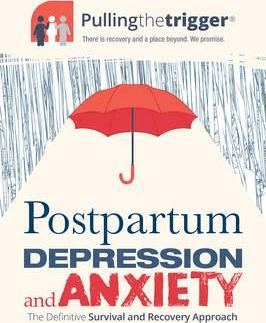
    Youngest was given the all clear aged one but it had taken its toll on Joel and I. I developed postnatal depression and severe panic attacks. I asked for help and went to counselling. Since then we’ve valued and always worked on our mental health.  Read this easy to use self help book about postnatal depression. 

    Postpartum Depression and Anxiety : The Definitive Survival and Recovery Approach

    Postpartum Depression and Anxiety : The Definitive Survival and Recovery Approach

    The Day My Physical Health Changed

    One day in 2009, aged 32, I woke with a sudden sharp pain around and behind my right eye. Standard painkillers didn’t help the pain, which was so severe I cried with every movement. I was signed off work for two months whilst my GP tried to help me. 

    I was misdiagnosed with infections and 2 chronic pain conditions before I was finally diagnosed with atypical migraine. I was given strong, preventative medication which my body took months to get used to. I had a phased return to my part time hours.

    Although the medication worked I still had low level constant pain, affecting family life and interfering with weekend plans. So I explored alternative therapies until I found a cranial osteopath who helped me live less painfully and our family more happily. 

    We could travel again and had many family adventures. The best thing was not being sensitive to sound so I could go to gigs, swim and watch the boy’s school shows. I aimed high and was promoted to an Early Years specialist and Senior teacher.

    Becoming A Chronic Pain Sufferer

    I started having migraine attacks every weekend. Then in January 2014 I had an attack that wouldn’t ease so my GP did an urgent referral to a neurologist who said my migraine had become chronic. Sadly that pain’s still with me years later. 

    I tried to push on but it was unbearable, I took sick leave, thinking I’d find a solution with traditional medication and natural therapies. Over the next 8 months I tried every migraine medication, elimination diets, reiki, reflexology and more but nothing helped.

    I couldn’t teach and began worrying about the future for myself and my family. I kept fighting it but the neurology team didn’t seem to care. I’d be upset on the phone to the nurse due to unbearable pain and she’d tell me to talk to my GP about ‘my mood’. 

    My tears fell from frustration of being unheard and the unrelenting pain that seemed different to the migraines I knew. So I researched constant headaches and a new symptom jumped out at me; the ‘whooshing’ in my ears was pulsatile tinnitus (PT).

    This was the first piece of the puzzle so I joined an online support group. I heard of a PT specialist in Cambridge and boy was that long car journey to see him worth it. He took my situation seriously and suspected Idiopathic Intracranial Hypertension or IIH

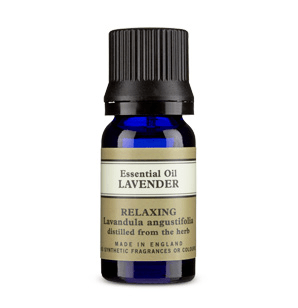
    I had to wait for the tests to confirm this and was told this would be a long process. I was on the migraine medication Merry Go Round, spending months weaning myself on and off of high doses of preventative medicine. Nothing improved my symptoms, although I got a little relief from using aromatherapy oils, especially this Neals Yard Lavender Essential Oil.

    My neurologist found out that I’d sought this second opinion and he refused to treat me. I knew I still had migraine so I was devastated. As the months went on, the ‘long process’ felt like forever. The pain lay heavy on me so I became severely depressed.

    I was losing my sense of self and felt left to rot. My GP was concerned so ran blood tests which showed I’d also developed Hypothyroidism. This explained the amplified feelings of hopelessness. My life became a chronic pain conditions balancing act.

    Idiopathic Intracranial Hypertension IIH Donate.jpeg

    Donate To IIH UK

    Improve the lives of sufferers

    What is IIH And Could I Have It? 

    IIH is associated with raised fluid pressure around the brain. The fluid that cushions the brain is called cerebrospinal fluid (CSF). It can cause disabling daily headaches and visual loss, which can be permanent.

    — iihuk.org.uk

    I started researching the symptoms of IIH, although I knew I didn’t have eye (optic) nerve swelling, called papilloedema. I was convinced I had it despite the headache specialist I saw shutting down my questions about IIH, as I didn’t have papilloedema. 

    IIH without Papilloedema (IIHWOP), is a very rare type of IIH. Less is known about it and many Doctors deny it exists. But the Cambridge team were working with other patients with similar symptoms to me so sticking with them was the best decision. 

    To be diagnosed with IIHWOP you need brain scans and a lumbar puncture (LP). Your explanation about the details of your symptoms is vital so I needed to document my experiences so I could give the specialists a clear picture of what was happening. 

    IIHWOP affects people differently so someone may have some or all of these most common symptoms. They may have additional symptoms too but all impact your quality of life. These are the most reported symptoms – read more about this here.

    • Headaches

    • Pulsatile tinnitus (PT)

    • Visual obscurations – temporary black outs or grey outs

    • Blurred or double vision 

    • Photopsias – short term flashes of light

    I still suffer with the same symptoms I had originally although the intensity changes. As well as PT, I have constant pain in my head, neck and around my right eye. I get very nauseous and have poor mobility; I can get dizzy, black out and stumble or fall. 

    I also suffer with brain fog, a type of cognitive dysfunction involving memory problems, lack of mental clarity and an inability to focus. This is linked to all of the chronic pain conditions I have but it has  improved with each surgery I’ve had for IIH. 

    IIH has left me disabled and bed-bound most of the time. I used to feel guilty about how this limits what I do but now I live day by day, saving my energy for family and friends. My family is about living a happy life, full of laughter and making memories.

    The Challenge To Get Treatment 

    My CT scans showed narrowing of blood vessels in the transverse sinus. This is part of the system acting as a conduit for the blood needed to oxygenate the brain. Watch how blood should drain into the dural sinuses through the internal jugular vein.

    This means I have restricted venous outflow so fluid builds up in my skull, causing a pressure cooker feeling. Headaches are a symptom of all my chronic pain conditions, so I’ve documented how they affect me to help me get the treatment I need. 

    However, getting the treatment for such a rare disease isn’t easy. Nothing was worse than a trip to A&E in late 2014 at the end of an intense weekend after I’d blacked out for the first time. When I finally saw a doctor she would only give me paracetamol! 

    My pain levels were so high, I was shaking as my legs felt like jelly.My GP prescribed a cocktail of pain relief, including oramorph, the following day. Of all my chronic pain conditions, IIH was the hardest to control, often leaving me I able to do anything. 

    This was a new level so Joel pushed for Cambridge to do the diagnostic tests. I was officially diagnosed with IIHWOP after the consultant listened carefully to how well the LP had temporarily reduced my pain levels, despite my LP result being low.

    My treatment plan, however, was delayed for over a year as their trial was under review. In 2017 I had my first of six surgical treatments. I’ve had skull and spine surgeries to create room for my veins and brain stents to reduce CSF build up. 

    The Truth About Living With Chronic Illness.jpeg

    The Truth About Living With Chronic Illness

    The truth is that living with chronic pain conditions tests your limits. We knew it would be a marathon, not a 10k race but I’ve had to accept that I need walkers, a stairlift, a wheelchair, and my gig ear plugs, to make it possible for me to go out on better days. 

    Joel’s my main carer and my boys are young carers for me. I also have a PA here each weekday lunchtime who is like a family member now. She ensures I eat and wash. She cooks, does laundry, keeps things tidy and is perfect company for me.

    Joel, myself and the boys have had to adjust how we live day to day with chronic illness in the mix. But by learning how to communicate effectively we’ve developed a stronger bond. The boys have become independent and resilient. 

    This is key to being able to thrive despite challenges. We work as a team to develop and encourage personal growth. My teaching skills have helped me facilitate finding solutions by making time to reflect on life whilst being mindful. 

    Joel’s always been more spontaneous than me so I’ve learnt how to make the best of my good days. I still love seeing friends or going out to eat but I have to be aware that all activity has consequences with high pain and sleep disturbances afterwards.

    We’ve created new routines to make the most of the time we have. We plan time together, such as family get-togethers and date nights. The boys tell me about their day and Joel and I make time to talk about how we’re feeling. This pays off long term.

    I know I’m so lucky to have Joel guide and stand by me through the toughest times and enjoy the good when we can. Chronic pain conditions impact your relationships so you have to make time for each other and find ways to release the stress. 

    The Chronic Pain Conditions Lifestyle Lowdown 

    Life can change overnight when you develop chronic pain conditions or mental health problems. When that involves family, your relationships change too. My story shows this and how we’ve succeeded by mixing plans with a day by day attitude. 

    Some people are diagnosed quickly with fairly common conditions, some spend years searching for a diagnosis. Wherever you are on your journey, it’s vital to learn about your condition and its symptoms so you make informed choices for treatment. 

    Any diagnosis leads to questions and concerns about the future. I believe that this is when you need a sense of purpose, especially when facing big changes and decisions. This is why I began blogging about my journey to raise awareness. 

    I’ve worked hard on my well-being to cope with the depression and pain that can hold me back. I refuse to let it win so I use distraction tactics. I am creative, I meditate and try to put myself first. Read about how I prioritise my wellness needs here.

    My husband struggled with his mental health and as our boys were young we chose to do family therapy. Thankfully my husband and children supported me in the good, bad and horrendous times. We built strategies to build good mental health for us all.

    Developing routines and structure leads to healthy communication which has made our family an awesome team. With their support I’m now emerging strong with hope and determination to get through hard times and enjoy the good.

    Stay safe
    L 💜

    P.S I can help you create better wellbeing strategies for living with chronic pain conditions. Download my free well-being planner here to prioritise your needs. If you want to get on a waiting list for updates on my first ever well-being product, please sign up to my newsletter below.


    ✋ Hey there! I hope you’re feeling stronger now. If so, sharing the love will help me help other mums with chronic invisible illnesses.⬇  Hit one of those sharing buttons or save the images to Pinterest and I will do a bed-bound happy dance – there’s an image for you!

    #block-yui_3_17_2_1_1599483536273_21920 .sqs-gallery-block-grid .sqs-gallery-design-grid { margin-right: -20px; }
    #block-yui_3_17_2_1_1599483536273_21920 .sqs-gallery-block-grid .sqs-gallery-design-grid-slide .margin-wrapper { margin-right: 20px; margin-bottom: 20px; }