
Tag: IIH stories

  • An Astonishing Look Into A Day With Chronic Illness

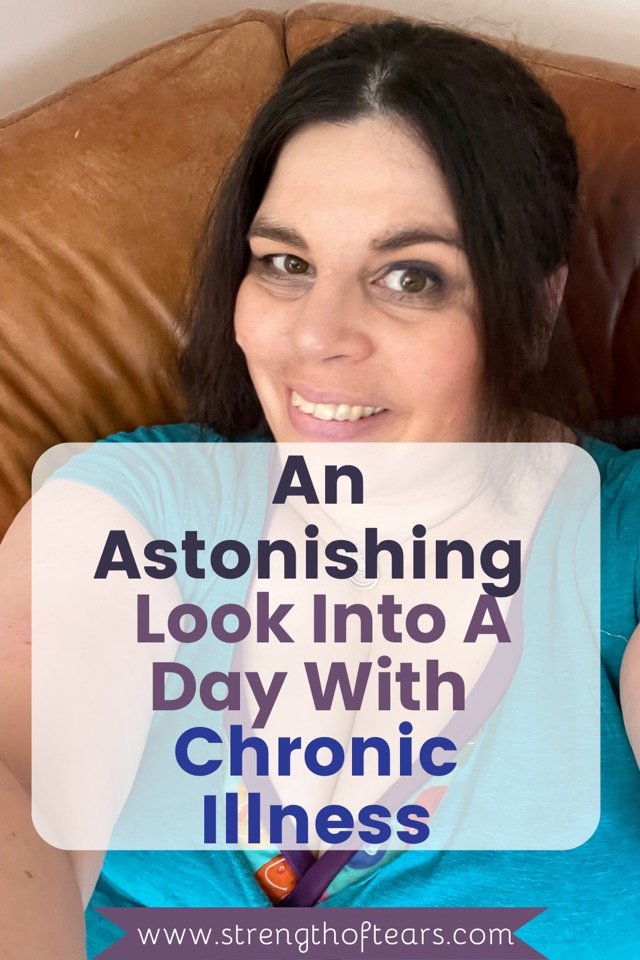
    An Astonishing Look Into A Day With Chronic Illness

    An Astonishing Look Into A Day With Chronic Illness

    Ever wondered what a day living with chronic illness and disability looks like? Today I’m taking you on an astonishing look into the highs and lows that can occur day to day, as well as some insight into the strategies that work for me.

    From the moment I wake up, I’m already facing barriers. My chronic illnesses make it hard to get out of bed, often leaving me exhausted and in pain. Every day is a balancing act where I have to be mindful of my energy levels and make sure that I’m taking time to rest. 

    This behind the scenes, focused, look into a day of my life with chronic illnesses, pain, and fatigue is part of a Linkup blog organised by Sheryl Chan from A Chronic Voice. Sheryl has written these questions which I’ve answered to write this blog.  


    An Introduction To My Chronic Illnesses

    In 2009 I was diagnosed with migraine disease after 20 years of undiagnosed attacks. My migraine became chronic in 2013, diagnosed when you have 15+ headache days a month. Every weekend was ruined by migraine attacks. 

    In early 2014 I fell ill with migraine-like symptoms, which my doctors thought was a month-long migraine attack. When it didn’t show signs of stopping, I noticed whooshing in my ears. My GP told me this new symptom was pulsatile tinnitus. I knew at once this was more than an extended migraine attack.

    My local neurologists wouldn’t look into this, and feeling frustrated, I sought specialist treatment in Cambridge. I was diagnosed with Idiopathic Intracranial Hypertension or IIH, a rare brain disease, 9 months after my symptoms started. 

    IIH medication didn’t help and it became apparent that I had an atypical presentation of this rare disease. The Cambridge specialists were working on a trial treatment for people with the same outlook as myself but I’d missed the deadline. 

    I had to wait another year for this controversial surgical treatment which I found incredibly stressful but had the support of my GP. Meanwhile I tried every migraine preventative to appease my various neurologists, who were all against my treatment plan, but to no avail. 

    I became depressed and had anxiety because of grief from losing my Career and active life, disagreements with doctors, as well as worries about experimental treatment. If you’d like to know more about my IIH treatment, please read this blog.

    What My Day Looks Like 

    When I first wake up I am confronted with the pain in my face that I live with constantly, this quickly translates to nausea. My thoughts quickly go to when I can take my medications to combat the worst symptoms, which I have to take with food. 

    Sometimes I wake very early because the pain is off the charts and I have to take a dose of Oramorph to get me through until breakfast. This is the next barrier as I can’t function until my medications kick in. So my husband, Joel, makes me breakfast and brings it to me in bed. Joel prioritises caring for me into his busy morning. Read Joel’s point of view as my Carer here. 

    My morning is then dedicated to rest as I take many heavy duty pain relief and preventative medications. I usually fall back to sleep while watching television, either a series of snoozes or a block of sleep, depending upon how high the pain is. 

    On the highest pain days my body simply can’t rest enough to sleep so I will force rest with meditation which is a brilliant restorative practice. So even if I can’t sleep I get some complete rest, often with the help of an oramorph dose. Thankfully on low pain days I don’t even think about taking any oramorph as sleep is enough of a boost on its own.

    My Carer, Sam, arrives late morning and brings me a cup of herbal tea and opens my curtains, to help me wake up at noon. Joel does this at the weekend as it’s vital in helping me become operational. They also get clothes out for me so I don’t have to bend down as this increases my intracranial pressure. 

    Sam or Joel bring me lunch at 1:30pm so I can take my next lot of medicine, both helping me gather enough energy to shower. Some days are easier than others but I use a shower stool to save energy for getting dressed. It’s painful and tiring to wash my hair so I only do this once a week. 

    On my better days, I’m usually functioning at my best around 3-6pm, so this is when I usually focus on writing my blogs, coaching journal and self-help downloads. I also write for patients at Teva’s Life Effects which you can find here.

    My favourite part of the day is spending time with my family when I manage to make it down to the sofa for a change of scenery. This routine only started at the beginning of 2023 as I’ve been building up my stamina by swimming regularly for over a year. 

    I head down around 6pm and curl up on the long seat, sometimes napping. Then we eat dinner and watch TV as a family which has really helped my mental health as I feel more connected. 

    I stay down until about 9pm when I take my nighttime medication which is even stronger than my morning regime. I wind down watching TV in bed with Joel, when we get a chance to hold hands and snuggle. 

    When I actually settle down to sleep, I play Wordle and other puzzles to help keep my brain working. Then I settle down, wearing my frozen ice hat that helps soothe my pain so I can sleep as my pain is always at its worst at night. 

    An Eye-opening View Of A Day Living With Chronic Illness

    What I consider a daily self-care must do.

    Writing about what I’m grateful for in my journal helps me remember the positives, even on days that are awful. Living in constant pain is so exhausting and can be very negative if the pain gets on top of you. 

    Are you are able to do any exercise? If so, what do you enjoy and does it help with managing your pain?

    I started swimming in 2022, when my social worker organised for my Carer to take me. I’ve gradually built up to twice weekly. I find swimming helps my pain levels, unless I can’t get out of bed. I have to take Oramorph when I’ve finished, as showering and dressing wipes me out, despite having help.

    Things that help me de-stress in my everyday life.

    Things that improve my mental health are essential oils, doing my make-up, organising anything, and swimming. I have to pace myself so everything takes longer than someone without chronic illness.

    The household chore I have the most trouble with.

    Everything! Luckily I have a Carer and cleaners but I’m gradually doing little chores now that I’m downstairs more, such as plumping cushions, drawing curtains and wiping down the surfaces in the kitchen. The worst chore is when the hoover comes out (I don’t do it) but I struggle with the noise.

    What’s breakfast, lunch and dinner typically like. Any diet protocols?

    My nausea and pain levels dictate my diet and I crave certain foods whilst my body is going from zero to functional. I always have toast and marmalade for breakfast, and this is my go-to when I’m in lots of pain. For lunch I usually have a sandwich and fruit. Dinner is quite varied as this is my best time of day.  

    I went vegan in 2021 which I believe has contributed to my overall health being slightly improved. I plan the menu for the week so my family, who are pescatarians, generally eat vegan meals as we eat lots of vegetables, lentils or chickpeas and some meat substitutes. Sam preps or cooks a meal in the slow cooker and Joel finishes it off and serves so it’s a team effort.

    People I see most often and my favourite activities to do with them.

    Sam comes for 2 hours every weekday and Joel works at home so I love having a good natter and a giggle, although this increases my pain levels. I love going out with my family on my best days, which is usually quite spontaneous to make the most of low pain levels. 

    Joel is my best friend so we plan date nights at home, visits to the village pub and live music and comedy in the last few years. Music has always been our thing so this is vital to our healthy relationship, although I know I will put myself into a week or so of high pain afterwards.

    Do you have any pets and how are they a part of your life?

    Having rescue cats has rescued me since I became ill in 2014. The wonderful Salmiakki and Finleaf came to live with us in 2019. Salmiakki (a Swedish liquorice) owns me. He knows when I’m in high pain and demands to sit on me so I rest. They are house cats so they always keep me company. 

    If I could leap out of bed pain free for ONE day within my current environment and circumstances, I would…

    tidy and clean the whole house as I’m a control freak. Letting other people organise my house and leaving things that aren’t as tidy as I’d like, has been one of the hardest things to learn since getting sick. I would also see my best friends more often.

    Is there anything else you’d like to share about daily living with chronic illness/disability?

    I hope people will realise that we never know what someone else is really going through. Whether it’s how much help I need to get going each day, sleeping all morning or going to bed wearing an ice hat, I’m in pain for every second. Some of the time it’s barely noticeable but I feel it dragging me down. 

    By sharing what my day to day life is like I hope I can raise awareness of the bigger picture as people only see snippets of me online or see me on my best days in person. I am not sharing this for pity or sympathy and I am not complaining.

    The Takeaway

    Writing about my day living with chronic illness has been quite shocking to me to see how much help I still need even on the days when I’m able to manage more. I feel strongly the need to celebrate the connectivity I have with my loved ones, 

    Writing this has made me see how much progress I’ve made since I last wrote about my chronic pain conditions. However, my progress is still very small which has reminded me that I still need care every day to function.

    I hope that you have found this blog an insight into life with chronic pain. I would love to hear about what surprised you or if you have any questions about anything I’ve mentioned. Just leave a comment below. 

    #block-d5972ebefb99f0449a79 .sqs-gallery-block-grid .sqs-gallery-design-grid { margin-right: -20px; }
    #block-d5972ebefb99f0449a79 .sqs-gallery-block-grid .sqs-gallery-design-grid-slide .margin-wrapper { margin-right: 20px; margin-bottom: 20px; }

    ✋ Hey there! I hope you’re feeling stronger now. If so, sharing the love will help me help other mums with chronic invisible illnesses.⬆  Hit one of those sharing buttons or save these images to Pinterest and I will do a bed-bound happy dance – there’s an image for you!


  • The Cruel Impact Of Being In Agony With Brain Fog & IIH Headaches

    The Cruel Impact Of Being In Agony With Brain Fog & IIH Headaches

    The Cruel Impact Of Being In Agony With Brain Fog And IIH Headache

    An Asian woman with long black hair is wearing a green blouse and has her head in her hands in pain. The writing on the left says 'the cruel impact of being in agony with brain fog and IIH headaches

    This IIH Awareness Month, I want to share how brain fog affects me as someone with IIH headache. IIH or Idiopathic Intracranial Hypertension is a rare brain disease affecting 1-3 in 100,000 people. I’ve had IIH for over 8 years and it has improved a bit with treatment.

    IIH., which you can read about here, has no known cause (idiopathic) and is focused in the brain (intracranial) where it raises pressure (hypertension). Headache is my most severe symptom, my second is brain fog, a type of cognitive dysfunction.

    The name gives it away, but it’s literally a foggy brain state! Brain fog and headaches are both constant for me. Never getting a break from these symptoms is exhausting. Initially my memory was so poor, to have a conversation was a challenge for me, as a mum, and my family. It’s less extreme now but still affects me daily.  

    Here I’m going to tell you about the symptoms of a foggy brain and  how long it can last. I’m also going to explain how this affects me, as someone with IIH headache and migraines. Then I’ll share tips for better managing brain fog and headaches as a tired mum.

    What Are The Symptoms Of Brain Fog? 

    Brain fog is not a medical term, but a term for those who experience a groggy mind. Read more about brain fog causes here. The most common symptoms of brain fog are short term memory loss, mental fatigue, unclear thoughts, trouble finding words and a sense of non-reality.

    For those with chronic illnesses, such as my brain fog and headache conditions of IIH and migraine, foggy brain also often occurs as an inability to follow simple instructions, extreme tiredness, difficulty processing information, being easily distracted and confused. 

    My symptoms of brain fog show up as all the above but I also have difficulty following a conversation, I struggle to find the words I need and multitasking is hard work! I feel as though I’m wading through treacle, everything slowing down and information is stuck hard. 

    Others will encounter their symptoms differently, as it can change from day to day and even fluctuate over the same day. My husband, Joel, is often dragged into twilight discussion as I try to share a story from the day. I often lose my place, go off track and then go back a step or restart, finding I’ve forgotten the point of the story anyway! 

    How Long Does Brain Fog Last? 

    There isn’t one answer for this, usually symptoms of brain fog are temporary or happen in short bouts over more time; it’s different for everybody. Those with brain fog and headache conditions often have persistent mental fog, which is felt on a sliding scale of severity. 

    The Coronavirus pandemic shone a spotlight on brain fog and research has shown that those with long Covid will have the symptoms of brain fog for weeks or up to many months. They did find that brain fog decreased in severity over time. 

    Prior research into mental fog was sparse, but with new scientific studies we’re learning more about brain fog and so improvements for symptom management are more likely. It’s vital to reassure anyone with constant brain fog, that they will not have lasting brain damage.

    Mental Fog

    Brain fog is like walking through a dense forest that doesn’t seem real. This analogy of brain fog shows how much it can impact your ability to function when a foggy bran is persistent.

    How Brain Fog and IIH Headaches Impacts My Life

    I believe it’s crucial to raise awareness of IIH symptoms, so I released this blog last year. became very unwell, overwhelmingly with brain fog and headaches, and had to leave my 15 year career as a teacher. These symptoms of brain fog dominate my life with IIH.

    I am one of less than 6% of patients with IIH who have IIH without Papilloedema. This is swelling of the optic nerve that can lead to blindness if untreated. IIH symptoms are debilitating and impact quality of life, especially as the most common symptom for us in the 6% is headaches.

    The cruel IIH headache I have on both sides of my head and around, below and behind my right eye, is like permanent brain freeze, migraines and facial neuralgia all at once. However, I also have constant, debilitating mental fog which affects every aspect of life.

     Brain fog surrounds all of my IIH symptoms:

    • Before the pain heightens, I feel agitated and confused 

    • When it eases I’m dopey and slow to process information 

    • High pain means poor sleep which leaves me even more tired

    • The medication I take makes me sluggish and confused

    • Living in the dark due to light sensitivity affects my sense of time

    • Hyperacusis (magnified sound) and vertigo makes the world not seem real

    When brain fog and headaches work together, my IIH symptoms are incapacitating. When I was first ill these symptoms were so severe I lived in an almost fugue state, impacting all my relationships, even my marriage, as I just couldn’t maintain a conversation.

    “Pain like this, felt at the core of one’s being, in the brain, carries an added challenge in interfering with how you think,” Paula Kamen 

    I’ve had 6 surgeries in the last 7 years, including having brain stents implanted on both sides of my brain. My brain fog improved a little with each surgery as the intracranial pressure reduced a little. It still affects me daily but now I’m able to write coherently.

    I’ll always have impaired brain function but now I can see the funny side when the pain eases a little. Brain fog can lead to humorous but frustrating events, such as when I put hand cream on my face or wear a top inside out all day. You just have to laugh!

    A woman with Down's Syndrome is wearing black leggings and sleeveless top with white trainers. She sits in steps in front of a wooden door as the wind blows her hair. The writing says 'How Tired Mums Can Better Manage Brain Fog And Headache

    How Tired Mums Manage Brain Fog

    Tiredness can slow your thought process but a mental fog affects the brain’s ability to think clearly. Brain fog is more than tiredness and makes life more even more challenging.

    How Tired Mums Can Better Manage Brain Fog And Headaches

    All mums experience exhaustion but no amount of sleep will ease a foggy brain migraine or IIH headache.  When we have IIH symptoms, life can be extremely limiting and tiresome but any headache condition exposes us to fatigue. This adds to mental fog and makes life even harder to manage.

    As someone with IIH headache and a chronic migraine sufferer, I have daily brain fog. I’ve particularly noticed my inability to remember details, have conversations, manage my time and multitask; so I’ve collated this list of tips to better manage brain fog and headaches:

    • Sleep Routine – this is often the first thing to go as Mums but with brain fog too we need good quality sleep. I’m not suggesting 8 hours a night, as we’re all different but sleep hygiene is crucial for us all. Keep track of your sleep and what helps you sleep better. 

    • Eat Healthily – nutrition deficiencies can worsen brain fog so we need a balanced diet. My mental fog has improved a little now I’m vegan and more aware of nutrients. Supplements can also help, read more about that here.

    • Exercise – gentle exercise, like a short walk, can help. I don’t mean going to the gym or for a run. Physio got me more mobile and it’s helped my symptoms of brain fog. Now that I swim often, I’ve noticed even more improvements. Walking round the house and doing the washing counts as exercise! 

    • Keep Hydrated – Regular fluid is important for brain health, but alcohol and caffeine is dehydrating. I drink 3-4 litres to combat dry mouth side effects of my medication, but your body is unique. Try to drink about 2 litres of water a day. 

    • Relax – listening to my body means I tune in to when I need to rest, usually meditating or doing gentle yoga. To manage your stress you need to do positive self-care acts for yourself. This could be a long bath or catching up with friends.

    • Take a Break – regular short breaks from activity, helps us manage better. I use the Pomodoro technique when working,  25 mins focus, then a 5-10 minute break to do my physio or meditate, anything mindful is rejuvenating.

    • Get Organised – This is tough but essential for all mums! I struggle to plan a day, now I have IIH symptoms. I start with the simple act of getting up, following the same simple routine. Having a clear plan and structure gives focus.

    • Time Checks – pain results in our dopamine levels dropping to make us stop and rest but this also affects our memory. So use your phone for alarm reminders and memory prompts.

    • Focus – prioritise tasks so you can focus on one thing at a time and remove distractions. I have real difficulty multitasking, made worse by tiredness. Avoid doing things when tired or anxious so you can focus more.

    • Make Connections – It can be easy to feel isolated when we are struggling with mental fog. Connecting with those who understand what you’re going through can be incredibly helpful, whether it’s online or in person it gives you support

    I’ve created this free wellness planner to help you prioritise for better life balance, which will help you organise your way through brain fog and plan for dealing with the symptoms of brain gog ad headaches. Simply click on this link to sign up for your free copy. Please feel free to ask me any questions you have.

    If you’re struggling to cope with brain fog, it’s important to speak to your doctor or seek professional help from a therapist, counsellor or life coach. They can help you manage your symptoms, emotions and focus on finding solutions.

    In conclusion…

    The symptoms of brain fog affect people differently, depending on the cause and symptoms you experience, so what helps can be different for each person. As women and Mums, we may also be affected by hormonal changes which is important to be aware of. 

    For me, brain fog and headaches, especially my IIH headache, has impacted my brain function from the day my symptoms started. It affected my ability to have conversation, and even now after six surgeries, I often still don’t join the dots when processing information. 

    There are lots of things you can try to help ease symptoms. To find the combination that works for you, track your symptoms and what you use to work out what helps you. Many treatments involve lifestyle changes and day-to-day management of the symptom.  This IIH awareness month, see how I experience IIH by checking out my blogs. You can see how another mum found managing IIH symptoms in this wonderful guest blog.


    ✋ Hey there! I hope you’re feeling stronger now. If so, sharing the love will help me help other mums with chronic invisible illnesses.⬇  Hit one of those sharing buttons or save these images to Pinterest and I will do a bed-bound happy dance – there’s an image for you!
    #block-yui_3_17_2_1_1663686217746_56882 .sqs-gallery-block-grid .sqs-gallery-design-grid { margin-right: -20px; }
    #block-yui_3_17_2_1_1663686217746_56882 .sqs-gallery-block-grid .sqs-gallery-design-grid-slide .margin-wrapper { margin-right: 20px; margin-bottom: 20px; }

  • What To Accept After Years Of Intracranial Hypertension Treatment

    What To Accept After Years Of Intracranial Hypertension Treatment

    What I Need To Accept After Years Of Rare Intracranial Hypertension Treatment

    Rare Disease Day 2022 is always on the 28th February, so at this time of year I tend to reflect on the treatment I’ve had for the rare brain disease I have – Idiopathic Intracranial Hypertension (IIH). 

    I’ve been treated by a specialist team in Cambridge for the past 7 years. They’ve developed rare treatment plans for patients, who like me, often present with atypical IIH symptoms. Sadly, the treatment options they’ve developed have been exhausted in my case.

    I spoke to my neuroradiologist about this last month and he asked about the results following my first procedure, so I re-read my notes and the hopeful blog I’d written back then. I now have to accept that my symptoms haven’t resolved as I’d hoped and this blog could help.

    The surgical team has established unorthodox medical care that most neurologists consider controversial. This affected the support I received, so I had to learn to advocate for the care I wanted. Medical journals now publish more on these treatments, giving me hope. 

    In this blog I’m going to look at:

    • My Background Story Of Idiopathic Intracranial Hypertension 

    • What I Wrote About How I Felt After This Procedure 

    • The Results Of My Following Treatments 

    • What I Am Feeling After Completing My Treatment Plan

    My Background Story Of Idiopathic Intracranial Hypertension 

    In January 2014 I became ill and was diagnosed with chronic migraine, but after years of migraines I had doubts. I grew aware of a symptom I’d never experienced before, a whooshing in my ears. I researched Pulsatile Tinnitus (PT) and my family doctor confirmed it.

    I found an ENT surgeon who specialises in PT and he believed I had IIH. But my symptoms don’t fit typical diagnosis factors, so with the support of my wonderful family doctor, I had to advocate for 18 months to get their Intracranial Hypertension treatment. 

    IIH, it’s symptoms and my full story are detailed on this blog. My main symptom is constant head and facial pain that’s mostly right sided and mobility issues due to imbalance. I also have brain fog, nausea, photophobia (light sensitivity) and PT.

    In October 2014, my IIH diagnosis was confirmed with a lumbar puncture and a CT venogram (scan with dye). This showed narrowed veins at the skull base and venous sinus stenosis, where the large vein in the brain is narrowed. This causes fluid build up in the head. 

    IIH is a rare disease that affects 1-3 in 100,000 people. My scans identified Transverse Venous Stenosis causing constricted outflow in the veins at the back of my skull. This and the lack of papilledema puts me in the group of 6% of all IIH patients with this presentation. 

    Their Idiopathic Intracranial Hypertension treatment is controversial with most neurologists. IIH is usually accompanied by Papilledema, which if left untreated can lead to loss of vision. The pressure reading from a lumbar puncture is usually very high, mine wasn’t. 

    When I’d mention the Cambridge team or IIH, my local neurologists turned me away. I found one who would see me, but she still didn’t agree with the team’s radical surgical plan to remove some bone to improve venous outflow in my neck (see below for details).

    This sounds outrageous but my pain and standard of living was so debilitating that I’d try anything for relief. The plan was brain and spine surgeries and stenting the narrowed vein in my brain. This article explains the link between venous sinus stenosis, PT and IIH.

    Reflecting On The First Procedure Of My Treatment Plan

    After a very long year of waiting, the team’s neuroradiologist was able to perform my first Intracranial Hypertension treatment. I had a cerebral angiogram and venoplasty as an outpatient procedure to see if surgery to expand a narrowed vein would be beneficial. 

    They thread a catheter up to the blood vessels in the neck that supply the brain, imaging and measuring the pressure inside my veins. Then they inflate a balloon in the vein (venoplasty) to monitor how it responds to decompression over a week. 

    I noticed a difference immediately and by the time I went back to the ward I was a different person to the one admitted that morning. I had lower pain levels, no nausea and a clearer head. The difference was visible and as I chatted, Joel, my husband, said “you’re Laura again”. 

    The improvement continued over the following days. I was able to walk the stairs, which I hadn’t done for 12 months, I didn’t need any oramorph, which I’d been taking 2 or 3 times a day and I reduced my other pain killers temporarily.

    My PT and nausea returned first and a week later I woke up in my usual state of brain fog and pain. My surgeon was pleased with the results of the venoplasty. Although temporary they clearly showed I had restricted venous outflow and that surgery should be beneficial.

    What I Wrote About How I Felt After This Procedure 

    I’d been told not to be disheartened if the symptoms reappeared the following week but it was frustrating to return to debilitating pain. However, I was pleased that this proved I didn’t just have chronic migraine.

    At the time I wrote “I am… pretending I’m ok, feeling bad for moaning about hurting, crying and letting people down and not being able to do things with my family… [as] the pressure [builds again]. 

    [I’m] missing out on… living life… trying to explain why everything takes so long and feeling worthless… knowing that the freedom of mobility is drifting away. [I’m] crying and waiting for that time bomb of pain to build so much that [I] can’t take anymore.

    I have meditated, eaten, napped and had a few pep talks from friends and my husband… There have been tears today but I’ve been reminded that I [will] see my amazing boys grow up… with my best friend [Joel] of 18 years. 

    I have hope that there might be light at the end of this very, very long tunnel… I have amazing friends and family that are always there… even though I feel I’ve let [them] down by only being better for a few days… [when] I was so tired I just slept! 

    I am back making jewellery… reminding myself that I CAN still do things that matter despite feeling like I’ve been run over by a truck after drinking… whiskey.” My true friends have stuck by me and Joel still gives me pep talks. He and the boys keep me going each day.

    The Results Of My Following Treatments 

    It wouldn’t be a complete reflection if I didn’t share the Idiopathic Intracranial Hypertension Treatment I’ve had since that first procedure. This blog has been more emotional than I thought because it’s shown me how poorly I was at the start of this journey. 

    I’ve had venoplasty procedures and many CT venograms. These show how the jugular vein passes through a small space between two bony structures, the styloid process and lateral mass of the C1 cervical spine. In my case the jugular vein is narrowed and flattened. 

    The anatomy of these areas are shown in these images.  

    This is my IIH story outline of the surgeries I’ve had: 

    1. Styloidectomy – removal of a small bone fragment that sticks out of the skull, behind the ear.

    2. Stenting on the right side of the transverse venous sinus.

    3. C1 mass removal of the right transverse process.

    4. Re-stenting the right transverse sinus due to a compromised stent. 

    5. C1 mass removal of the left transverse process.

    6. Stenting on the right side of the transverse venous sinus. 

    With each surgery I’ve seen some improvement, most notably my cognitive ability. My final surgery, in 2019, has had the most impact. My balance improved significantly and a month on, I managed a day out with my family, using a wheelchair, for the first time since 2014.

    I’ve hoped for a life without constant pain since 2014. My symptoms improved with each surgery. Sadly I still suffer daily but there are positives from my treatment, mostly being able to be a good mum & wife.

    What I Am Feeling After Completing My Treatment Plan

    It’s been emotionally challenging reliving my IIH patient stories again. There’s been many tears as I think back to the hope I had for this treatment, a normal life off of the merry-go-round of constant pain. I’d naively counted on my surgeons to fix me, so the reality is crushing. 

    When the first venoplasty procedure had clear results, confirming I’d benefit from venous stenting surgery, I felt optimistic. Every surgery improved my condition but I’d gradually worsen each time. 

    Reading a blog from the start of this journey shows how challenging communication was for me. I’d be stuck there without surgery which would have broken my family. As I complete my treatment, the harsh facts are that I suffer daily but I am able to be a good mum and wife

    This 2012 US case study states that “Intracranial venous hypertension may result from… compression of the jugular veins at the skull base. Although rare… [it’s ] important to recognize [this] because stenting…may actually exacerbate the outflow obstruction.“

    My surgeon stated this could happen with stenting. He described it as removing a blockage at the top of a hose pipe, when it’s squashed lower down. The water builds up, leading to increased pressure. 

    My scans still show narrowed veins at the skull base but I’ve had all bone surgeries recognised for treating IIH. My surgeon can only see one possible surgery to relieve pressure here but it isn’t seen as a viable treatment for IIH. I’m frustrated by having to forget this option. 

    All involved are disappointed about completing this treatment plan without the success we’d hoped for. But PT took me down this path, and I’d hoped that this symptom would be resolved. As this is mostly the case, then I can count this part of the treatment a success. 

    This has reminded me how my quality of life has improved because of my Idiopathic Intracranial Hypertension treatment plan. The positive outcomes are:

    • The cognitive change I’ve experienced is quite dramatic. 

    • My mobility has improved so much I no longer fall.

    • I can walk on one level of the house, without mobility aids.

    • I don’t experience daily dizziness or vertigo 

    • My phonosensitivity is less invasive

    Sadly, my head pain remains constant, despite initial improvement after surgery. My high pain levels are disruptive so I still spend much time in bed. It still takes days for me to recover from any activity, even going downstairs, which can feel oppressive. However, over time I’ve learnt how to priortise for better life balance.

    I’ve created this free wellness planner to help you prioritise for better life balance too. This is also a taster of the the Thrive Not Just Survive Journal, for mums with invisible illnesses coming out soon. Simply click on this link to sign up for your free copy. Please feel free to ask me any questions you have about using this resource.

    It’s been an exhausting journey but looking back I take the positives, such as my ability to build connections, from my treatment as I move forwards. My surgeon has suggested a doctor sympathetic to their work, who I’m working with on the next stage of my treatment plan. 

    It’s scary saying goodbye to familiar territory as I complete treatment in Cambridge. I’m reassured and hopeful after speaking to my new doctor, but I’m anxious and apprehensive about what I face ahead.

    P.S. If you’re a skim reader, catch up here –

    I’ve been reflecting on my unusual IIH or Intracranial Hypertension treatment. This rare brain disease causes debilitating pain, mobility problems, brain fog and more. I re-read a hopeful blog I’d written in 2015 after my first procedure, when my husband said “you’re Laura again” as soon as he saw me. As this treatment ends I accept my symptoms haven’t all resolved but there are positives I can take on into the next part of my journey. 

    #block-yui_3_17_2_1_1647542983744_17509 .sqs-gallery-block-grid .sqs-gallery-design-grid { margin-right: -20px; }
    #block-yui_3_17_2_1_1647542983744_17509 .sqs-gallery-block-grid .sqs-gallery-design-grid-slide .margin-wrapper { margin-right: 20px; margin-bottom: 20px; }

    ✋ Hey there! I hope you’re feeling stronger now. If so, sharing the love will help me help other mums with chronic invisible illnesses.⬇  Hit one of those sharing buttons or save these images to Pinterest and I will do a bed-bound happy dance – there’s an image for you!