Tag: mental health

  • What You Need To Know About The Mental Health Benefits Of Journaling
    What You Need To Know About The Mental Health Benefits Of Journaling

    What You Need To Know About The Mental Health Benefits Of Journaling

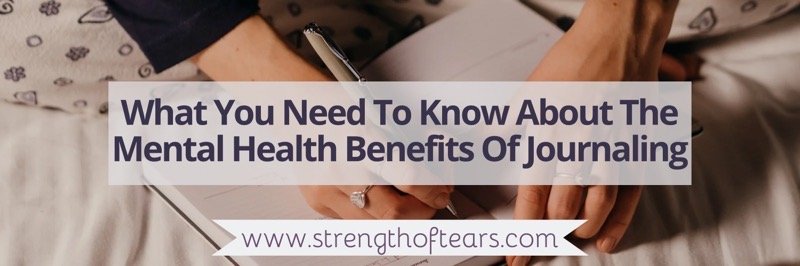
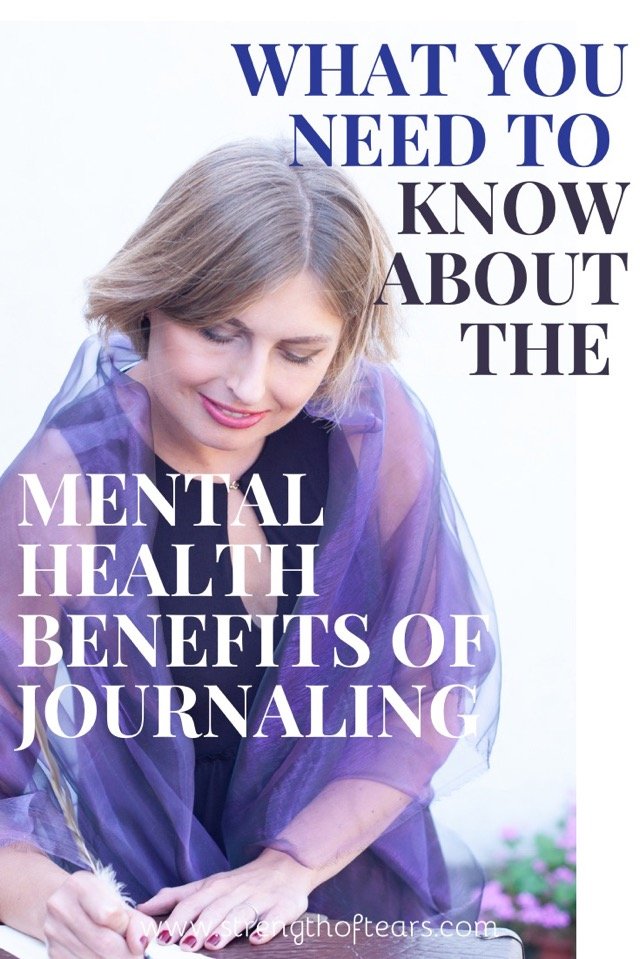
    A white woman’s hands and black sleeves show her writing in a journal with a silver pen. The writing over the top says What You Need To Know About The Mental Health Benefits Of Journaling

    Journaling is a way of recording your thoughts, feelings, habits, and gaining insights for your personal development. It can look different for each individual, some record digitally and some use paper, and it can be written or drawn. It takes work but it’s worth it for the good impact journaling has on mental health.

    Journaling has helped me cope with my Mental Health issues since I became chronically ill with migraine disease and was traumatised by the lack of support and, what I now know was, gaslighting from my neurology team. 

    The stress I was under as I tried for months to get a diagnosis, unable to work as a teacher, was immense. Even when I was diagnosed with IIH, a rare brain disease, I became depressed and had extreme anxiety as I had to wait for over a year for treatment so I had support from a mental health professional. 

    Whilst facing these challenges I started journaling about my situation as a way of exploring the difficult feelings I had, for example, writing about grieving for the life and career I’d lost. 

    This helped me work through this extremely emotional phase and I was able to rant without my loved ones being in the crossfire. Writing about my difficult emotions, whilst living with chronic illness, helped me so much that I’ve written about the benefits journaling has on our mental health when done safely. 

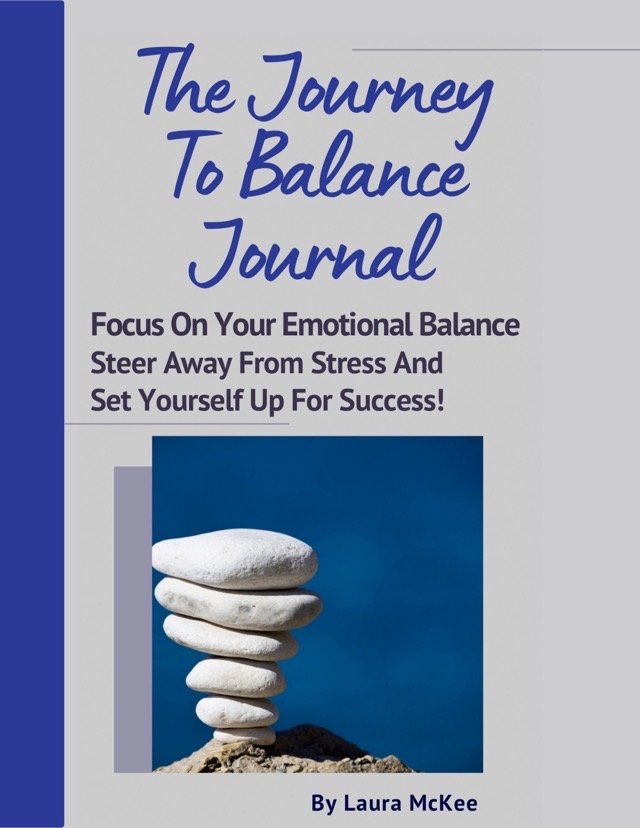
    I have also created an epic coaching journal for mental health that is written to ensure you’re not isolated in the process. The Journey To Balance Journal will help you understand yourself and your mental health needs better. You can buy the journal by clicking here. 

    You need this 400 page coaching journal!

    Forget the trends and get ready for the journal you need as a busy and stressed out mum.

    It is split into 4 sections:

    Emotional Health Coaching

    Goal Setting For Whole Well-being

    Undated Monthly and Weekly Planner

    Emotion Based Journal Prompt

    Journaling is different for everyone, some use it to record parts of everyday life, whilst others use it as an exercise to process experiences, negative thoughts and feelings. Putting these things on the page helps you take back a sense of control. Psych centra says in this article that:

    “journaling is a powerful, evidence-based strategy that you may find helpful for managing mental health conditions and stress.”

    The mental health benefits of journaling can be powerful, helping you process stress, trauma, and difficult emotions. These are some of the ways that journaling can support you:

    • Reduces stress and anxiety

    Writing about your thoughts and feelings can help you reduce their intensity and therefore loosen their hold over you, reducing symptoms of stress and anxiety.

    • Improves mood

    Journaling can help you focus on the positive aspects of your life, which can improve your mood and increase feelings of gratitude.

    • Enhances self-awareness

    Journaling can help you become more self-aware as you reflect on your thoughts and behaviors. This can help you identify patterns that are causing stress or holding you back.

    • Boosts creativity

    Writing can stimulate the creative parts of your brain and help you come up with new ideas and solutions to problems.

    • Increases mindfulness

    Mindfulness is being present in the moment. Journaling can help you practice this by focusing on your thoughts and feelings in a non-judgmental way.

    These mental health benefits of journaling show that it’s simple and effective to use journaling to improve your mental health. Regularly taking time out to reflect on your thoughts and emotions helps you develop strategies for coping with stress.

    What Should A Mental Health Journal Feature?

    Here are some elements that can are often utilised for each individual’s needs in a mental health journal:

    1. Mood tracking is one of the most important features, involving recording your mood each day so that you can analyse patterns and look at what may affect your mood. By identifying triggers, you can evolve strategies to manage them.

      This is a key feature in the Journey To Balance Journal, based on the theme of the journal and the emotion coaching in the self-help section of the journal. Over a month you record your daily mood on this graphic, colouring in using the key. There’s also space to document how triggers impact your mood.

    2. Daily gratitude log allows you to practice gratitude, which is important in promoting mental wellbeing. This exercise helps you beat negative self-talk which can stifle your personal development and impact your mood. Learn more about how to overcome this by reading my blog about beating toxic self-talk.

    I set out to ensure that the ‘Journey To Balance’ mental health journal encourages positive self-talk by having a segment where you write down what you are grateful for each day. It’s a quick and easy way to help you maintain good mental health. 

    3. Self-care habits are one of the mental health benefits of journaling, building self worth by tracking your self-care activities. Using a habit tracker can help you set goals for things that make you feel good and improve your well being. You can adopt and keep up habits such as exercise, meditation or any other activities that promote self-care.

    Recording your self-care activities on the habit tracker in the Journey To Balance Journal will help you feel motivated and committed to doing self-care. In the long run, achieving your goal to make these activities habits will improve your whole life.

    “In a nutshell, your health. wealth, happiness, fitness, and success depend on your habits.” – Joanna Jast

    4. Thought records, according to this NHS information, is a common cognitive behavioural therapy (CBT) exercise. It is explained in full here as the practice of recording and studying your thoughts and feelings about a situation so you can understand the link between your thoughts and behaviours. 

    As explained in the daily gratitude section this is a helpful tool that allows you to identify and challenge negative thought patterns. The gratitude log is part of this section of the Journey To Balance Journal for mental health. Record the thoughts and feelings you have throughout the day, so that you can process your emotions and reframe negative thoughts and feelings.

    5. Regular Reflections is a core self care activity. I discuss how this activity and others lead to emotional development in this blog (link). I explain how self reflection is vital for meeting our goals and improving ourselves through regular self care.

    In the Journey To Balance Journal for mental health, I’ve ensured that there are activities in the prompts section and space for deep work in the monthly reflection area. This is what makes it a powerful self awareness book as it helps you gain real insight into your thoughts and feelings. 

    These features should be personalised to your specific needs and goals in a mental health journal. They can be a powerful tool for promoting self-awareness, identifying patterns, and working towards positive mental health outcomes.

    Quick Guide: How Is Journaling Good For Mental Health? 

    From my own experiences with chronic conditions, I have found journaling a helpful tool for balancing my mental health. I used it as an opportunity to explore the difficult feelings I was experiencing as I grieved the life I’d known pre chronic illness. 

    Journaling helped my mental health during this difficult time period and has continued to do so as I manage the challenges of chronic illness. Journaling gives me space to shout about it without aiming my negative emotions at my loved ones. 

    It isn’t just me using journaling to process big emotions, in fact it’s well documented that journaling is good for mental health. I found research, such as this WebMD article, that explains that the mental health benefits of journaling include reducing stress, building self-awareness, regulating emotions, and breaking the cycle of obsessing over negative experiences. 

    In Conclusion…

    Journaling is good for your mental health. Recording your thoughts and feelings can be therapeutic, helping you process difficult emotions and experiences. Writing about stressful events can help you make sense of them. 

    Journaling helps you gain a deeper understanding of yourself, your values, and your priorities. It can help you explore new ideas and perspectives and can be a helpful tool for tracking progress towards goals and reflecting on personal growth.

    I know that writing about my difficult emotions whilst living with chronic illness helped me, so I have written the Journey To Balance Journal to include the 5 key features of a good mental health journal: Mood tracking, gratitude journaling, self care habits, thought records and reflections. 

    This journal for improving mental health puts emotional development front and centre, so that it has a positive impact on your mental health. Chronic illness life comes with many difficult feelings so the Balance Journal allows you to: 

    • Write freely to help you understand yourself better

    • Rant about difficult situations without it being aimed at loved ones

    • Use the coaching aspect of the journal to create a safe space to explore your emotions

    Overall, journaling can be a valuable tool for improving mental health and well-being. It’s a simple and accessible practice that can be tailored to meet your unique needs and preferences.
    #block-cb49c1408f6e510e0199 .sqs-gallery-block-grid .sqs-gallery-design-grid { margin-right: -20px; }
    #block-cb49c1408f6e510e0199 .sqs-gallery-block-grid .sqs-gallery-design-grid-slide .margin-wrapper { margin-right: 20px; margin-bottom: 20px; }

    ✋ Hey there! I hope you’re feeling stronger now. If so, sharing the love will help me help other mums with chronic invisible illnesses.⬆  Hit one of those sharing buttons or save these images to Pinterest and I will do a bed-bound happy dance – there’s an image for you!

  • An Exclusive Look At The Challenge An Unpaid Carer Faces

    An Exclusive Look At The Challenge An Unpaid Carer Faces

    An Exclusive Look At The Challenge An Unpaid Carer Faces

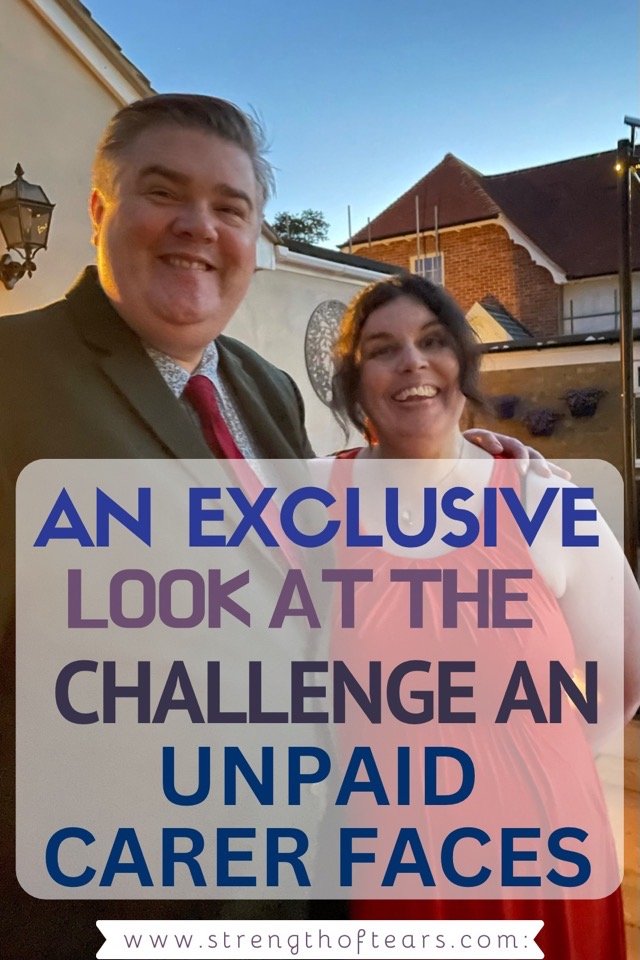
    A lavender and heart soap image with the title of the blog over it. An exclusive look at the challenge an unpaid carer faces.

    As part of this year’s Carers Rights Day on the 24th November, I have taken over my wife’s blog and am going to provide an exclusive look at life as an unpaid carer, how I manage the challenge of balancing demands on my time and energy, and what has changed as our relationship evolved to include caring for one of us with a chronic illness.

    When Laura became chronically ill in 2014, read about this here, and it eventually dawned on me that my role as Husband, Father, best friend and confidante would now be expanded to that of prime and unpaid Carer, life would become a little more complicated, especially as this would need to be balanced with being the main financial provider in the household.

    My role as unpaid Carer covers a wide variety of tasks and activities. I will try to distinguish these from the roles of Husband and best friend, though I have to be honest, this is often difficult to do!  

    As an unpaid Carer for Laura, I need to consider her needs at all times, ensuring that her physical needs are met and that I am aware of those needs at all times of the day and night.  At a very basic level I need to ensure that Laura has taken her medicines, eaten regularly, has access to clean water and is washed and clothed every day.  

    I need to ensure Laura can access essential services, such as getting to a toilet safely. I need to be there to help if she falls or passes out, getting her to safety or calling the emergency services if needed. It sounds very mechanical listing it out but this is how I can distinguish my role as unpaid Carer from that of husband. As the person I love the most and have chosen to spend my life with, she is much more than just this list of needs.

    In addition, as Laura’s condition impacts her cognitive function, I handle the more complex elements of her care and help her organise and attend medical appointments and understand the risks and potential benefits of procedures to help her make decisions right for her. 

    As well as helping Laura with the more complex elements of her care, I also help her in her role as equal partner running the household, making sure she can perform her role in key decisions around finances, household maintenance, childcare and the general running of a family. 

    I also help her to understand what is happening when, and what decisions need to be taken.  As an unpaid Carer, I need to be mindful of Laura’s needs, breaking complex information down into easily understood pieces so she can make decisions that affect her and the family.

    What A Normal Day Looks Like For Me

    After my alarm I ensure the youngest is on track for college, then I’ll have a quick shower, and while brushing my teeth will check my work emails and calendar for the day.  

    My first caring concern is making sure Laura has her breakfast ready to take her medicines, so will prepare her favourite toast and marmalade, a cool cup of tea (too hot could burn her, or worse still melt a medicine capsule and release some horrid flavours!) and take her breakfast upstairs, to where I often have to wake her. 

    I’ll turn on her light, place everything she needs within reach, making sure the handle of the tea cup is where she can’t knock it over. I will then ensure she has her medicines, checking that she takes them, and has enough water for the morning.  

    Only then will I move onto my needs, getting dressed and ready for my day. Once she puts on her lifeline device, and has taken her medicines, I know she’s safe to be left as her medicines mean she often sleeps most of the morning.

    We are really lucky and have a paid Carer who attends daily around lunchtime. Read about how Sam fits into our team here. On the days when she is on holiday, or at weekends, I will give Laura a cup of tea close to lunchtime, and put out her clothes for the day, and prepare her some lunch.

    On the (thankfully) rare occasions that her condition and pain levels flare up, I will need to help Laura to shower, wash her hair, help to dry and dress her, as well as help with her access to her variety of beauty and medicinal creams.

    Throughout the day I am on hand to pick things up that Laura may have dropped, handle some cat related incident, or answer any questions when Laura is struggling to understand something.  As her Carer I’m there to listen to her emotional needs, be patient when her pain affects her mood, offer a listening ear, and a giggle or a hug. These are essential parts of caring for Laura and their impact cannot be underestimated.

    Let’s not forget our sons.  Eldest is now at University but youngest may well need picking up from college early, or late, depending on his schedule. I’m also there if he needs my taxi service for any appointments or social engagements.

    Later I will prepare dinner, again something our paid Carer will have prepared or put in the slow cooker. and sort any washing, cleaning or household task that needs doing.  I normally give the youngest the job of delivering Laura her dinner, which saves a trip up the stairs.

    Once we are all tidied away after dinner, I like to enjoy an evening watching TV with Laura, where we will chat about our day, catch up on anything important and just enjoy each other’s company.  Before bed-time, I ensure Laura’s bed is re-made, she has her nightwear to change into, has taken all of her medicines for the day and has enough water to drink. I make sure she has a small packet of biscuits to combat nausea if it comes on in the night, and that she has her ‘ice hat’ which she normally falls asleep with, as it helps manage her pain.

    As Laura can at times be prone to passing out, I tend to sleep lightly, always being alert to when she uses the toilet or if she needs me in the night. Should anything happen, as her unpaid Carer I can help to get her to safety.

    Did I mention work?  I am very fortunate to be able to work from home, and have access to work communications on my mobile phone too.  As a Systems Director I manage a small team of data managers across Europe. It is complicated work, and draws upon my many years of experience.

    I have many virtual meetings with people around the world, periods of intense concentration, people to support and invariably problems to solve.  I tend to think of my working hours as 8am – 4pm but this flexes as needed around my caring responsibilities. I am always able to catch up in the evenings in that window between dinner and time with Laura.

    My main responsibilities as an unpaid Carer are that Laura’s needs are first known and understood. These change daily and it is so important to never assume I know what these needs are, but rather ask Laura to ensure her voice is heard and that her needs are shaping her care.  

    Then it is to ensure these needs are met, from medication, food, water, cleaning, clothing to medical appointments, setting up household systems and communication with the family and support network.  As Laura’s prime Carer, being with her and on hand to help 24 hours a day I take it as my responsibility to consider how I can help to meet these needs wherever she requires my help.

    How Caring For Laura Impacts My Well-being

    Having hopefully painted a picture of how my day-to-day life works, and my main caring responsibilities for Laura and our family, I also have to think about myself! The transition to accepting the role of unpaid Carer for my wife has not been an easy one. Realising that our family life would be changed forever affected me tremendously.

    I am quite a positive person, always looking for solutions and trying to find the best in every situation, but seeing the person I love the most in so much pain, and their life going from a busy Mum and teacher, to being bed-bound and struggling with the simplest of things really hit hard, especially as I felt so helpless.  

    Being Laura’s unpaid Carer has been hard emotionally, and my mental wellbeing has suffered. Adjusting to a new life, while grieving for a lifestyle lost, with all the freedoms and spontaneity being compromised by putting someone else’s needs first took me through a difficult emotional journey. 

    Finding my role as Carer, however, gave me a focus and activity that I could understand in helping to work with something I couldn’t find a solution for. Realising that being an unpaid Carer was my way of helping, coupled with being the Father/Husband/Earner helped me to reconcile with a problem that I couldn’t solve, and adjust slowly to our new life.

    I have always been able to find positive perspectives, and I am thankful that I still have my wife, that we are together and we’re able to support each other through this transition in roles, and most importantly provide strong role models for our sons.

    My physical well-being has suffered a little over the years, especially as my work is quite sedentary, being office based, and with the onset of years and being overweight I am definitely not as fit as I used to be. When your partner is mainly bed bound, inevitably time spent together is also a sedentary experience too. So a renewed focus on fitness and activity is my latest goal in trying to address my well-being needs, and make sure I am fit enough for me, and importantly for Laura too!

    How My Caring Role Affects My Work-life

    My work-life as an unpaid Carer has had to become ever more flexible.  As I say, I am very lucky in that I can work from home, and flex my time around work and caring responsibilities.

    The main thing though is that I have to be a strong and confident advocate for my needs. What I mean by that is that I am always clear and confident in communicating how I will be the best employee while also balancing the needs of those who rely on me.

    I am always open and honest about my role as an unpaid Carer and when I am available and not. My employers don’t suffer from compromising with the time I need to dedicate to my caring duties. In fact, my employers benefit from my perspective, approach to prioritising, time management and ability to focus wholly on any problem or solution I work on.

    Being aware of ‘reasonable adjustment’ rights in the workplace is also something that has served me well. When I became a Father I worked compressed hours to care for my sons one day a week, which was so valuable to us as a young family, with high childcare costs. It ensured we felt we had balanced time and it became a real cornerstone for what I wanted in my work life, especially as an unpaid Carer for Laura.

    In the past I have been able to represent the needs of parents and Carers in setting up and running an award-winning colleague network, something I will forever be immensely proud of, as well as being a role model for other leaders with caring responsibilities.

    What My Support Network Is Like As An Unpaid Carer

    My support network is small but strong. I have relied at times on my father-in-law for contingency taxi or childcare. My emotional support though is what gets me through the tough times, with close friends to lean on, and becoming close to Laura’s paid Carer. 

    I am also part of a band, and music is such an escape valve for the hurricane of emotions I balance in my life. The release it gives me to just have to think about the next note in a song, comfortable in the knowledge that Laura is happy and safe, means that the emotional elastic band gets a chance to flex and not snap.

    Most importantly though, is the network of support we have created as a family.  We focus on the positives of life, balancing against the challenges and we remain solution focused. It feels like we work well as a team, each supporting the other. As a whole our family life is happy and fulfilled, which nourishes us all as we each achieve our ambitions.

    If I Could Have One Wish Granted To Make Caring Easier…

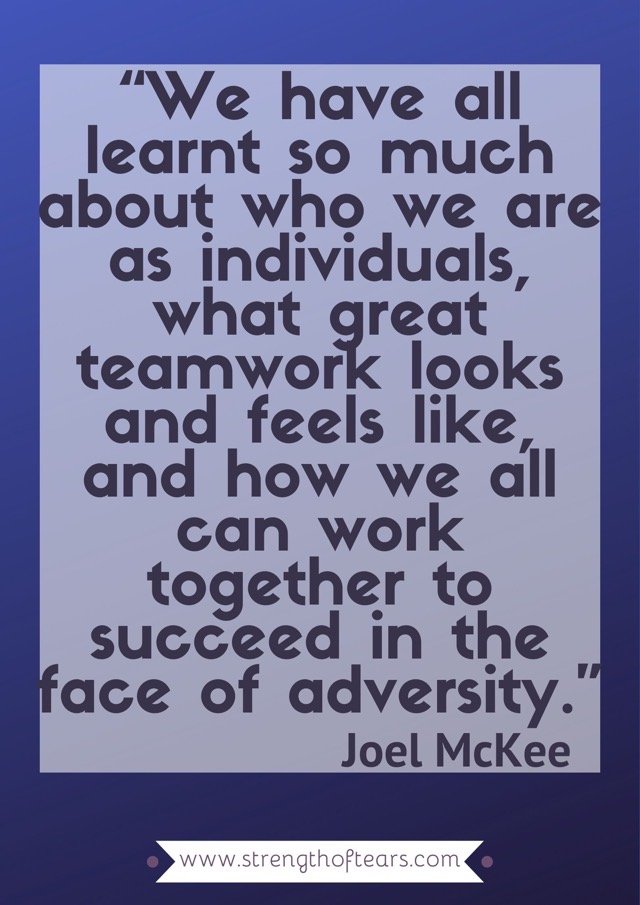
    I would wish that all of my wife’s illnesses and conditions would be alleviated and we could go back to a time where chronic illness was not a part of our family life. This is not wholly true, though, as we have all learnt so much about who we are as individuals, what great teamwork looks and feels like, and how we all can work together to succeed in the face of adversity.

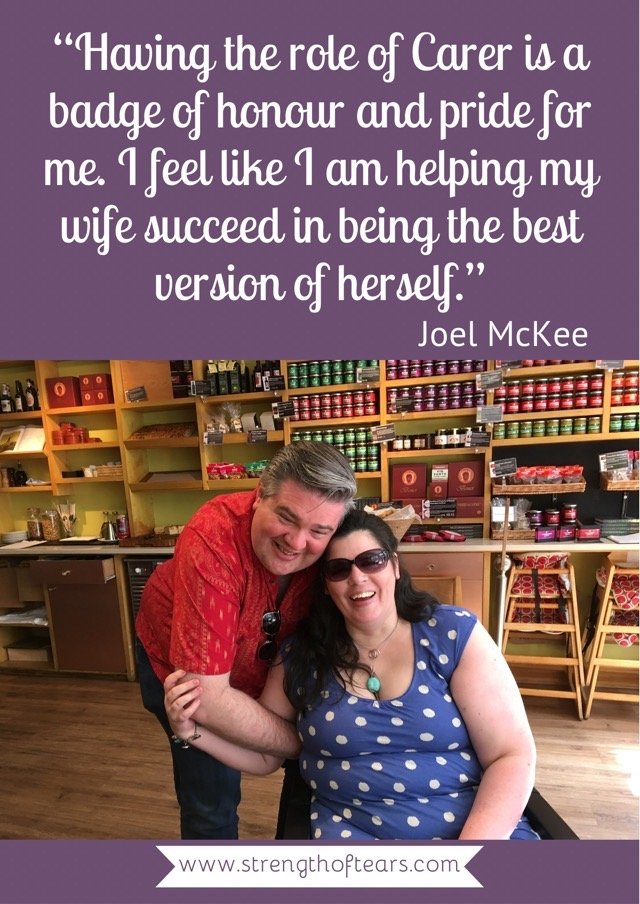
    Having the role of Carer is a badge of honour and pride for me.  I feel like I am helping my wife succeed in being the best version of herself, and that my role as her unpaid Carer also helps me be the most resilient, empathetic, understanding and above all most caring version of myself that I can be.

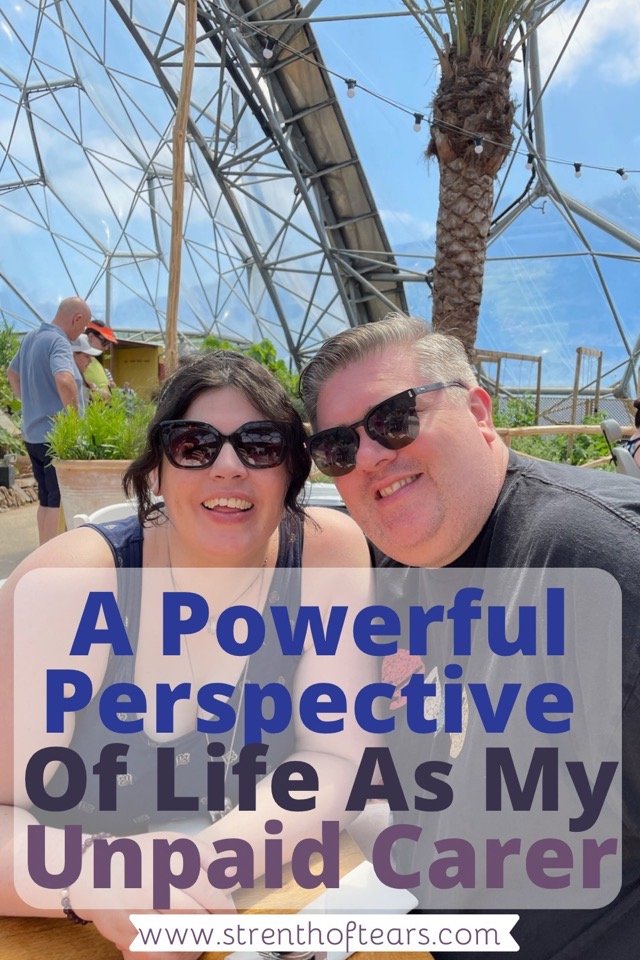
    A Powerful Perspective Of Life As My Unpaid Carer

    It’s been wonderful, challenging and entertaining to read my husband’s perspective about his role as my Carer, especially being one who isn’t paid at all. It’s eye-watering to read about the list of jobs he has to do in the morning before work, whilst I lay sleeping or waking casually to the smell of toast. I can honestly say I’ve never thought of it that way and this will hopefully help me to be more patient and show my gratitude even more than I do already. 

    My lack of awareness comes from both being in bed, isolated from the real world for the majority of the time, and due to my brain condition. My brain reacts to the extra pressure in my skull, the same way it would if I had a brain tumour so I can struggle to see things from others perspectives unless they tell me repeatedly how they feel. 

    I also think it’s partly down to the husband-wife relationship. Come on, you know we don’t always listen to what our spouse says! However, Joel hasn’t told me about a lot of what he’s written here about how he felt transitioning into the role of an unpaid Carer. 

    I was very unwell at the time and could not hold a conversation or retain any information. Thankfully my brain surgeries have allowed this aspect to right itself quite well so I can now take this on. I just wish I’d asked Joel how he felt more, I knew he was struggling of course, but I didn’t know how much. 

    I too am able to look at the positives of our situation now and know we’ve been able to teach our sons so much more about how to flex and grow to cope with challenging situations. As a team, we’re unstoppable and that includes my paid Carer Sam, who often acts as my proxy in the physical activities of running a household. I couldn’t be prouder of Joel and the boys for how they cope with ALL the challenges they face as unpaid Carers. 

    I would like to thank Joel for taking the time to write this piece, guided by my questions that came from this year’s Carers Rights Day campaign. Each year Carers Rights Day helps carers in the community know their rights and find out how to get the support they’re entitled to. The West Sussex Carers Support page says: 

    “This year our campaign will focus on the ways in which Caring Costs unpaid carers. From carers’ well-being and ability to access health services, to costs to their finances and employment options, to the current cost of living crisis which is being felt even more acutely by carers throughout the UK.”

    National Carer support organisations that help unpaid Carers know their rights are:

    Carers UK

    Carers Trust

    The UK government also have support materials for Carers

    There is also information on the new Carers Leave Bill that was passed in October 2022 here. We’ve found our local carers organisation very helpful, and highly recommend searching what is going on in your local area this Carers Rights Day. 

    Finally I want to publicly share how grateful I am to Joel for everything he does for me, everything he sacrifices and mostly everything he does to put a smile on my face, and my son’s face every single bloody day. He is an incredible human being and I love him even more after reading this article. In our 25 years together he has only ever shown me kindness and generosity and this seeps through the words on the page here. I am so honoured that you’ve shown another side of me to those who take time to read this blog. I appreciate you taking even more of your precious time to write about your perspective as my unpaid Carer

    #block-3522ab9dfd053e687057 .sqs-gallery-block-grid .sqs-gallery-design-grid { margin-right: -20px; }
    #block-3522ab9dfd053e687057 .sqs-gallery-block-grid .sqs-gallery-design-grid-slide .margin-wrapper { margin-right: 20px; margin-bottom: 20px; }

    ✋ Hey there! I hope you’re feeling stronger now. If so, sharing the love will help me help other mums with chronic invisible illnesses.⬆  Hit one of those sharing buttons or save these images to Pinterest and I will do a bed-bound happy dance – there’s an image for you!

  • How To Know If You Have Significant Mental Health Issues

    How To Know If You Have Significant Mental Health Issues

    How To Best Manage Agony If Your Pain Relief Medication Isn’t Approved

    Why do they refuse to treat you when they know the agony you experience without your chronic pain medications? Is it something you did? These are genuine concerns in the chronic pain community right now. 

    The NICE guidelines were introduced formally in 2021, possibly impacting on professionals treating patients. There are legitimate concerns about this leading to many doctors refusing pain relief medication to patients with chronic pain.

    Alongside this, the media are portraying those in the chronic illness community negatively. So I want to address some of these awful stereotyped viewpoints and share how living with chronic pain can impact those who are isolated. 

    People living with chronic pain symptoms have to manage if they aren’t prescribed pain relief medication or have it removed and social media provides a community that benefits you. It is a platform for sharing your experiences and solutions. 

    What Are The Guidelines For Chronic Pain Management

    The World Health Organisation classes chronic primary pain “as pain that persists for longer than three months and is associated with significant emotional distress or functional disability that cannot be explained by another chronic condition.”

    NICE only recommends exercise, antidepressants, Acceptance and Commitment Therapy, Cognitive Behaviour Therapy and Acupuncture for treatment and management of chronic primary pain. Read my article about the NICE guidelines for the details.

    The guidelines state there was no evidence that pain management programmes, therapies or preventative medications were effective, however, the research used did not use large studies which leaves the guidelines woefully inadequate. Read about The British Pain Society’s view here.

    There’s a long list of pain relief medications the guidelines state as being ineffective for chronic pain, including opioids, paracetamol and many commonly used painkillers. Yet they do recommend antidepressants which seem lacking overall. 

    The Faculty of Pain Medicine states there is a “real risk that those classed as having “chronic primary pain” will include large numbers of people… to whom this guidance should not apply.” The likelihood is that Doctors will misunderstand and misuse these guidelines in managing pain and patients.

    The NICE Guidelines And Chronic Pain Symptoms 

    As I read these guidelines I felt sick with the idea that others may have my experience of debilitating pain and not get help. Let’s be real, I’m consumed with chronic pain symptoms so my GP does prescribe pain relief medication so I can function, and I am still stuck in bed nearly every day due to the severe pain. 

    The guidelines aren’t rules, so you can advocate for individual treatment for your chronic pain symptoms, using this section of the guidelines: “When exercising their judgement, professionals and practitioners… [have] the responsibility to make decisions appropriate to the circumstances of the individual”.

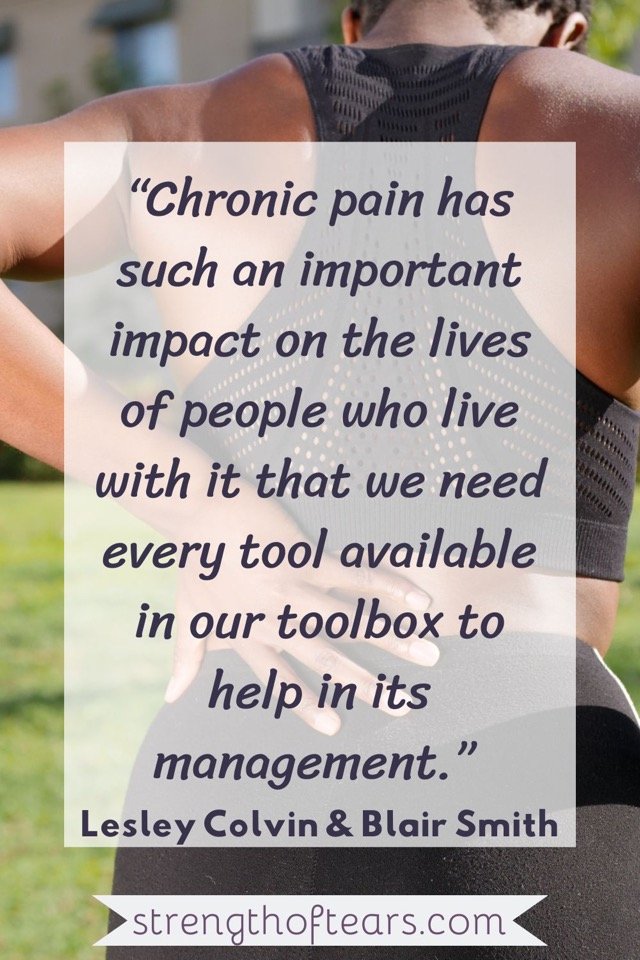
    This Pain Concern statement shares concerns raised by Blair Smith and Lesley Colvin that “chronic pain has such an important impact on the lives of people who live with it that we need every tool available in our toolbox to help in its management.”

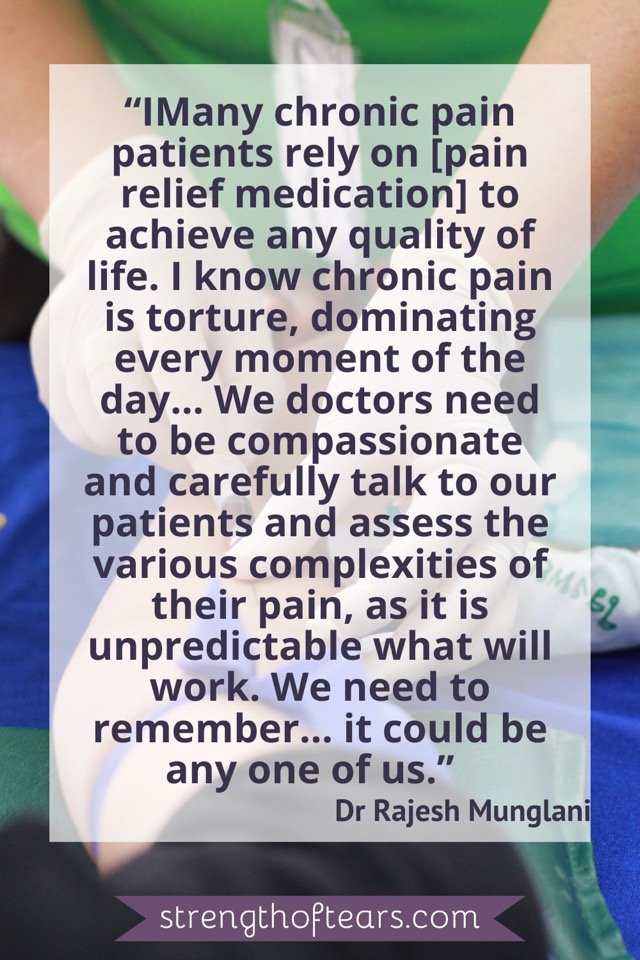
    Many chronic pain patients rely on [pain relief medication] to achieve any quality of life. I know chronic pain is torture, dominating every moment of the day… We doctors need to be compassionate and carefully talk to our patients and assess the various complexities of their pain, as it is unpredictable what will work. We need to remember… it could be any one of us.

    Dr Rajesh Munglani

    These guidelines are causing patients real distress when they are already living an unpredictable life consumed with chronic pain symptoms. Many patients already feel isolated and misunderstood. With such a complex symptom we still need to access pain management clinics and pain relief medication.

    What Is The Media Saying About Pain Relief Medication 

    The BBC have asked over 4,000 adults aged 16-75 about chronic pain experiences. The results suggest 1 in 4 people in the UK live with chronic pain and 45% say their daily life is affected by chronic pain symptoms. 

    It goes on to talk sensationally about someone’s experience of persistent daily pain and how their experience was made worse by taking pain relief medications. In my opinion this is clickbait, one-sided journalism. It goes on to say: “It’s so easy to sit at home and take a pill and fall asleep. The other way to go is to… basically have a laugh – because while you’re laughing you’re not crying.’” Kev Howard, organiser of a peer support group at a pain clinic says. Read the full article here.

    This infuriates me, as taking pain relief medication is the only way I’m able to get out of bed and have low enough pain to laugh. If I go to the hospital I have to take painkillers to get to the car and sit in a waiting room. In fact, taking pills actually enables many people to function. There is no one size fits all solution. 

    A second article by the BBC, quotes Dr Mark Hainsworth who “wants to see a different approach to dealing with chronic or persistent pain, to help prevent the rise in “opiate hermits”, people unable to work or exercise.”

    This, in my opinion, is a damning view of those in chronic pain. It doesn’t recognise that those with extreme chronic pain symptoms do not choose to live isolated lives, nor that most try alternatives to pain relief medication. In fact, I’m now able to exercise again, because I have the right balance of opiate medication and because I’ve had Physiotherapy to help myself. 

    The commentary on prescription opioids seemingly aims to shame those of us whose pain is life limiting, despite trying or still using alternatives to pain relief medication. There is little recognition of a patient’s individual needs in these cringe worthy pieces of journalism. But the media hasn’t finished yet.

    How Social Media Benefits Those With Chronic Pain Symptoms 

    On the 7th September 2022 The Daily Mail published an incredibly negative story that offended nearly everyone I know in the chronic illness community. The clickbait headline said – Addicted to being sad; and it gave another one sided article. Vulnerable young adults’ social media posts were shared without consent. The author writes that teenage girls are posting online as ‘Spoonies’, conspiring together, faking their illness or twisting their chronic pain symptoms to get the diagnosis they want, for attention and seemingly fame. 

    This article questions the actions of thousands of people living with chronic pain symptoms and complex conditions. As you can imagine, the repercussions of this article rocked the chronic illness community. I was hurt that the ableist society was louder again, judging those of us who are in pain.

    The ‘spoon theory’ helped me in the first months of my illness. Written in 2003, it explains how spoons represent the energy you have for a day, with each activity taking away a spoon until you run out. It’s a well recognised explanation of chronic fatigue for any condition. Read about the ‘spoon theory’ here.

    One weekend during this time, when I was seeking answers, I was struck down by unbearable pain and new, strange chronic pain symptoms. My husband was out and I started panicking but managed to contact a friend I’d made in a Facebook support group. She helped me until my husband got home.  I ended up in A&E, prescribed multiple pain relief medications by my GP, including opiates. I couldn’t have managed without her support, that of someone who understood exactly how I was feeling. My husband is amazing but he, thankfully, doesn’t know what it’s like to be in so much pain, for so long. Read about my story here.

    As I reflected back on my world, I realised how lonely I would be without the support I’ve found on social media. From when I was first ill and found answers by sharing my chronic pain symptoms to the amazing friends I’ve made along the way.

    The thought of that not being available to others with chronic pain symptoms is horrifying. You learn from each other by sharing your conditions and stories on your own terms. There’s no pressure to share as a ‘victim’ or to exchange pain for likes.

    What is there, in fact, is a genuine community supporting each other, looking out for those with new diagnoses and a collective effort to educate people about invisible illnesses and chronic pain symptoms. I know that I, and many others, share for awareness, not sympathy and that this benefits everyone. 

    Without this I doubt I would have had the treatments and surgeries that have given me back my ability to communicate, and more. I probably wouldn’t be invested in alternative therapies which help me alongside my pain relief medication, and I wouldn’t have a job as a patient advocate writer. 

    The Takeaway 

    I am incredibly thankful that my GP works with me to create an individualised treatment plan. I feel that everywhere I turn options that help me are being taken away from others and it makes me feel so angry that one piece of guidance can do this. 

    I’m concerned that the pain relief medication that helps me sit up, could be taken away at any time, which is distressing. The media’s imagery of opioid hermits makes this possibility more real for me, and everyone else out there in constant pain. 

    Picture-perfect snapshots on social media can be harmful for vulnerable people but I don’t accept the Spoonie community encourages harmful content. In fact, those with chronic illness find others who understand and support each other. Sharing images of your authentic experience of being chronically ill, shows the world your reality which helps raise awareness.

    I’d love to know what you think about this? If you are a part of the Spoonie or invisible illness community, does social media help you? 

    Join my Strength Of Tears Instagram community now.

    #block-4cf50a27523afd803ccb .sqs-gallery-block-grid .sqs-gallery-design-grid { margin-right: -20px; }
    #block-4cf50a27523afd803ccb .sqs-gallery-block-grid .sqs-gallery-design-grid-slide .margin-wrapper { margin-right: 20px; margin-bottom: 20px; }

    ✋ Hey there! I hope you’re feeling stronger now. If so, sharing the love will help me help other mums with chronic invisible illnesses.⬆  Hit one of those sharing buttons or save these images to Pinterest and I will do a bed-bound happy dance – there’s an image for you!

  • How To Know If You Have Significant Mental Health Issues

    How To Know If You Have Significant Mental Health Issues

    How To Know If You Have Significant Mental Health Issues

    Trigger Warning: This post discusses mental health problems, including suicidal thoughts, self-harm and eating disorders. 

    Do you feel as if something isn’t right but can’t pinpoint it? Don’t worry you’re not alone as you may be displaying mental health symptoms. In fact, millions of people struggle with these conditions daily. 

    Mental illness affects everyone at some point in life, whether it’s for a few days or years.  It can be difficult to identify due to the many different types of mental health issues. So it’s important to know what mental illness looks like to get support.

    I’m not a mental health expert but I know what it feels like to live with depression, anxiety and trauma. I’ve had bouts of depression since becoming a Mum and when I first became chronically ill, grieving the loss of the life and career I loved. 

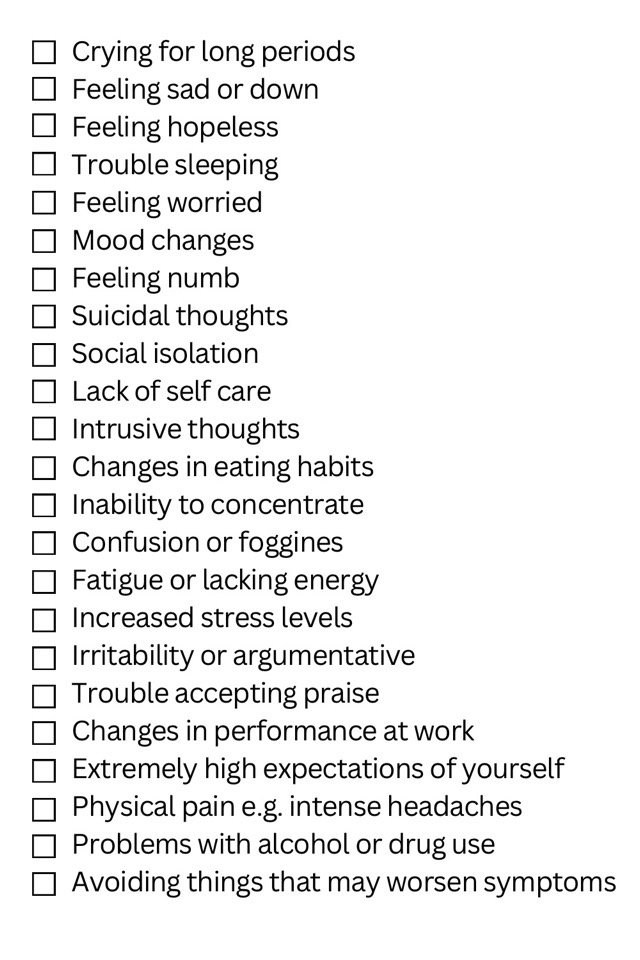
    I want others to know they’re not alone with mental ill health so I share warning signs and a mental health symptoms checklist. Then I explore 3 symptoms that get overlooked which could help you identify what mental health treatment you may need. 

    Some Warning Signs Of Mental Health Issues

    They’re are many different mental illness symptoms, but there are some general warning signs for anxiety, depression, and stress; as symptoms vary between people and sometimes even for an individual. The most common symptoms include changes in sleeping habits, isolation and sudden mood swings.

    Self-harming is one of the common mental health symptoms but I haven’t experienced this myself but know people who have. If any of these symptoms persist and interfere with your ability to study, work or relate to others, please seek help.

    Anxiety disorders involve excessive fear and worry. Some people feel anxious all the time, while others experience panic attacks that come on suddenly. Anxiety may also cause sleep disruption with people struggling to put the day’s worries away.

    Anxiety is when you worry about things you cannot control. It can make you feel tense, nervous, restless, and irritable, and avoid social situations.

    I created a free Anxiety Busting Exercises Download based on strategies I use myself. Just click below to get your copy now!


    Depression is characterised by unwavering sadness and loss of interest in activities that once brought pleasure, it can take over everything and has a significant impact on your life, affecting your eating habits, energy and concentration. 

    Many symptoms of depression are well known but it can also make you feel sick with guilt, have low sex drive, and lack of energy. If you worry someone you know may have a mental health issue you need to ask a few times how they are and just listen to them fully. Simply be there. Read more about depression warning signs here so you know.

    Mental Health Symptoms Checklist 

    One or two symptoms alone don’t mean you have a mental illness but it may indicate a need for further evaluation. If you experience several at one time and the symptoms are causing serious problems you should see a doctor or mental health professional. 

    I was a young teenager when I first experienced anxiety but I had no idea that’s what it was. I struggled in social situations and was argumentative. I worried all the time, often laying awake worrying but I thought I was just being fussy. 

    Then when my baby was born sick and he was in NICU, I was a mess. My husband tried to take me out for a walk but I had trouble breathing. The Dr checked to see if it was a pulmonary embolism but they said I’d had a panic attack. 

    Once home, I couldn’t cope and my anxiety spiraled. I couldn’t cope and pushed my husband away so I could be in control of what I had to do, being mum to our boys who were both under 2. The traumatic experience was extended and I began having suicidal thoughts so I got mental illness treatment quickly.

    I saw a counsellor immediately, which (I didn’t realise) meant they were genuinely concerned I may try to take my life. I was mostly in a daze but doing the mental health symptoms checklist, helped me see the severity of my situation. My past trauma and this one had collided and triggered my anxiety.

    Symptoms vary widely depending on the tests, some being free online test. These are helpful to gain perspective, rather than for self diagnosis. The most common issues are in this mental health symptoms checklist. Please only use it as a kick-start to a professional test for mental illness treatment.

    Rate these based on how often and strongly you experience these symptoms. Rate from 0 being never and 5 being always:

    Remember you will experience some of these in the course of everyday life. It is meant to help you take a few steps back and look at the bigger picture to see if these signs are likely to be caused by depression, anxiety or other mental health disorder.

    Being honest with your health care provider is crucial to improving your mental illness symptoms. But if you rated highly for suicidal thoughts or have had any intention to harm yourself or others, seek immediate medical attention. Call 999 (UK), your doctor or speak to your country’s mental health helpline. 

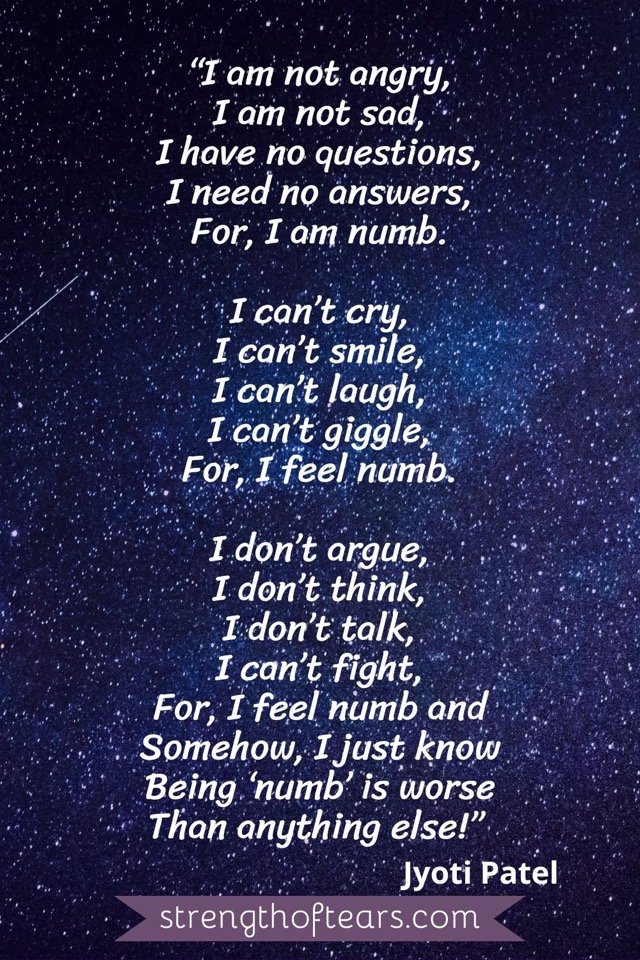
    Another symptom on this mental health symptoms checklist that needs fast intervention is feeling numb. This is also called Emotional numbing and can leave you desperate. You may want to feel so much that you self harm or seek danger.

    Emotional Numbing

    If you relate to this you need urgent care!

    If you relate to this not feeling; emotional numbing, you’re not alone but you need urgent care. This feeling can be managed with mental health treatment. Read the full article on here.

    3 Toxic Mental Health Symptoms That Are Being Overlooked

    Some mental health symptoms can be a warning sign for early intervention, but are often overlooked. Everyone has heard of these aspects of emotional well-being but they are not usually associated with serious mental health problems. 

    These 3 traits can become toxic. Toxic behaviour is when a person’s behaviour and actions cause harm physically or mentally. This is usually a toxic person spreading negative behaviour, stressors or trauma. Toxic behaviour isn’t considered a mental health disorder but is caused by mental ill health. 

    Sometimes that person can be you! It can happen because others around you also exhibit toxic characteristics, adding negativity and stress to your life. Here I look into 3 traits that can become toxic to yourself so you can get help quickly.

    Toxic Stress

    Toxic, or chronic stress, occurs when the brain’s fight or flight response is triggered too often, for too long, or is triggered by multiple sources. Toxic stress normally only happens when there are many, persistent and severe stress factors.

    The stress response is designed to warn us when there is a perceived threat. This activates the release of hormones such as adrenaline and cortisol. Learn more about the stress response in this blog about anxiety.

    If you experience prolonged stressful events you may find a negative influence on your physical health and mental health symptoms, such as substance abuse and inability to focus. 

    Research shows that supportive, responsive relationships with caring adults, especially in early life, can prevent the damaging effects of toxic stress. Relaxation, like meditation and yoga, counteract high stress levels and reduce the physical aspects of the stress response such as heart rate and breathing. 

    Change in appetite

    Toxic hunger is a physical addiction to a diet high in processed or ‘junk’ foods that are excessively sugary, salty or oily. These ingredients aren’t found naturally and are designed to give you a dopamine high. You become more likely to avoid natural, nutritious food. 

    Mental health symptoms can lead to a loss of appetite or to binge eating comfort food for short term relief. Toxic hunger symptoms are usually feelings you’ve learnt to interpret as hunger but are actually signs of your body’s toxicity: 

    • Headaches

    • Cravings

    • Dizziness

    • Nausea

    • Shakiness

    • Irritability

    • Fatigue

    • Brain fog

    Toxic hunger can be accredited to the time of day, food cravings and alcohol intake. It’s very easy to slip an extra snack in, if you eat outside of your normal routine. Cravings can also be linked to activities, such as having popcorn at the movies, or a kebab after a drink at the pub.

    Simply put, this means you need to check your hungry status and ask if you’re really hungry as toxic hunger comes from the head and stomach. Don’t replace mental health treatment with eating your feelings or starving your anxiety. 

     Toxic Perfectionism

    This is often only alluded to on mental health symptoms checklists but the 24/7 world of filters and perfect pictures can easily distort your view of an ‘ideal life’. This can lead to setting goals influenced by the outside world, instead of meeting your needs. 

    Perfectionists often think that ‘perfect’ is an achievable goal so have unrealistic expectations. If there’s any deviation from the perfect end-point it is seen as a grievous failure. Researchers link perfectionism to mental ill health as you become convinced that others expect you to be perfect. 

    Once you set yourself these goals, it inevitably leads to an expectation of everyone around you meeting your standards. As nobody can meet these, it makes it difficult to maintain a healthy relationship. 

    As a recovering ’perfectionist’, I’ve felt empowered to leave certain practices behind by reading Brené Brown’s work. She talks about perfectionism being a shield we use to stop us being hurt but instead we hide fearing we’re going to be caught out as not perfect. 

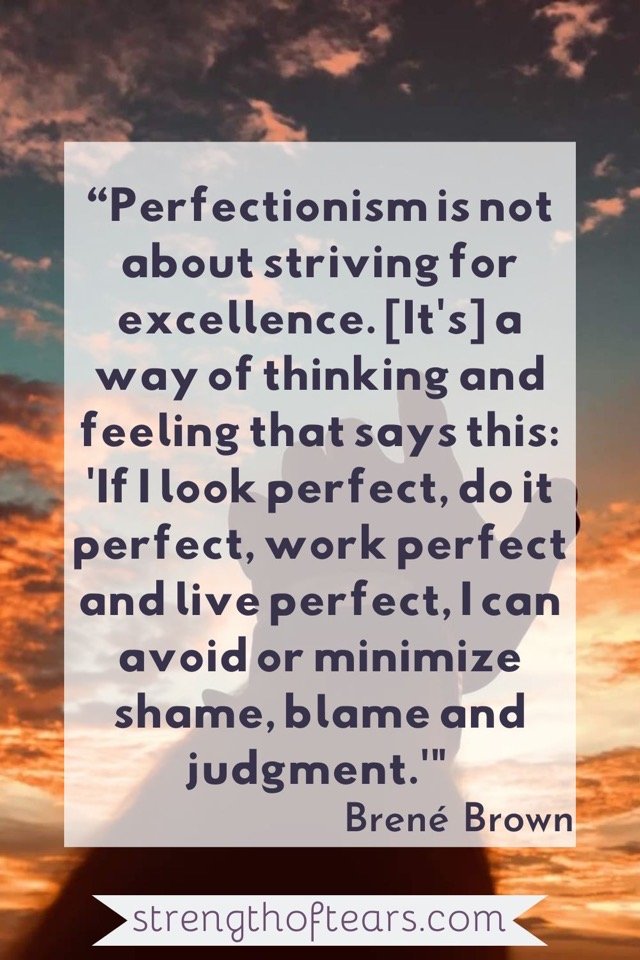
    Perfectionism is not about striving for excellence. [It’s] a way of thinking and feeling that says this: ‘If I look perfect, do it perfect, work perfect and live perfect, I can avoid or minimize shame, blame and judgment.’”

    Brené Brown

    How Toxic Living Affects Your Mental Illness Treatment?

    The hallmarks of a toxic person include unsupportive and unpleasant behaviour, being manipulative, judgemental and controlling. If this is you, you’re living in a cycle of negative self-talk which affects everyone around you.

    You will probably experience mental illness symptoms and are likely to have either depression, anxiety, PTSD, BPD, etc. If you recognise this in yourself please seek mental health treatment. You can start practices to kick out toxic behaviour. 

    My Journey To Balance Journal can help you develop self awareness of your behaviour; develop your values and live by them, grow empathy and compassion; evolve into a person who thinks before they act and explore your vulnerability. Learn more about journaling to re-frame negative self-talk here.

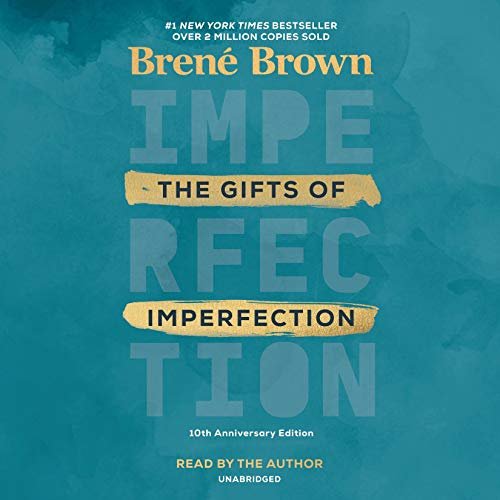
    Buy The Gifts Of Imperfection Book

    This #1 New York Times bestseller is about effective daily practices are the ten guideposts to wholehearted living.

    These practices will change our lives and walk us through our expectations that get in the way.

    In conclusion

    Mental health symptoms are hard to identify. If you’ve ever felt like there is something wrong with you or tried to combat anxiety or depression, you’re not alone. You can look for warning signs, such as sleep routine or appetite changes, mood swings and irritability; which are all things you can track.

    There are many online tests and informative articles to help you. In this article I’ve included a list of the most common issues in a mental health symptoms checklist. However, this is not a replacement for professional mental health support. 

    Many symptoms get overlooked, here I focused on eating habits, stress management and perfectionism to help you spot if you or a loved one is developing unhealthy or toxic habits that could become toxic and lead to mental health conditions. 

    I’d like to link to some other key articles that I hope can help you identify the signs and symptoms of mental health issues. This can help anyone experiencing mental illness symptoms so please feel free to share this post with them.

    I’m not a mental health professional so this article is based on research and my own experiences. I’ve struggled in the past to ask for help but as soon as I did reach out, I got help. I’ve been lucky to have support at home too so please share this so others can learn what to look out for to be that trusted friend,

    If you think it could be time to seek support for your emotional  well-being or someone you know may be struggling, it is crucial to seek help from a mental health professional, doctor or by contacting a crisis line. Please check out the links below. 

    Click here to check out these NHS curated articles and video to help you be kind to your mind. 

    It’s always okay to ask for help. Seeking help is often the first step towards getting and staying well. Click here to read this Mind guide about getting help for a mental health problem.

    The Mental Health Foundation looks out for people like you,  by researching how mental health issues affect an array of different people. Their resources are designed to give you information about how to cope with symptoms and even prevent mental illness developing. Click here to read more. 

    Most people recover from mental ill health with support. There are many UK services, providing therapies and counselling for free. Help with other aspects of life, such as claiming benefits, services to help is provided by a community mental health team (CMHT). Access this via the Citizens Advice Bureau. 

    The Samaritans offer emotional support 24 hours a day – in full confidence. Email jo@samaritans.org.uk or Call 116 123, free in the UK. 

    #block-yui_3_17_2_1_1666020770891_15428 .sqs-gallery-block-grid .sqs-gallery-design-grid { margin-right: -20px; }
    #block-yui_3_17_2_1_1666020770891_15428 .sqs-gallery-block-grid .sqs-gallery-design-grid-slide .margin-wrapper { margin-right: 20px; margin-bottom: 20px; }

  • Why You Need An Instructive Journaling Guide To Beat Toxic Negative Self Talk

    Why You Need An Instructive Journaling Guide To Beat Toxic Negative Self Talk

    Why You Need An Instructive Journaling Guide To Beat Toxic Negative Self Talk

    Do you ever obsess over a mistake or unkind word? Do you feel shame for being vulnerable or dismiss negative emotions? These are self-talk examples from your inner critic or Judgy McJudge voice – the toxic voice in your head that can hold you back from success.

    You’re either an optimistic or pessimistic person, and this determines whether your self-talk is positive or negative. It influences how you see yourself and the world around you. But ‘all or nothing’ thinking is how your inner voice becomes toxic, so you need to find balance. 

    I can help you identify your first step to change. Learn how to silence the devil on your shoulder by getting down and dirty with your inner critic. The journaling guide I’m writing will help you spot targets for your toxic negativity, use positive self-talk phrases and much more.

    This blog explores negative and positive self-talk, negativity bias and how to balance your inner narrative. I share my experience of taking out my toxic thought cycle and discovering my inner guide. Finally I share strategies on how to develop balanced positive self-talk phrases. 

    Beat Toxic Negativity And Find Positive Self Talk Phrases 

    Negative self-talk can be suffocating and affect us and those around us. When I was first sick, I felt immense guilt which seeped toxicity into my family life. This guilt came from my inner critic which, to me, sounded like a critical parent, but this sounds different for everyone. 

    Positive self-talk can also become toxic, if you force positive thinking. Suppressing or dismissing negative emotions is an example of toxic positivity and is not what I’m recommending. We need to find balance and therefore, we know that we learn from making mistakes. 

    Self-talk is, however, more likely to become toxic negativity so I’m focusing on how to conquer this. It’s probably the most important act of self care you can do. Although it’s manageable, it will take time and patience so using a journaling guide helps you find your way.

    Finding your positive inner voice or inner guidance can change how you approach life’s challenges. This isn’t ignoring negative thoughts, rather, reframing your viewpoint. To find the positive self-talk phrases you need, you first need to identify your self-talk styles. 

    Negative Self-talk can sound like:

    • Catastrophising – thinking of worst case scenarios all the time or taking what someone has said and going all in e.g. “She was right, I’m not a good mum, I’m always shouting.”

    • Personalising – where you blame yourself e.g. “I’m unfriendly” if someone communicates badly or ‘I’m a failure’ when you make one tiny error. 

    • Polarising – where you only see the world in black and white, ignoring any positives in a situation e.g. “I messed up that new system at work today so my boss is annoyed with me.”

    • Magnifying – leading your mind into a fear-based fantasy e.g. “I’m never going to get that promotion.”

    Your negative inner voice can be useful, warning you of the negative impact something may have. An instructive journaling guide shows us how this self-talk type can help us achieve a goal. It also ensures that you keep your self-talk balanced with positive self-talk phrases. 

    However, negative self-talk can have severe affects on your mental health such as increased anxiety, lower motivation, missed opportunities because you talk yourself out of doing something that would be a success. This blog from anxiety-gone.com explores this is more detail.

    Positive Self-talk can sound like: 

    • Minimising – reducing the impact of something someone has said or done to you, or of how you feel about something e.g, “It doesn’t matter what she said, I know I’m a good mum.”

    • Absolution – where you forgive yourself e.g. “It’s not my fault if they didn’t communicate what they wanted to me” or “It’s okay, I’ll try again’ if you make a mistake. 

    • Connecting – where you see the grey areas in a situation, seeing both positives and negatives e.g. “I messed up that new system at work so we can all learn from my mistake.”

    • Self awareness – talking yourself down from a disaster e.g. “I might embarrass myself, but the interview is experience.” Or it makes you think twice e.g. “I shouldn’t feel like this.”

    The journaling guide I’m creating is focused on exploring negative and positive emotions which are interlinked with your inner voice. To find your inner guide; try different approaches to see what works for you, identify patterns and switch it up with positive self-talk phrases. 

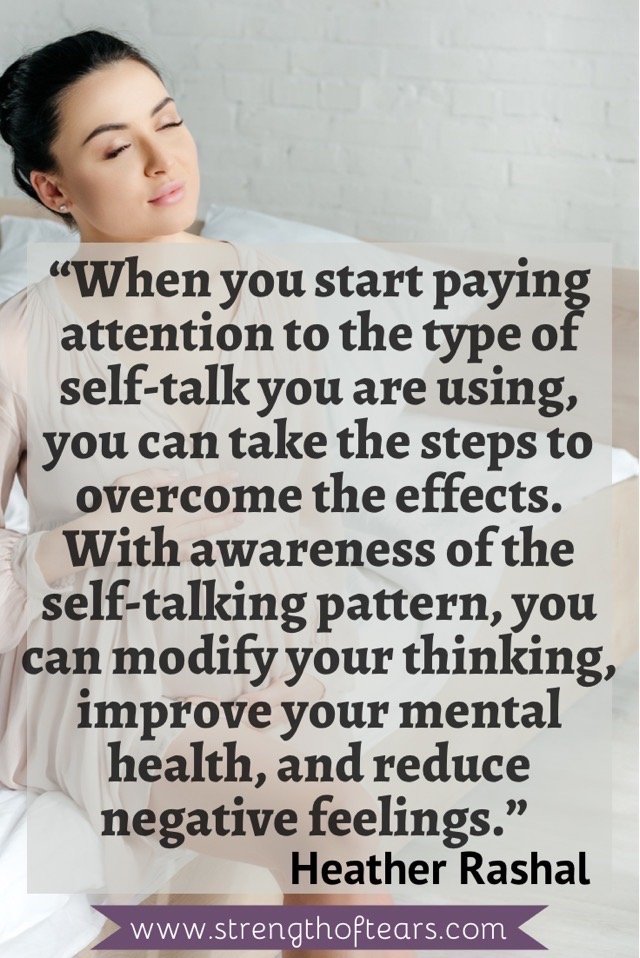
    “When you start paying attention to the type of self-talk you are using, you can take the steps to overcome the effects.
    With awareness of the self-talking pattern, you can modify your thinking, improve your mental health, and reduce negative feelings.”
    Heather Rashal

    The Negativity Bias And Its Impact On Your Wellbeing  

    Before self-talk can become your guide, you must be aware of how negative bias affects your inner voice. Subconsciously you’ll lean toward negative thoughts, actions and beliefs from infancy, due to a primal need to focus on the danger all around us, for survival. 

    Negative bias pushes the pain of disapproval more strongly than the comfort of appreciation. The absence of positive self-talk phrases influences your behaviour, decisions and relationships negatively. 

    “Our brains are hardwired to remember negative experiences over positive ones, so we recall the times we didn’t quite get it right more than the times we do. We then replay these messages in our minds, fuelling negative feelings.” Gregory L. Jantz – 2016

    For example, we will: 

    • Retain memories and sensory links to past traumas.

    • Hold on to blame, even if we were praised for the same event

    • Think about negative things more often than positive ones

    • Learn more from negative events and reactions.

    Negative self-talk affects your mental wellbeing, often damaging your confidence, increasing stress levels, triggering feelings of shame or self-blame and crushing your self-love. It can also lead to or worsen mental health issues, such as anxiety, depression and PTSD. 

    In my case, I had a life-long tendency towards guilt and self-blame, but this worsened considerably when I got sick. My breakthrough was working with my life coach, who used journaling guided exercises to help me gain awareness of my self-blame and guilt. 

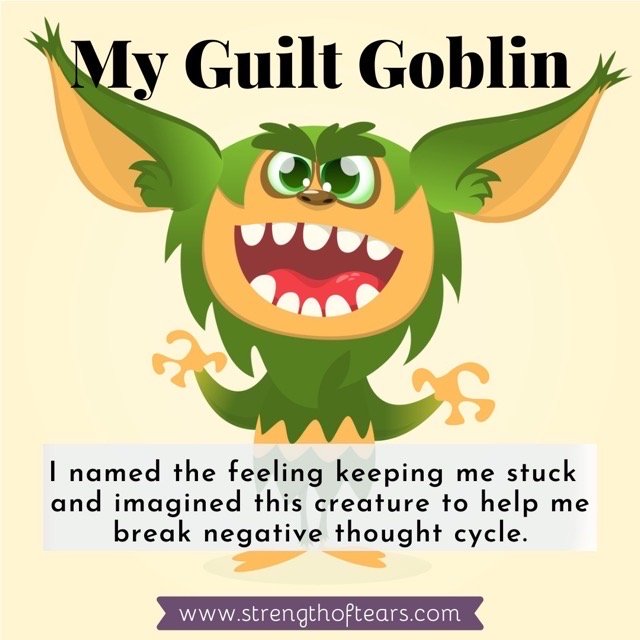
    The work revolved around making my thought process adaptable. I imagined a creature saying these negative phrases and named it the Guilt Goblin. Doing this helped me push the negative away and use positive self-talk phrases to tip the scales for more balance. 

    My Guilt Goblin

    I nicknamed this imaginary figure to tell my brain that I don’t have to agree.
    It shows me that my critical thoughts are ridiculous.

    Using this nickname for the feelings of guilt and self-blame in my negative thought cycle have helped me break from away from this toxic negative self-talk.

    Your brain craves stimulation to challenge negative self-talk. Having a journaling guide helps acknowledge these negative thoughts so you can challenge them and create a more positive outlook, which results in inner guidance that builds your self worth. 

    An effective journaling guide creates space to reflect on your negative experiences, so you can find patterns and learn from them, halting negative toxicity. This allows you to change how you talk to yourself, which has a roll-on effect in how you behave with others.

    I’m often asked how I keep positive, living with unrelenting pain. I use positive self-talk phrases or affirmations, to provide inner guidance to help me focus on the journey, not the destination. I learn from the negatives and preserve positive experiences, letting go of the rest. 

    How Targeted Journaling Can Really Boost Your Positive Self Talk Phrases

    Establishing practices to create balance has driven my creation of the targeted journaling guide. Focusing on positive and negative thoughts allows you to tune into your inner guide and believe you can achieve. Initiating positive self-talk phrases promotes an optimistic outlook.

    Studies have shown that optimistic thinkers are more successful, do better academically and recover more quickly from surgery. You can develop a positive mindset using a targeted journaling guide that focuses on self-belief and meeting your goals.

     Negative bias means you’ll listen more to the devil than the Angel on your shoulder. This allows self-doubt, shame, guilt and misguided worry to tip the scales the wrong way for your mental health. But you can stop toxic negative self-talk dominating your mind if you work at it. 

    I don’t mean ignoring life’s challenges, rather finding productive ways to cope with stress. By redistributing positive self-talk phrases you can develop a constructive inner dialogue. Balancing your mind and the world around you, enables you to develop a steadier inner guide. 

    Here’s how to start your journey to reframe your thoughts: 

    1. Your internal narrative is constant so you need to develop self awareness of your thoughts. Pause to tune in to your brain’s frequency, remembering that not every thought you have is true. 

    2. Learn to recognise negative self-talk or when you dwell on an issue. Don’t try to stop your thoughts, this has the opposite effect, but try to think of solutions. You won’t always need to act but going over the steps you’d take helps you to move on.

    3. Recognise your own negative bias by considering both sides of an argument, then ask if your thoughts are accurate. Make time to reflect on the patterns to show you the opposite is true when your thoughts become overly negative. 

    4. Switch gears – when a negative thought enters your mind, stop and think how to flip the phrase using positive language. For example, ‘this is too much change’ to ‘I’ll tackle this one bit at a time’ or ‘I can’t do this’ to ‘I’ll learn the next step.’ 

    5. Use positive self-talk phrases or affirmations regularly. Such as “I am capable and strong, I can do this’ or ‘I am proud of myself for having the courage to try”. Say these out loud for full effect and have visual cues, such as in a journaling guide.

    6. Consider the advice you’d give a friend in a negative frame of mind. You wouldn’t tell them they’re stupid or a loser, so why say this to yourself? Offer yourself the same kindness and encouragement you’d show a loved one.

    7. Check-in with your emotions regularly, identifying different feelings can be tricky as there are blurred lines. My journaling guide has a system for looking at opposite emotions so you can balance them. 

    8. Try “thought-stopping”, where you use an action to change to another thought if you have extremely critical thoughts. Try pinging a rubber band on your wrist, read aloud positive self-talk phrases or affirmation cards or visualise a stop sign.

      The following methods are for longer term changes. This is where the Journey To Balance Journal, your targeted journaling guide, will help you plan long term strategies for finding a balanced inner guide.

    • Identify your negative self-talk traps, such as feeling anxious in large social events. Knowing which areas of your life you lean more negatively to, allows you to make a focused plan of when and how to approach each area more positively.

    • Create boundaries by reducing or removing contact with people who encourage negative talk. Strong boundaries are essential in life so teach your inner voice how to say no by collecting phrases that help you stick to your own lane.

    • Go with your worst case scenario so you can see that the catastrophe you’re predicting is very unlikely. Remind yourself of real situations where things haven’t gone well, so you know that you can handle difficult outcomes, 

    • Work on accepting your flaws and plan how to address the things you want to change at the same time. Remember that the process of using this targeted journaling guide is to help you find balance in life and your inner voice. 

    • Plan uplifting activities to break the cycle of negative self-talk. Examples of this – breathing exercises, dancing, singing, going for a walk or talking to a friend about something else.

    • Show gratitude for positive moments, big or small, using your journaling guide to record them. Your brain needs more positive experiences to make them count so record and make time to re-read your journal often to reinforce this.

    Look out for my new journaling guide, coming soon. The core focus is on balancing your emotions but with my top positive self-talk phrases, it’s perfect to kickstart finding your inner voice balance. 

    If You’re Still Wondering…

    What is self-talk and why does it matter? 

    Self-talk is the voice in your head and can be positive or negative. Your inner voice is personal but most of us have experienced getting stuck on a thought about your own or another’s actions or comments. It can become all-consuming, leading to toxic negativity. 

    If you let this voice become heavier on one side it takes much more work to reframe it. Positive self-talk is thought to lead to self-esteem, healthier relationships and problem-solving skills. It has even been linked to lower stress levels and better general wellbeing. 

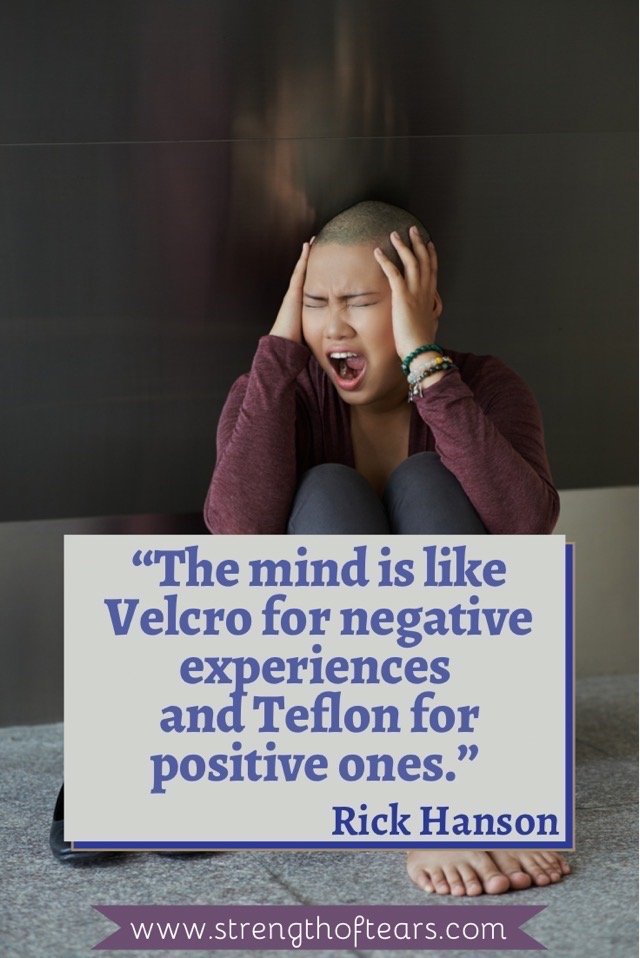
    The mind is like Velcro for negative thoughts and Teflon for positive ones

    — Rick Hanson

    Negative bias is where negative interactions stick over positive ones of equal weight. This leaves negative self-talk as the more prominent voice and it can easily become toxic. If you put in the work to reframe your inner narrative you can develop a strong inner guidance.

    Dull the devil on your shoulder and develop the strategies you need with your journaling guide. The Journey To Balance Journal engages your inner narrative so you can find your inner guide at your own pace, 

    Whether you’re fresh faced and fancy free, a contrary, crumbling crank or a ready and raring rebel, pause for a moment. Take every opportunity to check your self-talk and give yourself some love today! 

    And Finally…

    If you are suffering from a toxic negative-self talk cycle you may need more than my advice. I am a trained mentor and because of my own experience, I can guide you from personal experience, in confidence. However I am not a trained, mental health professional.

    If you feel unsafe due to persistent and invasive, negative thoughts, or are having difficulty looking after yourself, please seek a medical professional’s opinion:

    • Talk to your doctor about the first steps to help when negative self-talk takes over. They can connect you with the right help.

    • Therapists can help you explore how and why you’ve learnt negative ways of thinking, usually from parents or caregivers. They can provide effective and customised ways to improve your relationship with yourself and others. 

    • Cognitive behavior therapy (CBT) or acceptance or commitment therapy (ACT) will teach you the skills you need to manage false logic or overestimated threat.

    • If you feel that you need support because you’re worrying more than usual, having thoughts and feelings that are difficult to deal with or aren’t enjoying life and need support, I recommend this guide from mind.org.uk.

    #block-yui_3_17_2_1_1651422700122_25194 .sqs-gallery-block-grid .sqs-gallery-design-grid { margin-right: -20px; }
    #block-yui_3_17_2_1_1651422700122_25194 .sqs-gallery-block-grid .sqs-gallery-design-grid-slide .margin-wrapper { margin-right: 20px; margin-bottom: 20px; }

    ✋ Hey there! I hope you’re feeling stronger now. If so, sharing the love will help me help other mums with chronic invisible illnesses.⬆️  Hit one of those sharing buttons or save these images to Pinterest and I will do a bed-bound happy dance – there’s an image for you!
  • How To Challenge And Overcome Resistance To Change In Life

    How To Challenge And Overcome Resistance To Change In Life

    How To Challenge And Overcome Resistance To Change In Life

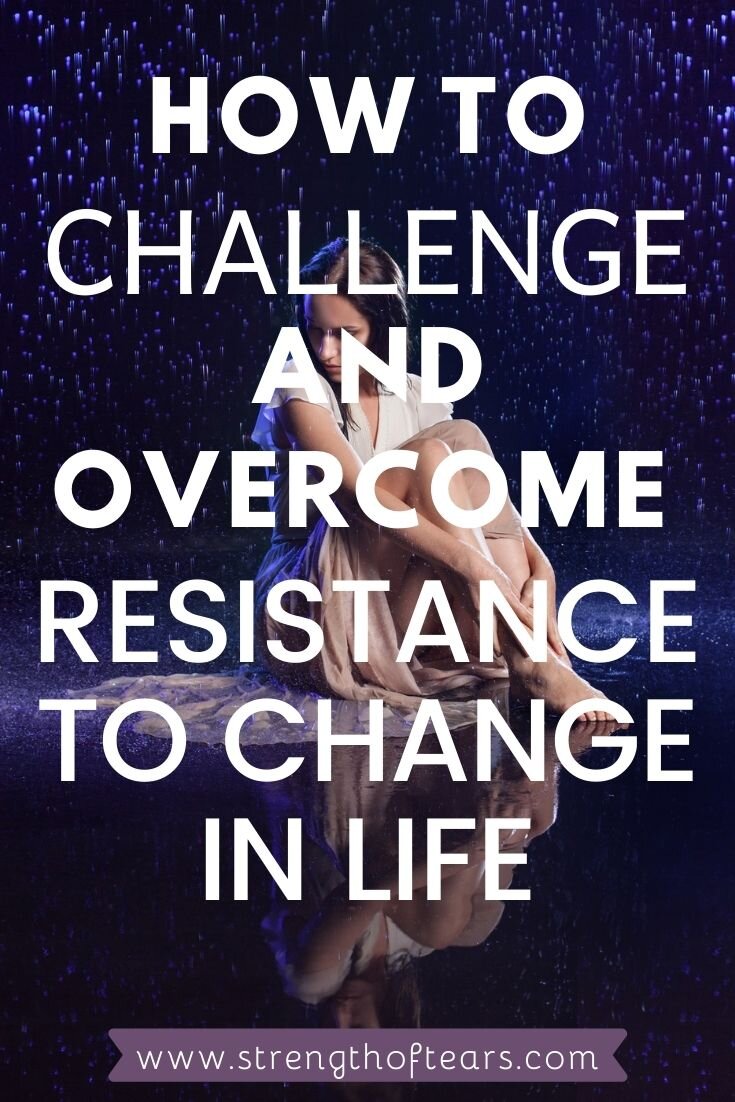
    How To Challenge And Overcome Resistance To Change In LifeWhen I became chronically ill, I believed I was a burden, with little self worth. My family supported me in fighting this and taking back control of my life where I could. To challenge and ov…


    Life with chronic illness isn’t easy for anyone, especially a mum with anxiety. I lack control over my own life due to chronic migraine and my rare brain condition, IIH. This life has challenged my whole family but has motivated us to adapt. With hard work, emotional strength, patience and trusted support we’ve been able to change. 

    Knowing I have power over my thoughts and actions made me see how my mind can get stuck going over past events when I’m feeling low or depressed. I’d tell myself ‘I’m a burden’ or ‘It’s all in my head’, only confiding in my husband, Joel. However, dealing with so much at once tested us. 

    We needed to discuss our feelings with someone neutral so we’d have full support from each other and our loved ones moving forward. I knew effective change would take time and support so I swallowed my pride and asked for help. I’ve learnt to be present with my thoughts and that honest self-talk is vital to my ability to cope.

    To challenge and overcome resistance to change I also needed to appreciate how my brain and body work together. By studying my patterns of behaviour in the past and present, I could plan for sustainable change. This has helped give me the mental strength to accept development and disarm any power this held over my self worth. 

    The four key ways I’ve developed my attitude towards positive change are:

    • Accepting you can only control how you think and act

    • Listening to the stories you tell yourself 

    • Knowing with whom to discuss how you feel 

    • Changing your behaviour patterns over time

    As this covers 4 ways you can take practical action and improve your mental health, I recommend downloading my free journal prompts to support you in looking at behavioural patterns and developing self worth so that any and all changes you make are effective.

    _Disclaimer this blog post contains affiliate links and any purchases made through such links will result in a small reward for me and my crafting habits. Oh and there’s some free recommendations too, Im nice like th - Edited (1).JPG

    Accepting You Can Only Control How You Think And Act

    Big changes in our lives impact our thoughts, and subsequently our mental health, because of what we are exposed to. Our minds are wired to respond to stress with primal instincts, as if facing physical threats. This can lead to strong reactions to emotions, such as my anxiety when adjusting to new situations.

    When I became chronically ill my world changed from an active life to a confined one  overnight. My world became my family, house and garden which was okay but as my health deteriorated further, my world became even smaller. At the time I wanted to run from it all. I talk in detail about my chronic illness journey in this blog.

    I believed I was a burden to my family, especially to Joel, as I could no longer play the role I always had. I became depressed with little self worth, even wondering if my family would be better off without me. But I knew I had to fight to be the mother and wife my family needed, even if it was different. 

    I learnt how the brain and body responds to stress and that mine was trying to protect me from threat, which helped me manage stress. This article explains ways to can manage and reduce stress. I learnt that to overcome resistance to change my negative thinking, I had to take control. Only I had the power to make the changes I needed to live the best life I could.

    You Can Only Control Your Attitude and Actions Quote.jpeg


    Listening To The Stories You Tell Yourself 

    To do this I needed to unpack how my past experiences impacted my current thoughts. I exposed vulnerabilities in my relationship with chronic illnesses. Due to many absences from secondary school due to undiagnosed migraine, I’d been labelled a hypochondriac. Now I was struggling to believe my own pain was real.

    I’d been diagnosed with atypical migraine after 20 years so I was stuck in a negative thought pattern whilst trying to get my IIH diagnosis. I’d buried embarrassment and regret more deeply with each misdiagnosis, convinced nobody believed me. I needed help to navigate my journey so found my life coach, Josie, to help me unpick it all

    These truths may be uncomfortable, but they can be the basis of meaningful change. Figuring out your own story could take 20 minutes or 20 years. And you may not make one big transformation; maybe it’s a series of incremental changes. You just have to feel your way through.

    — Brené Brown

    Being aware of this helps me reinforce my truth and grow stronger. My past has less control over my narrative and I have more power to overcome resistance to change. I may still take small steps forward but my self belief continues to grow. 


    Knowing With Whom To Discuss How You Feel 

    I’ve had to reshape my life from necessity which makes change a bigger challenge. My brain condition stole my ability to communicate well and many of my supposed close friends dropped out of my life. I felt guilty for letting others down and because my judgement was impaired, I didn’t know who to trust with how I felt. 

    However, my true friends showed themselves when they rallied to help and comfort me when I had my first treatments. Their loyalty gave me strength to set boundaries to protect myself from those who didn’t support me as I navigated this new life.

    But I was still grieving my old life and needed reassurance that it was okay to feel angry, sad and lost. The four of us built our communication skills in family counselling so we could discuss our feelings whilst respecting each other. We built strong support systems with others who we trusted over time, which was crucial for each of us. 

    Having confidantes has helped us cope with every surgery I’ve had, each one giving me back more of my old self. We developed ways to discuss our feelings as a family and I grew to trust those who were there for me without doubts or conditions again. This helped me overcome resistance to change and be grateful for what I now have.


    Changing Our Behaviour Patterns Over Time   

    It’s normal to resist change, we usually run from it but accepting we’re scared helps us embrace the inevitability of change. Exploring why past experiences made us feel this way, can help grow our ability to adapt. Change is most likely during our career, so this Forbes article shares 12 ways to successfully manage change in business.

    resistance stems from fear, and for many, fear is caused by change quote.jpg

    Make it stand out

    Whatever it is, the way you tell your story online can make all the difference.

    I managed change in my role as lead teacher but I had no idea how much change I was capable of until my situation left me no choice. To embrace my new life, I looked at my emotional reactions to positive and negative changes in my past. This enabled me to transform feelings of blame and guilt into pride and self respect. 

    When trying to adapt established behaviours we need to set our intentions and know it will make a positive difference to our lives. Click here to read my blog about how I developed my ‘Growth Mindset’ for going through change. Our brains continue to develop throughout life, forming new connections through repetitive actions or habits.

    As a worrier, my brain is wired to release dopamine to reinforce connections each time I worry. This feel-good chemical is released whether the action is good or bad, making it hard to stop worrying and difficult to overcome resistance to change.

    However, when we recognise that changing our habits will bring a huge difference to our lives, we can use the same wiring. Creating new behaviour patterns also releases dopamine each time we repeat an action. Focusing on small steps forward leads to more success, so with willpower and time it becomes our default behaviour. 

    Serotonin is released to communicate our desire to change. I use journaling to reflect on daily progress with new habits and to celebrate my small wins. Each win releases these feel-good hormones and helps us establish positive change. If you’re interested in journaling to support your own growth and mental health, try my free prompts.   


    How To Overcome Resistance To Change By Being Strong

    How to overcome resistance to change by being Strong.jpeg

    Everything in my life changed with my IIH and this has been difficult to accept because I have such little control over the situation. I’ve learnt to focus on changes I can control and now focus on making positive transformations despite my illnesses.

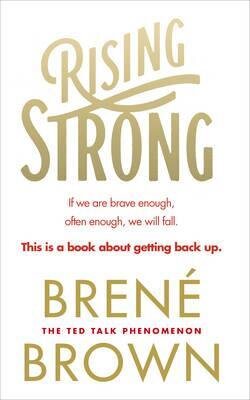
    Despite getting through the darkest days, self-talk held me back, making it harder to overcome resistance to change. Brené Brown’s perspective on the stories we tell ourselves was a revelation for me and was critical in helping me adapt successfully. 

    Now I’m usually able to reject negative thoughts that could slow my progress as I understand the link between the brain and changing behaviour patterns. My recognition of the science behind this has helped me be better prepared for future developments. However, big life changes still have potential to upset my emotions. 

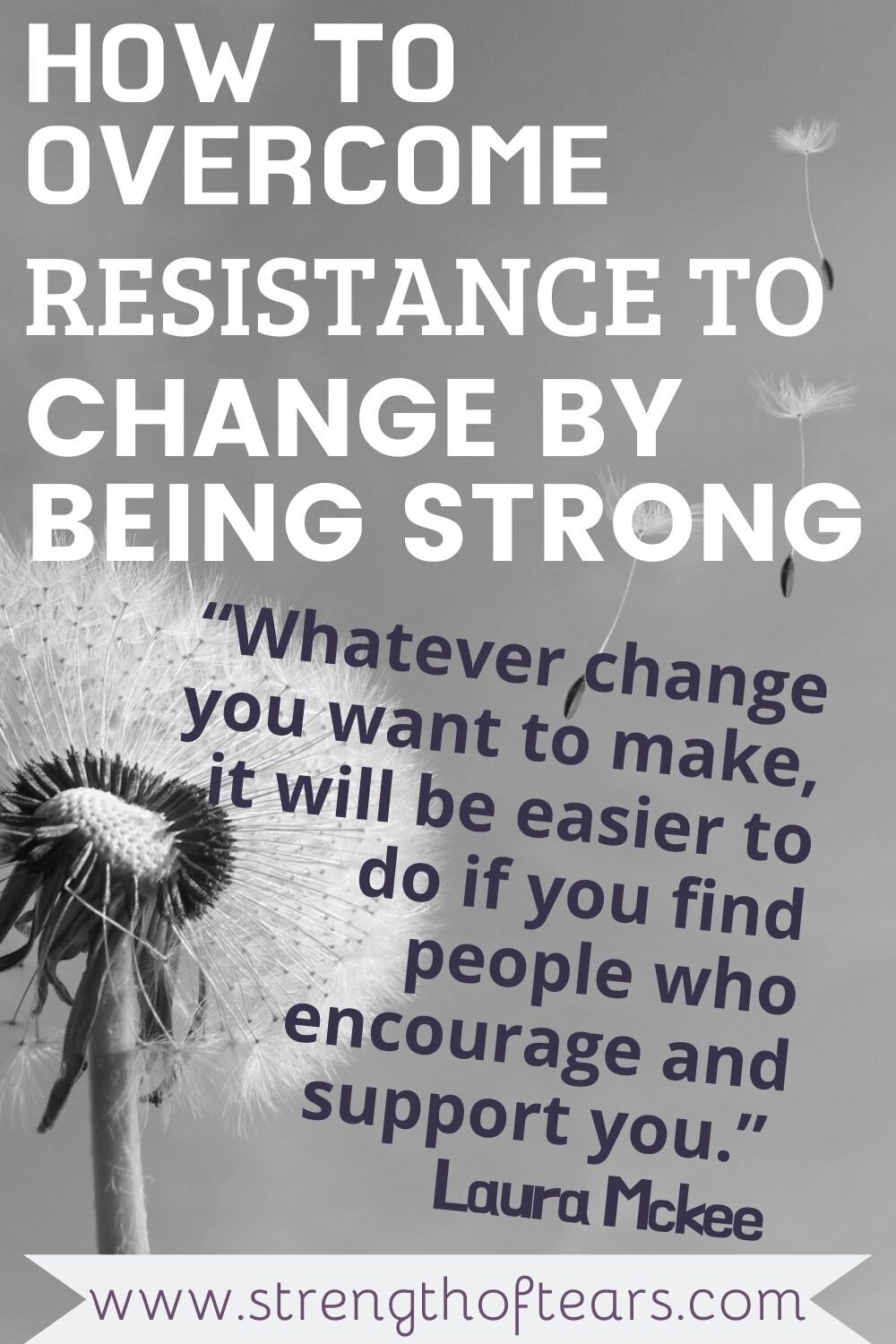
    Whatever change you want to make, it will be easier to do if you find people who encourage and support you.

    — Laura McKee

    The difference in my life nowadays has helped me learn when, who and how to talk about my feelings. Having boundaries has meant removing people from my life who hold me back and making room for those who genuinely encourage and support me. 

    I believe I’ll keep moving forward by accepting what I can control, promoting positive self-talk, having authentic support and recognising that change won’t happen quickly. These steps have given me the strength to persevere and push myself to overcome my resistance to change; even on the hardest days.

    Stay safe,

    Laura 💜

    P.S. If you just want the main points…

    When my world changed overnight, I had to embrace a life with chronic illnesses. So I set boundaries with myself and others so I had support to focus on what I could control. I learnt that my negative self-talk was making it harder for me to change. So I looked at my brain and behaviour patterns to adapt my habits for making sustainable change for a better life.

    #block-6bab4cdb0c7118445fe1 .sqs-gallery-block-grid .sqs-gallery-design-grid { margin-right: -20px; }
    #block-6bab4cdb0c7118445fe1 .sqs-gallery-block-grid .sqs-gallery-design-grid-slide .margin-wrapper { margin-right: 20px; margin-bottom: 20px; }

    If you find it hard to make changes to habits or struggle to cope with change, I can help you create small, achievable goals using my free well-being plan in my VIP resources area. This will help you develop your self-worth and stop doubting yourself.

    Or if you want to wait for my upcoming ‘Thrive Not Survive Journal’, and be the first to know when it’s for sale, sign up to my Strong Mums mailing list here.

    #block-15ceb995cfb3d016c8ab .sqs-gallery-block-grid .sqs-gallery-design-grid { margin-right: -20px; }
    #block-15ceb995cfb3d016c8ab .sqs-gallery-block-grid .sqs-gallery-design-grid-slide .margin-wrapper { margin-right: 20px; margin-bottom: 20px; }

    ✋ Hey there! I hope you’re feeling Able to Start Making changes to support your own and Your Families well-being. By sharing this Post You’ll help mums with mental health and/or chronic illnesses. ⬆️ Hit one of these sharing buttons for social media and I’ll do a bed-bound happy dance – there’s an image for you.

  • Emerging Strong From My Chronic Pain Conditions Challenge

    Emerging Strong From My Chronic Pain Conditions Challenge

    Emerging Strong From My Chronic Pain Conditions Challenge

    Emerging Strong From My Chronic Pain Conditions Challenge This story is about the impact chronic pain conditions have had on my life. I have a rare brain disease called Idiopathic Intracranial Hypertension or IIH, as well as Migraine and Hypothyroid…

    This story is about the impact chronic pain conditions have had on my life. I have a rare brain disease called Idiopathic Intracranial Hypertension or IIH. I also have Migraine and Hypothyroidism and have bouts of depression and anxiety.

    I’ve worried about an unknown future as I’ve had the challenge of a rare condition and misunderstood diseases. I felt frustrated by the doctors who didn’t listen to me. Knowledge is power so I became my own advocate to find the right treatment plan.

    I feel like a strong Mum as I emerge with my story today. However, the reality is that I still face challenges every day. I do still have wobbles and mini meltdowns making occasional appearances but I have the strength to get through it, 

    My family and friend’s love enables me to embrace every day. I want you to feel empowered to raise awareness of your condition and challenges you face too. Anxiety is still what challenges me the most so read about my coping strategies here.

    Living with chronic pain or illness is different for everyone but by reassuring you and giving practical advice, I hope I can support you on your journey. The solutions and strategies I’ve tried, help me and my family live a mostly balanced life. 

    Disclaimer.jpeg

    My Life Before Chronic Illness

    I met my husband Joel at University when I was training to be a Primary School Teacher. I’d already trained and worked as a nanny and I loved being in the classroom, seeing the children grow. Joel’s ability to draw at midnight was a bonus. 

    We moved to Hove when I got my first job, teaching children ages 4-8 from mixed backgrounds. I stayed at the school for 11 years, working with multicultural children, children with special needs and integrating kids with autism from the specialist unit.

    Joel and I married in 2003 and had a baby boy a year later. Eldest taught me how different looking after other people’s children is than your own, but I was still strict in both roles. I adored being a mum and we had another baby boy 21 months later.

    We nearly lost Youngest at birth who was born quickly with the cord tight around his neck. He was taken to the special care ward whilst I was sent back to the maternity ward, surrounded by mums with their babies. I’d never felt a sense of loss like it. 

    That night he had a 4 hour seizure and we were told to prepare for the worst. Thankfully he just pulled through but they couldn’t find a cause. It was put down to trauma and 11 days later we came home. We had another 5 day stay weeks later. 

    Youngest was given the all clear aged one but it had taken its toll on Joel and I. I developed postnatal depression and severe panic attacks. I asked for help and went to counselling. Since then we’ve valued and always worked on our mental health.  Read this easy to use self help book about postnatal depression. 

    Postpartum Depression and Anxiety : The Definitive Survival and Recovery Approach

    Postpartum Depression and Anxiety : The Definitive Survival and Recovery Approach

    The Day My Physical Health Changed

    One day in 2009, aged 32, I woke with a sudden sharp pain around and behind my right eye. Standard painkillers didn’t help the pain, which was so severe I cried with every movement. I was signed off work for two months whilst my GP tried to help me. 

    I was misdiagnosed with infections and 2 chronic pain conditions before I was finally diagnosed with atypical migraine. I was given strong, preventative medication which my body took months to get used to. I had a phased return to my part time hours.

    Although the medication worked I still had low level constant pain, affecting family life and interfering with weekend plans. So I explored alternative therapies until I found a cranial osteopath who helped me live less painfully and our family more happily. 

    We could travel again and had many family adventures. The best thing was not being sensitive to sound so I could go to gigs, swim and watch the boy’s school shows. I aimed high and was promoted to an Early Years specialist and Senior teacher.

    Becoming A Chronic Pain Sufferer

    I started having migraine attacks every weekend. Then in January 2014 I had an attack that wouldn’t ease so my GP did an urgent referral to a neurologist who said my migraine had become chronic. Sadly that pain’s still with me years later. 

    I tried to push on but it was unbearable, I took sick leave, thinking I’d find a solution with traditional medication and natural therapies. Over the next 8 months I tried every migraine medication, elimination diets, reiki, reflexology and more but nothing helped.

    I couldn’t teach and began worrying about the future for myself and my family. I kept fighting it but the neurology team didn’t seem to care. I’d be upset on the phone to the nurse due to unbearable pain and she’d tell me to talk to my GP about ‘my mood’. 

    My tears fell from frustration of being unheard and the unrelenting pain that seemed different to the migraines I knew. So I researched constant headaches and a new symptom jumped out at me; the ‘whooshing’ in my ears was pulsatile tinnitus (PT).

    This was the first piece of the puzzle so I joined an online support group. I heard of a PT specialist in Cambridge and boy was that long car journey to see him worth it. He took my situation seriously and suspected Idiopathic Intracranial Hypertension or IIH

    I had to wait for the tests to confirm this and was told this would be a long process. I was on the migraine medication Merry Go Round, spending months weaning myself on and off of high doses of preventative medicine. Nothing improved my symptoms, although I got a little relief from using aromatherapy oils, especially this Neals Yard Lavender Essential Oil.

    My neurologist found out that I’d sought this second opinion and he refused to treat me. I knew I still had migraine so I was devastated. As the months went on, the ‘long process’ felt like forever. The pain lay heavy on me so I became severely depressed.

    I was losing my sense of self and felt left to rot. My GP was concerned so ran blood tests which showed I’d also developed Hypothyroidism. This explained the amplified feelings of hopelessness. My life became a chronic pain conditions balancing act.

    Idiopathic Intracranial Hypertension IIH Donate.jpeg

    Donate To IIH UK

    Improve the lives of sufferers

    What is IIH And Could I Have It? 

    IIH is associated with raised fluid pressure around the brain. The fluid that cushions the brain is called cerebrospinal fluid (CSF). It can cause disabling daily headaches and visual loss, which can be permanent.

    — iihuk.org.uk

    I started researching the symptoms of IIH, although I knew I didn’t have eye (optic) nerve swelling, called papilloedema. I was convinced I had it despite the headache specialist I saw shutting down my questions about IIH, as I didn’t have papilloedema. 

    IIH without Papilloedema (IIHWOP), is a very rare type of IIH. Less is known about it and many Doctors deny it exists. But the Cambridge team were working with other patients with similar symptoms to me so sticking with them was the best decision. 

    To be diagnosed with IIHWOP you need brain scans and a lumbar puncture (LP). Your explanation about the details of your symptoms is vital so I needed to document my experiences so I could give the specialists a clear picture of what was happening. 

    IIHWOP affects people differently so someone may have some or all of these most common symptoms. They may have additional symptoms too but all impact your quality of life. These are the most reported symptoms – read more about this here.

    • Headaches

    • Pulsatile tinnitus (PT)

    • Visual obscurations – temporary black outs or grey outs

    • Blurred or double vision 

    • Photopsias – short term flashes of light

    I still suffer with the same symptoms I had originally although the intensity changes. As well as PT, I have constant pain in my head, neck and around my right eye. I get very nauseous and have poor mobility; I can get dizzy, black out and stumble or fall. 

    I also suffer with brain fog, a type of cognitive dysfunction involving memory problems, lack of mental clarity and an inability to focus. This is linked to all of the chronic pain conditions I have but it has  improved with each surgery I’ve had for IIH. 

    IIH has left me disabled and bed-bound most of the time. I used to feel guilty about how this limits what I do but now I live day by day, saving my energy for family and friends. My family is about living a happy life, full of laughter and making memories.

    The Challenge To Get Treatment 

    My CT scans showed narrowing of blood vessels in the transverse sinus. This is part of the system acting as a conduit for the blood needed to oxygenate the brain. Watch how blood should drain into the dural sinuses through the internal jugular vein.

    This means I have restricted venous outflow so fluid builds up in my skull, causing a pressure cooker feeling. Headaches are a symptom of all my chronic pain conditions, so I’ve documented how they affect me to help me get the treatment I need. 

    However, getting the treatment for such a rare disease isn’t easy. Nothing was worse than a trip to A&E in late 2014 at the end of an intense weekend after I’d blacked out for the first time. When I finally saw a doctor she would only give me paracetamol! 

    My pain levels were so high, I was shaking as my legs felt like jelly.My GP prescribed a cocktail of pain relief, including oramorph, the following day. Of all my chronic pain conditions, IIH was the hardest to control, often leaving me I able to do anything. 

    This was a new level so Joel pushed for Cambridge to do the diagnostic tests. I was officially diagnosed with IIHWOP after the consultant listened carefully to how well the LP had temporarily reduced my pain levels, despite my LP result being low.

    My treatment plan, however, was delayed for over a year as their trial was under review. In 2017 I had my first of six surgical treatments. I’ve had skull and spine surgeries to create room for my veins and brain stents to reduce CSF build up. 

    The Truth About Living With Chronic Illness.jpeg

    The Truth About Living With Chronic Illness

    The truth is that living with chronic pain conditions tests your limits. We knew it would be a marathon, not a 10k race but I’ve had to accept that I need walkers, a stairlift, a wheelchair, and my gig ear plugs, to make it possible for me to go out on better days. 

    Joel’s my main carer and my boys are young carers for me. I also have a PA here each weekday lunchtime who is like a family member now. She ensures I eat and wash. She cooks, does laundry, keeps things tidy and is perfect company for me.

    Joel, myself and the boys have had to adjust how we live day to day with chronic illness in the mix. But by learning how to communicate effectively we’ve developed a stronger bond. The boys have become independent and resilient. 

    This is key to being able to thrive despite challenges. We work as a team to develop and encourage personal growth. My teaching skills have helped me facilitate finding solutions by making time to reflect on life whilst being mindful. 

    Joel’s always been more spontaneous than me so I’ve learnt how to make the best of my good days. I still love seeing friends or going out to eat but I have to be aware that all activity has consequences with high pain and sleep disturbances afterwards.

    We’ve created new routines to make the most of the time we have. We plan time together, such as family get-togethers and date nights. The boys tell me about their day and Joel and I make time to talk about how we’re feeling. This pays off long term.

    I know I’m so lucky to have Joel guide and stand by me through the toughest times and enjoy the good when we can. Chronic pain conditions impact your relationships so you have to make time for each other and find ways to release the stress. 

    The Chronic Pain Conditions Lifestyle Lowdown 

    Life can change overnight when you develop chronic pain conditions or mental health problems. When that involves family, your relationships change too. My story shows this and how we’ve succeeded by mixing plans with a day by day attitude. 

    Some people are diagnosed quickly with fairly common conditions, some spend years searching for a diagnosis. Wherever you are on your journey, it’s vital to learn about your condition and its symptoms so you make informed choices for treatment. 

    Any diagnosis leads to questions and concerns about the future. I believe that this is when you need a sense of purpose, especially when facing big changes and decisions. This is why I began blogging about my journey to raise awareness. 

    I’ve worked hard on my well-being to cope with the depression and pain that can hold me back. I refuse to let it win so I use distraction tactics. I am creative, I meditate and try to put myself first. Read about how I prioritise my wellness needs here.

    My husband struggled with his mental health and as our boys were young we chose to do family therapy. Thankfully my husband and children supported me in the good, bad and horrendous times. We built strategies to build good mental health for us all.

    Developing routines and structure leads to healthy communication which has made our family an awesome team. With their support I’m now emerging strong with hope and determination to get through hard times and enjoy the good.

    Stay safe
    L 💜

    P.S I can help you create better wellbeing strategies for living with chronic pain conditions. Download my free well-being planner here to prioritise your needs. If you want to get on a waiting list for updates on my first ever well-being product, please sign up to my newsletter below.


    ✋ Hey there! I hope you’re feeling stronger now. If so, sharing the love will help me help other mums with chronic invisible illnesses.⬇  Hit one of those sharing buttons or save the images to Pinterest and I will do a bed-bound happy dance – there’s an image for you!

    #block-yui_3_17_2_1_1599483536273_21920 .sqs-gallery-block-grid .sqs-gallery-design-grid { margin-right: -20px; }
    #block-yui_3_17_2_1_1599483536273_21920 .sqs-gallery-block-grid .sqs-gallery-design-grid-slide .margin-wrapper { margin-right: 20px; margin-bottom: 20px; }

  • The Exclusive Guide To Well-being For Life

    The Exclusive Guide To Well-being For Life

    The Exclusive Guide To Well-being For Life

    As a mother your well-being is so important but do you make it your main priority? Being Mum means driving the rest of the family forward, as well as literally driving them around. If you focus on your own well-being, you’ll have the energy to do this.

    I love making sure everyone’s wellness feels uplifted, but I reached a point when my well-being needed to take priority. I am sharing how I learnt about wellness and well—being to help me look after myself and prioritise my family.

    This exclusive guide is for every mum, regardless of how old or young your kids are. It’s for you whether you face depression, anxiety or chronic illness. We all do our best with the tools we have, so this post is a guilt and judgement free zone.

    This is for you if you take the kids to all their activities, cook amazing meals whilst helping with homework; your teen cleans up after tea, you don’t know how to help your child when they’re being bullied, you’re stuck in bed all day or anything else. 

    This guide looks at the elements needed to find well-being for life so you can fulfil your own needs and find your purpose. I’ll deep dive further into key aspects of this blog in coming posts. To get the most from this blog, click below to download your free guide to wellness priorities planner.

    This guide supports you to make simple mindset shifts for better well-being for you and your family, whatever your home life looks like, how old your children are or what size your house is. This guide is for mums to build solid foundations for their family. 

    By the end of this blog you will know:

    • Why And How Wellness and Well-being Needs Managing 

    • Each Wellness Area And Learn What To Improve

    • How Your Well-being Affects Your Family Interactions 

    • How To Reward Physical and Emotional Well-being Growth

    • How To Make A Simple Focus Well-being Plan

    I hope you find this an insight into your own wellness and how the changes you make for you and your own family’s health, will impact your well-being for life. 

    * Disclaimer – this blog contains affiliate links to products that I have tried and loved. If you do buy anything using this link, I get a small monetary reward at no cost to you.

    Why And How Wellness and Well-being Needs Managing 

    Wellness: the quality or state of being healthy in body and mind, especially as the result of deliberate effort.

    Well-being: a state characterised by your  health, happiness, and prosperity; welfare

    From dictionary.com

    Wellness and Well-being both focus on our state of health and by using them both strategically, but simply we can make a shift in our mindset. If you can focus on these areas to make them work well, then you’ll feel secure.

    As someone living with chronic illnesses, wellness is hard to aspire to, so I have to approach all my healthcare decisions based on doing the best I can for myself now and try to prevent future conditions by looking after my body and mind. 

    Therefore wellness for me, is working towards the best state of mental and physical health possible. It’s about actively choosing to take self-responsibility for my own behaviour toward an outcome of healthy living and well-being for life. 

    To make the right choices I’ve had to understand some of the psychology of wellness and well-being so I could make conscious changes. By focusing on these I’m able to process ideas and reach appropriate solutions more easily.

    I’m using the psychology of Maslow’s Hierarchy Of Needs which is still relevant in 2020. I believe that physical wellness, feeling safe, relationships based on love and secure friendships, before we can fulfil our potential in life and love.

    This is commonly used to support personal development in the workplace but I believe it’s a great structure for personal and family growth.

    Maslow’s self actualisation is the highest state for you to find meaning and purpose in life, which links to your emotional and physical health. Read this Forbes article about how a strong sense of purpose builds our resilience in face of challenge.

    By identifying what humans need and what drives and motivates [us, we] can develop mutually beneficial relationships and positive environments

    — Katie Home

    Reaching a high level of satisfaction in your life has a positive effect by maximising your pleasure or from living with your true self. A positive family meets the needs of individuals by creating a place of security and trust for one another. 

    Positive relationships play a huge part in our wellness and wellbeing. I’m fascinated by the 5 Love Languages by Dr Gary Chapman. He explains how we give and receive love through a simple strategy shown to build positive relationships. 

    A little insight into some of the thinking behind how to well being for life helps you find solutions and influence the actions you take to improve our wellness. These breakthroughs lead to change in your mental and physical health. 

    Well-being is your current state as you use wellness areas to plan your next steps towards improved well-being. Understanding the wellness areas has helped me create more achievable goals so my future health will based on focusing on my wellness to the best that I can.  

    Understand Each Wellness Area And Learn What To Improve

    In my research I came across this diagram showing 8 areas of wellness (It seems to change with 7 and 9 elsewhere). Knowledge about these areas of Wellness and how they fit into your life, helps you decide what action to take.

    Wellness is a choice to work towards what you aspire to. This diagram shows that physical and mental health are linked, so you consider your needs holistically. The journal I’m creating will have a guide for fitting them into your life for balance. 

    Dimensions Of Wellness

    1. Emotional Wellness is about coping with life effectively and building strong relationships. I’ve discovered so much about how I look after myself and others by listening to this amazing book on Audible: Braving The Wilderness By Brene Brown.

    2. Physical Wellness is looking after your health through exercise, hydration, sleep hygiene and nutrition. We get a Vegetable Box delivered weekly. As I’m Vegan and my family are Vegetarian this inspires nutrition and variety in our diets. Click here to set up your own box, however often you need to.

    3. Intellectual Wellness is about seeing your creative abilities and actively seeking ways to expand your knowledge and skills. I love the idea of learning with a friend.

    4. Social Wellness is creating relationships with others and forming support networks with two way connections. You could try strengthening bonds on one of these Crystal Maze Experiences in London and Lancashire. 

    5. Occupational Wellness is finding satisfaction and enrichment in your choice of career or in being a Stay at Home Mum.

    6. Financial Wellness isn’t about how much money you make but how you use it. Feeling good about how you use money and talking about it is healthy. Know if youre satisfied with your situation or gain confidence about future finances.

    7. Environmental Wellness is creating a pleasant, stimulating environment around to support your overall wellbeing. I use calming items like this gorgeous Soto Aroma Diffuser by Neal’s Yard Remedies, with essential oils.

    8. Spiritual Wellness is something you strive for, whether religious or not. This helps you discover that meaning in life you strive for. Look for opportunities to grow and learn by reading (check out Oxfam online below) to connect with your true self through using mindfulness. You can learn more on The Benefits Of Meditation by reading this blog post.

    Understand How Your Well-being Affects Your Family Interactions 

    To see the whole picture your family dynamics matter too. As Mums we have to be role models and encourage healthy habits from day dot. I know it’s easier said than done – I have teenagers glued to X-boxes but we use rewards to motivate them. 

    I’ve created 4 steps, incorporating each wellness area. This will help you recognise things in your life, including you’re parenting skills, to help you improve your overall physical and mental wellness. 

    To help you work out you’re starting points to create well-being for life habits, work through the bullet points at your own pace and in whatever order works best for you. 

    1. Creating Time And Space – Start by building your physical and environmental wellness for a healthier home and family life. 

    • Create a varied diet by eating a range of nutritional foods and cooking new things with and for your kids to try to start healthy habits early.

    • Get outside with your kids most days. This is the time to play with them and be active by working at your own pace, 

    • Show your kids how sipping water through the day is good for your body and mind. It’s great for you physically and helps your skin glow.

    • Sleep is so important, as well as creating a better vibe at home, it helps motivate you, keeps your mind focused and emotions in check. I love naps!

    • Your home need to be a safe space with regards to your environment. So grow plants, create calming spaces and set quiet times for you all. 

      2. Safety and security – Stay on the theme of building safety with financial security and occupational satisfaction wellness 

    • You’re aware of the financial implications as soon as you have kids and see the reality of the amount of clothes you need for one day,so get budgeting. 

    • Creating security for your family is something we hardly discuss. It’s stressful but make time with your partner or get help to discuss savings, pensions etc. 

    • I’ve tried working full time, part time and not at all. It often felt like I wasn’t good at my job or as a Mum. This has to be your choice but keep talking.

    • Check in often with your partner about how their day and create boundaries for getting things off your chest. It’s not healthy for the family to hold things in.

    • Find ways to build a deeper connection with your family. Eat together when you can and chat to them or get them to visit you in bed when they get home, 

    3. Making Connections – Build emotional relationships within your family and develop your social support with your wider community for your family. 

    • Your emotional well-being will be affected by your stage of motherhood and womanhood. Take time to look after your emotions from hormonal changes. 

    • Consider immediate family emotions in your decisions. Do you need help solving squabbles, supporting anxious teens or making time for romance?

    • There are many personality types within a family to balance emotionally. Take these 5 Love Languages quizzes so you can develop family communication. 

    • Focus on social support networks with friends that have children when you do and/or reconnect with your friends who know you well, to turn to in a crisis. 

    • Talk about and let the kids see how to look after someone who’s hurting or solve arguments quickly. You can role play them in a family meeting too. 

      4. Development and Growth –  Finding time for intellectual and spiritual growth is hard, although as we come out of the last few years of the pandemic, I expect many of us have tried to.

    • We all need to spend time learning new things, whatever age we are or if we have chronic illnesses. It improves self discipline and boosts self confidence!

    • We saw many Acts of Kindness during the pandemic. These create a rush of positive chemicals, increasing our self worth and sense of fulfilment. 

    • Make time to relax and be creative. Try a new class out of your comfort zone. Include older kids or a willing partner, this could be a reward or bonding time.

    • Time for ourselves is a reward that all mums need. I plan a weekly reward based on self care, It’s not selfish to plan me time so get thinking! 

    • Try mindfulness and/or meditation by exploring what style works for you. Read this post to guide you through some techniques to help with stress and anxiety.

    Step 4 has ideas for your well-being plan from the top tier of Maslow’s Hierarchy, which naturally comes after you’ve built the foundations. Plan around what you feel is most important for your creativity and spirituality. Get This Free ”Understanding How To Improve Your Well-being’ Guide for support.

    How To Reward Physical and Emotional Well-being Growth

    Before you can properly take your first steps to plan your well-being target(s), you need to prioritise the most important read of wellness you need to improve well-being for life. To help stay focused on your plan, you should use rewards to help you stay on track to meet your goal or intention. 

    Rewards work because we’re motivated by dopamine which tells it whether a good or a bad thing is about to happen so we either act because of the promise of getting a reward or avoiding punishment. 

    I set rewards for all my goals and commitments, work and personal goals. When I reviewed my targets recently I realised the change of routine in lockdown had interrupted me achieving them. I know it sounds ‘workplace’, but it helps me. I recommend setting times to review your progress towards your targets. 

    However learning to roll with the changes that occur from life with challenges, means moving the goal to work at your own pace. If your symptoms flare, use the thought of your weekly reward to think positively. You need a visual to keep you motivated. I make a Pinterest mood board, to create an image of the target and reward. 

    My first well-being plan was simple, focusing on one goal for my physical wellness. I aimed to be kind to myself by listening to my body; more rest and starting bed yoga. This would impact my whole life by strengthening my foundations of physical rest and care for well-being for life. 

    I thought of what I needed to help me meet this goal and I needed my support network, so I asked Joel and the boys. They could stop me doing things if I looked unwell and I used timers/alarms, I still use these things if I need to be kind to myself. 

    As I’ve never been good at doing nothing I needed rewards to keep me focused on my goal. As I can have a flare at any time from living with chronic pain, I’ve had to learn when to go back to basics.

    Despite this being on my well-being plan a way back, I know it’s something I still need to be reminded of so I’m planning a reward for motivation. Rewards trigger our brain into wanting positive outcomes, therefore rewarding positive and emotional well-being growth.

    Rewards can be anything from an experience to a small gift or food occasionally. I’ll be sharing more ideas for these in the new journal I’m creating. If you want to make sure you’re the first to know, get sneak peeks and be on the waiting list please join my mailing list.

    How To Make A Simple Focus Wellbeing Plan

    I’ve developed my wellness plans over the years and have supported others with creating their plans. I’m excited to add these options to my new journal so you can start thinking about it.

    Well-being plans are focused with targets to set intentions and make commitments. They have to be focused on the most achievable area for your wellness and must make the biggest impact on your well-being for life.

    You can put all of this together with these simple steps and focusing on your areas of wellness. This quick and simple activity can help you spot patterns. 

    1. Go back to the 8 areas of wellness above. On the table below score each area from 1-10 in relation to how you think you’re already managing. 1 is not meeting it at all and 10 is when you’ve got it down! 

    2. Now list the 3 lowest scoring areas in order. Choose 1-3 topics from these that you need to focus on in your life now. Keep them short and simple.

    3. Write 3 actions to make changes in the three areas in this table. Or choose one action for the worst 3 areas. E.g. I will meditate for 5 minutes each day.

    4. Write the support you will need to help you achieve each target or intention. 

    5. Write the reward you will get when you achieve your target or intention and how you’ll know you achieved it. E.g When I’ve meditated every day for 1 month I will have a spa treat. 

    You can download this free Planner to print and reuse, along with a ‘Understanding How To Improve Your Wellbeing’ Guide – Click here for your free copy.

    For some guidance of actions you can take go back to the bullet points in the 4 steps to well-being section above. This planner comes with the 8 areas of wellness included.

    If you need a little more guidance, read this ‘What Is Wellness?’ article from the Global Wellness Institute

    Please let me know if you try this simple planner out in the comments. 


    The Takeaway

    1. You need to understand that wellness leads to your well-being for life. It’s important to look after your mental and physical health to prioritise needs. 

    2. Having your own awareness of the eight wellness areas I’ve talked about in this blog, helps you understand human needs better. This information helps you to prioritise your needs. 

    3. Understanding the importance of relationships is vital to you making progress whether it’s positive or negative. Having my family help me stick to my commitments is so important. 

    4. Rewards are important in helping you achieve your goals from a scientific process in the brain. Your brain prepares you for both good and bad outcomes. Try to use these strategically to focus. 

    5. You’re equipped to consider your relationship with the areas of wellness and plans for your intentions or targets. Keep going back to your 3 ‘I will’ sentences and remind yourself of your reward. Keep it short and simple. 


    Disclaimer

    If you’re struggling with your wellness and need targeted support from a health professional please speak to a doctor. I am not a trained healthcare professional. 

    Online Support

    You can access these websites from charities and organisations for additional support. 

    Go to the Mind website for mental health support.

    Go to the National Well-being Institute here for further support.

    I also recommend these two podcasts to check out. 

    Happy Place – Fearne Cotton

    Your Wellbeing Podcast – Mind Body Spirit Festival

    What areas of wellness do you think you need support in? Tell me in the comments what has helped you or made you think whilst reading this blog.

    Stay safe, Laura 💜

    P.S I can help you build on the areas of your well-being you may be neglecting without realising. If you want to get sneak peeks, get on a waiting list or start focusing on your well-being for life sign up to my newsletter at the bottom of the page. ⬇


    ✋ Hey there! I hope you’re feeling stronger now. If so, sharing the love will help me help other mums with chronic invisible illnesses.⬇  Hit one of those sharing buttons or save the images to Pinterest and I will do a bed-bound happy dance – there’s an image for you! 
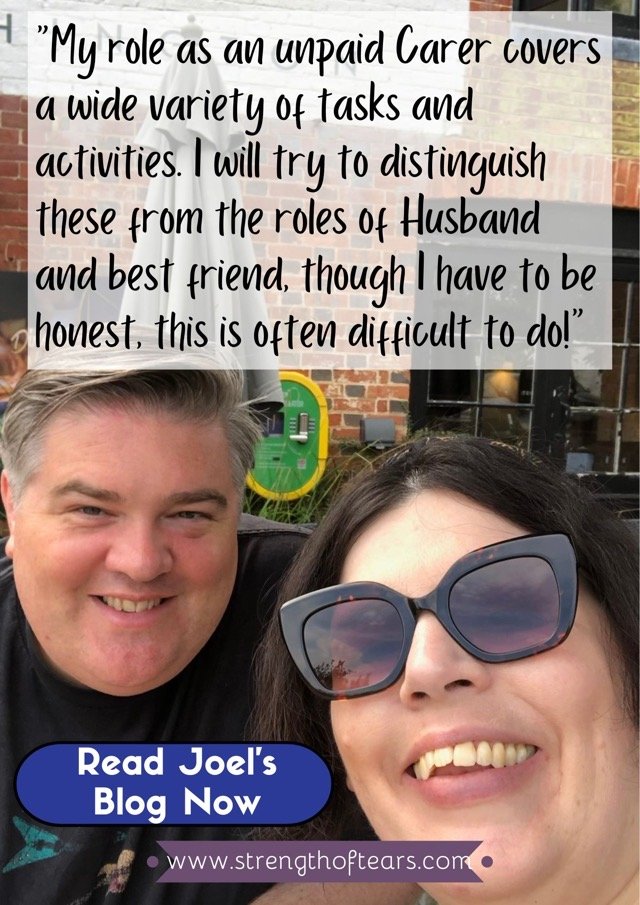
    #block-yui_3_17_2_1_1594904364350_75680 .sqs-gallery-block-grid .sqs-gallery-design-grid { margin-right: -20px; }
    #block-yui_3_17_2_1_1594904364350_75680 .sqs-gallery-block-grid .sqs-gallery-design-grid-slide .margin-wrapper { margin-right: 20px; margin-bottom: 20px; }